




Related: Micromobility Usage in North America at 'All-Time High'
Shared Micromobility Ridership Sets New Record, Report Finds
Shared micromobility is on the rise, with 2024 ridership up 31% and more cities adopting e-bikes, e-scooters, and adaptive vehicles. NABSA’s latest report highlights usage trends, emissions cuts, and industry growth.
August 12, 2025
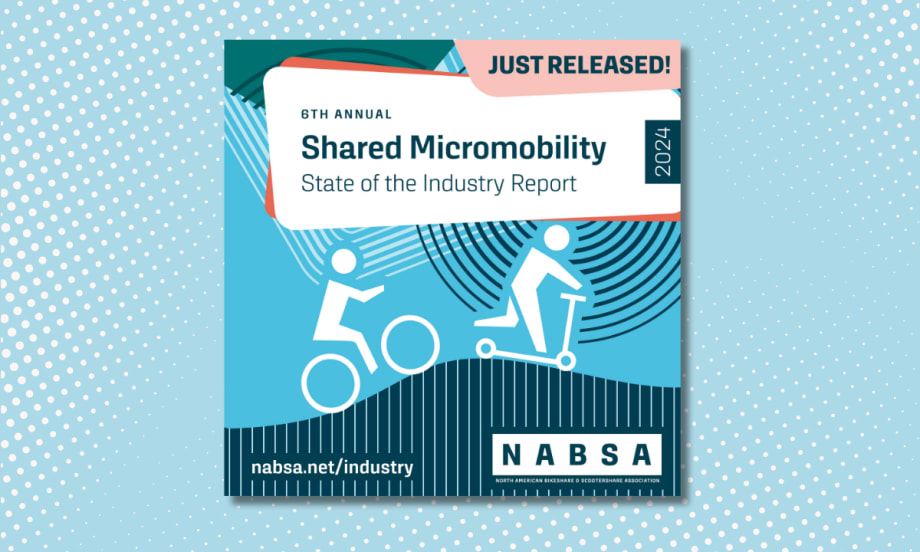
NABSA’s 2024 Shared Micromobility State of the Industry Report shows record ridership, growing electrification, and expanding access in communities across North America.
Photo: NABSA
2 min to read
The North American Bikeshare and Scootershare Association (NABSA) released its sixth annual Shared Micromobility State of the Industry Report, reporting a 31% increase in ridership in 2024. At least 225 million trips were taken, reflecting the continued growth of shared micromobility in communities of all sizes.
Shared Micromobility Growth
In 2024, 415 cities across North America operated one or more shared micromobility systems. Vehicle deployments increased 19% from 2023 to 333,000.
“Shared micromobility continues to expand in large, mid-sized, and small cities, as well as rural and suburban areas,” said NABSA Executive Director Sam Herr. “It is providing more mobility options and improving public transportation connections.”
Survey data showed 74% of riders use shared micromobility to connect to transit, and 35% of trips replace car travel. Forty-six percent of systems offer adaptive vehicles.
Trip Purpose and Economic Impact
Trips were taken for commuting, errands, social activities, dining, recreation, and other essential purposes, contributing to local economies.
This year’s report also includes examples of parking management strategies and a breakdown of public agency funding and staff support for shared micromobility.
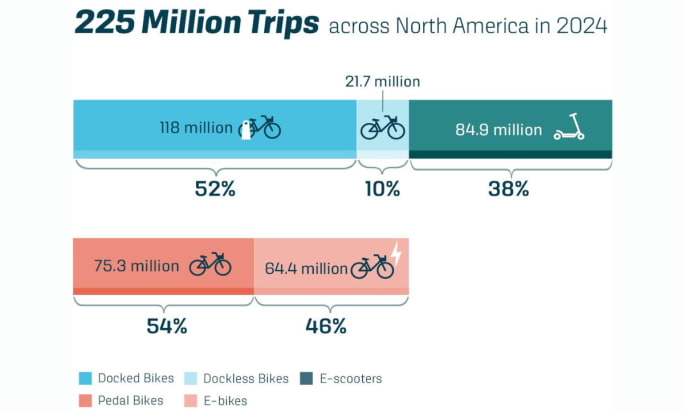
The 2024 NABSA report shows shared micromobility breaking records, with more riders, expanded e-device use, and increased adoption in cities of all sizes across North America.
Photo: NABSA
Electrification Trends
In 2024, 79% of systems included e-devices, and 66% of trips were taken on them. E-bike trips hit 64 million, and e-scooter trips reached 85 million. The shift toward electric devices has contributed to emissions reductions, with approximately 101 million pounds of CO₂ offset in 2024 by replacing car trips—403 million pounds since 2019.
Industry Outlook
“Shared micromobility is a strong investment for communities,” Herr said. “Aligning public funding and policy support with its growth is essential for sustainable operations.”
NABSA estimates the industry employs at least 8,200 people in North America. The report was developed in collaboration with Toole Design and the University of California, Berkeley Transportation Sustainability Research Center, using survey responses, system performance reports, and GBFS data.
English and Spanish versions of the report are available at NABSA's website.
More New Mobility

From Hardware to Digital Partner: Luminator Charts Its Next Chapter
CEO Magnus Friberg discusses Luminator’s shift toward becoming a digital partner, the growing importance of software and interoperability, and how AI can help agencies improve operations and passenger experience.
Read More →
Biz Briefs: Alstom Lands Canadian Contract, LYT to Supply California TSP, and More
In METRO's latest installment, we take a look at recent news from Complete Coach Works, Beep, FlixBus, and more partnerships making headlines across the transportation sector.
Read More →
CharterUP’s Armir Harris on Technology, AI, and the Future of Group Mobility
In a recent episode of METROspectives, CharterUP Founder/CEO Armir Harris discussed the company’s evolution from an online charter bus marketplace into a technology platform supporting public- and private-sector mobility and much more.
Read More →
Jacksonville’s NAVI Project Charts a New Course for Autonomous Public Transportation
Through its NAVI program, JTA is showing how autonomous vehicles, intelligent infrastructure, and coordinated operations can work together to deliver everyday public transportation.
Read More →
Biz Briefs: Luminator Marks Milestone and More
From manufacturers and suppliers to transit agencies and motorcoach operators, these updates offer a snapshot of the projects, partnerships and business moves driving the industry forward.
Read More →
New Tricks for Old Bureaucracies: Joshua Schank on Making Transit Innovation Stick
Former LA Metro Chief Innovation Officer Joshua Schank discusses why good ideas aren't enough, how transit agencies can overcome resistance to change, and why today's challenges demand more innovation.
Read More →
How DART's GoPass Is Redefining Regional Mobility
Serving 14 transit agencies, GoPass simplifies multimodal travel by allowing riders to plan, pay for, and manage an entire trip through one app.
Read More →
Biz Briefs: OCTA Taps Clean Energy for Hydrogen Station, Stadler to Supply Via Rail Vehicles, and More
From manufacturers and suppliers to transit agencies and motorcoach operators, these updates offer a snapshot of the projects, partnerships and business moves driving the industry forward.
Read More →CharterUP Expands Into New Mobility and Autonomous Transportation
Vice President of New Mobility Stephen Joos discusses how CharterUP is leveraging its nationwide transportation network, technology platform, and autonomous vehicle partnerships to expand into workforce mobility, campus shuttles, and transit solutions.
Read More →
METRO Magazine Announces 2026 Innovative Solutions Awards Winners
Projects Recognized for Advancing Mobility Through Technology, Accessibility, Workforce Innovation, and Operational Excellence
Read More →