



Transport Contracting Delivering, Must go ‘Further Faster’ to Unlock Economic Growth
The Urban Transport Group report, which was published to follow the Government’s English Devolution White Paper (released last December), includes transport case studies from UTG’s member city regions

Outside of the capital, devolution has so far seen around $37 billion of public spending devolved to metro mayors through increasingly flexible and long-term funding arrangements.
Photo: UTG
English transport devolution, or contracting, is delivering real change across major cities, from enhancing connectivity to boosting housebuilding, but must go “further and faster” to unlock additional economic growth, according to report by the Urban Transport Group (UTG), the UK’s network of transport authorities, which charts the history and success of English transport devolution to the present day and sets out recommendations on how to fully realize the benefits it offers for future growth.
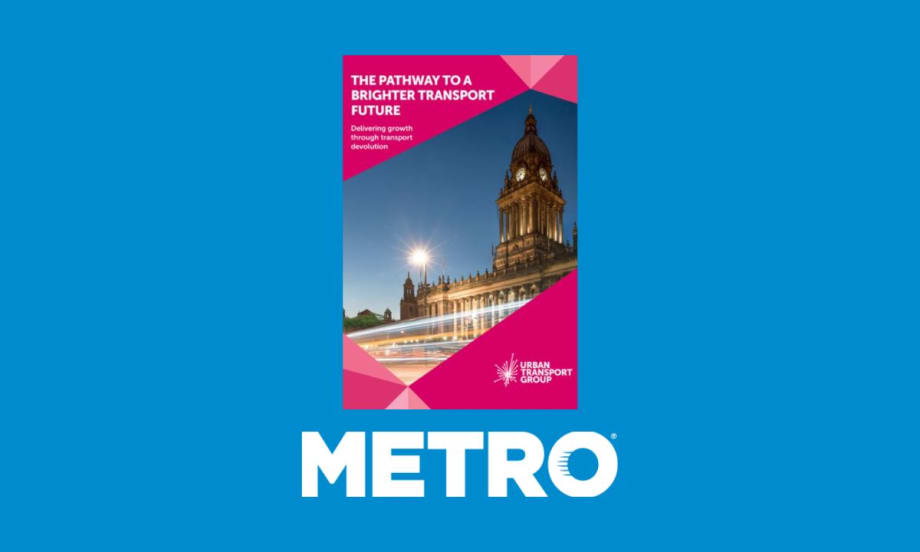
The report, which was published to follow the Government’s English Devolution White Paper (released last December), includes transport case studies from UTG’s member city regions — from the new, yellow franchised Bee Network buses on the streets of Greater Manchester and the publicly owned and operated Supertram network in South Yorkshire, to London’s Elizabeth line, the fastest growing railway in the UK.
The Benefits of Devolution (Contracting)
Outside of the capital, devolution has so far seen around $37 billion of public spending devolved to metro mayors through increasingly flexible and long-term funding arrangements.
Most mature Mayoral Combined Authorities are now in line to receive a fully integrated multiyear funding settlement, with Greater Manchester and the West Midlands first to receive this in 2025/26.
Yet, the National Infrastructure Commission has found that a lack of effective transport infrastructure is limiting the productivity of city regions.
Still More Work to Do
To fully capitalize on the devolution prize, the report — “The pathway to a brighter transport future: Delivering growth through transport devolution” — recommends that the Government should:
Work with city regions to deliver a sustainable long-term solution to funding to all tiers of local government.
Commit to enabling further devolution by providing city regions with greater local investment levers, such as land value capture mechanisms and infrastructure investment funds.
Offer funding certainty to Transport for London to enable it to properly maintain and renew transport assets and to honor existing contracts to deliver upgrades to the network.
Deliver on devolutionary commitments around regulating micromobility (such as e-bikes and e-scooters), rail reform and highways powers in the forthcoming English Devolution Bill.
“Transport devolution is changing England’s major city regions for the better — improving our public transport networks, boosting growth and setting ambitious plans for more homes,” said Jason Prince, director of the Urban Transport Group. “However, the devolution journey is far from complete. To fully deliver the government’s Plan for Change and realize the benefits of economic growth, transport devolution must go further and faster. Building on the Government’s White Paper, greater priority should be given to working with devolved areas to deliver sustainable investment solutions whilst also expanding powers in critical policy areas such as micromobility and rail integration.”
More Management

METRO Opens Submissions for 2026 Motorcoach Awards
Nominations are now being accepted for METRO Magazine’s Operator of the Year and Innovative Operator of the Year awards.
Read More →
New York MTA Advances Final Contract for Second Avenue Subway Expansion
Contract Four is the largest in the Second Avenue Subway Phase 2 project and includes construction of station infrastructure, tracks, and signals for the subway expansion, MTA officials said. Work on Contract Four will begin in 2027.
Read More →
Transit Agencies Highlight Safety Gains at National Summit
Leaders from 15 major transit systems shared crime-reduction results and safety initiatives while discussing the role of continued federal support.
Read More →

NITA Names New Leadership, Expands Reduced-Fare Program at First Board Meeting
The new regional transit authority appointed its first board chair and interim executive director while extending reduced fares across CTA, Metra, and Pace for eligible riders.
Read More →
Beyond the Checklist: A Structured Approach to Transit Maintenance
Reliability-Centered Maintenance helps transit agencies move beyond routine checklists to focus limited resources on the assets and failures that have the greatest impact on safety, reliability, and service.
Read More →
APTA 2026 Nominating Committee Selects Leadership Slate, Names Chair and Vice Chair Nominees
Leadership changes will help shape the association’s priorities and its representation of the transportation industry during the 2026–2027 term.
Read More →
DART Launches Major Security, Fare Enforcement Initiative
The 90-day demonstration will deploy coordinated security teams at five light rail stations while testing controlled access and gathering data to guide future investments.
Read More →
Advancing Fare Collection Through Technology and Innovation
Learn about delivering 1300 gates at 91 stations while managing fare evasion. Explore the large scale deployment, solution customization and real-world results that affect the region. Prepare for deployment in your region now.
Read More →
Game Day in Motion: Moving Millions During the 2026 World Cup
Between packed transit stations and team motorcoaches, see how agencies and operators across North America tackled the transportation demands of the 2026 FIFA World Cup.
Read More →
Surface Transportation Extension Averts Shutdown, Leaves Transit Funding Gap
The stopgap keeps federal transportation programs moving, but missing advance funding could complicate the transit and rail projects agencies are planning next.
Read More →