



Today’s Regional Transit Strategies Require a Multimodal Approach
Evolving population trends continue to map the paths of a new, modern commute — one that’s giving transit leaders an opportunity to consider public transit strategies with a deeper, multimodal approach.

After decades of population decline, many rural areas have been experiencing population increases.
Photo: Enterprise
- Changes in population trends are influencing modern commuting patterns.
- Transit leaders are exploring deeper strategies for public transportation.
- A multimodal approach is central to new transit strategies.
*Summarized by AI
Evolving population trends continue to map the paths of a new, modern commute — one that’s giving transit leaders an opportunity to consider public transit strategies with a deeper, multimodal approach.
We know public transportation connects communities, spurs progress, and lifts economic development in a region. However, many agencies continue to face operational deficits as they work to rebuild ridership.
To serve more riders, it’s important to recognize the ways population shifts and living patterns have changed in recent years. Though many metro areas continue to make post-pandemic gains, the nation’s exurbs, outer-ring suburbs, and rural communities also experienced an influx in population between 2019 and 2023.
As we look to address the transit needs of a new era, it’s important to take a closer look at the unique considerations for reclaiming riders and expanding service reach.
Commute Times Jump, Despite Hybrid Schedules
Recent data on commuting lengths reflects the impact population shifts have already had on the average, daily commute. Research shows the average round-trip commute to work now extends to 54 miles, a significant increase from 2019, and one in three Americans reported in a 2024 Enterprise Mobility survey that they’re driving even more than they did five years ago.
Additional data from Statista Consumer Insights finds the number of commuters driving 60 minutes or more to work increased between 2019 and 2023. Meanwhile, the number of workers commuting less than 15 minutes declined.
Influenced by remote and flexible working arrangements, and other lifestyle and cost of living considerations, roughly 1 in 20 workers live more than 50 miles from their job today, compared to less than 1 in 100 pre-pandemic, according to domestic migration data from Gusto.
Accommodating such changes requires a regional analysis of today’s transportation systems to keep up with the needs of exurb and rural commuters.
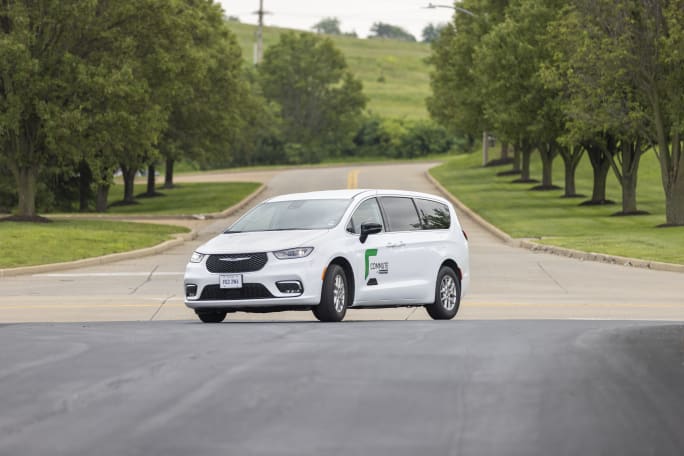
To serve more riders, it’s important to recognize the ways population shifts and living patterns have changed in recent years.
Photo: Enterprise
Rural Infrastructure Factors
After decades of population decline, many rural areas have been experiencing population increases.
According to the USDA Economic Research Service, the increase in remote work that followed the pandemic contributed to this major shift in migration after migration rates were negative from 2010 to 2016 and near zero from 2017 to 2020.
With public transit being a connector to regional prosperity and economic opportunity, we must think strategically about the ways we can alleviate today’s shifting population demands while diversifying to meet tomorrow’s unexpected shifts — especially as continued hybrid working arrangements potentially spur further migration towards the exurbs and beyond.
Cost of the Commute to People and the Planet
As living and commuting patterns shift, traffic data from TomTom also shows a correlation in congestion, as average drive times increased in many cities during peak hours.
This year’s INRIX Global Traffic Scorecard shows that between 2021 and 2023 many of the 25 U.S. cities surveyed saw increases in both congestion and related costs in lost time and productivity in downtown areas.
The wear-and-tear of the commute on vehicles and roads also comes at a cost to our planet. Transportation is considered to be one of the largest contributors of U.S. greenhouse gas emissions.
But contrary to the focus on aviation, trucking, and other heavy industries, the U.S. Environmental Protection Agency estimates light-duty vehicles (including passenger vehicles, vans and SUVs) contribute more than half of the sector’s emissions.
Shared mobility can help reduce this impact.
Increasing Awareness for Alternative and Shared Mobility
While new multimodal transit strategies and public-private partnerships can help cities and regions reach their goals, including car sharing and vanpooling, 22% of U.S. respondents in the Enterprise Mobility “On the Move Survey” survey say they have not heard of some or all of these services mobility options.
By collaborating with businesses in the region, transit agencies can ease the pains of the daily commute for citizens and help business leaders attract and retain top talent by encouraging the adoption of shared mobility services.
Promoting shared mobility and offering incentives like commuter benefits can make the commute more convenient and cost effective.
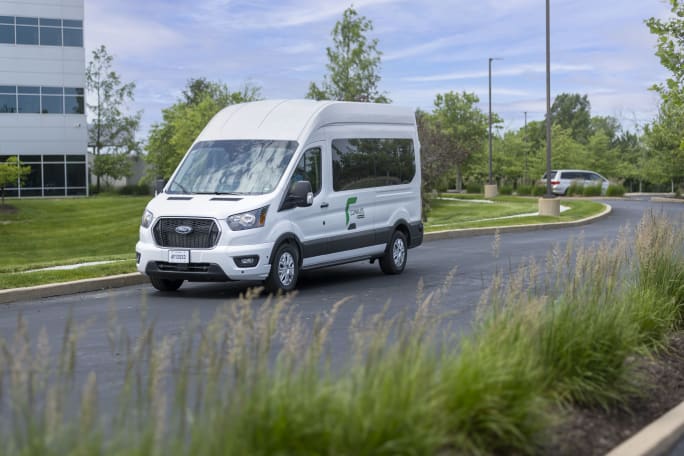
By collaborating with businesses in the region, transit agencies can ease the pains of the daily commute for citizens and help business leaders attract and retain top talent by encouraging the adoption of shared mobility services.
Photo: Enterprise
Addressing Growth and Inclusivity in San Diego
From urban traffic centers along the U.S. coasts to the rural manufacturing and industrial centers of the south and Midwest, vanpooling has long helped communities expand service reach, ease congestion, and reach sustainability goals.
In 2018, the San Diego Regional Economic Development Corporation launched its Inclusive Growth Initiative to enhance small-business competitiveness, strengthen its local talent pipeline, and address the affordability crisis of living in the region.
Dr. Bronner’s, maker of the top-selling soap in the U.S. natural marketplace and a top regional employer, introduced a new commuter vanpooling program, designed to align with the EDC’s initiative, which would help the company reduce its Scope 3 emissions, while supporting employees amid San Diego’s rising cost of living.
Through vanpooling, Dr. Bronner’s estimates it can reduce emissions by over 10 metric tons per year, versus individual driving, through just one vehicle shared among five employees, commuting 25 miles roundtrip, daily — the equivalent to planting and growing 150 trees for 10 years.
To accomplish its goals, Dr. Bronner’s created a program that provides flexibility and subsidies that enable employees to pay just $50 per month — a cost savings compared to the average expense of $285 on solo driving, based on IRS standard mileage rates — while focusing on first-shift production employees with consistent shift times and clear needs for reliable commuting solutions.
Regional Solutions Demand Shared Mobility Strategies
As employers continue to seek talent across sprawling regional distances, programs like Dr. Bronner’s serve as an example of the ways companies are increasingly demonstrating purpose through their employee experiences and transportation choices.
As we look to the next five years, transit leaders will be pressed to expand service to support growth, more sustainably, with limited resources. However, we cannot rebuild and attract riders by solely relying on past systems.
Faced with the pressure to serve more commuters, in further distances, under tight resources, a multimodal approach incorporating shared mobility solutions like vanpooling can help communities meet today’s immediate needs while building a better system tomorrow.
Working together, rural, suburban, and urban leaders can expand reach, ease congestion, and support economic opportunity with safe, reliable, and convenient transportation services that benefit us all.
About the Author: Sirus Karimi is VP, Commute, with Enterprise
Quick Answers
A multimodal approach in regional transit strategies involves integrating various modes of transportation, such as buses, trains, bicycles, and walking, to offer a comprehensive and flexible transit solution.
*Summarized by AI
More New Mobility

From Hardware to Digital Partner: Luminator Charts Its Next Chapter
CEO Magnus Friberg discusses Luminator’s shift toward becoming a digital partner, the growing importance of software and interoperability, and how AI can help agencies improve operations and passenger experience.
Read More →
Biz Briefs: Alstom Lands Canadian Contract, LYT to Supply California TSP, and More
In METRO's latest installment, we take a look at recent news from Complete Coach Works, Beep, FlixBus, and more partnerships making headlines across the transportation sector.
Read More →
CharterUP’s Armir Harris on Technology, AI, and the Future of Group Mobility
In a recent episode of METROspectives, CharterUP Founder/CEO Armir Harris discussed the company’s evolution from an online charter bus marketplace into a technology platform supporting public- and private-sector mobility and much more.
Read More →
Jacksonville’s NAVI Project Charts a New Course for Autonomous Public Transportation
Through its NAVI program, JTA is showing how autonomous vehicles, intelligent infrastructure, and coordinated operations can work together to deliver everyday public transportation.
Read More →
Biz Briefs: Luminator Marks Milestone and More
From manufacturers and suppliers to transit agencies and motorcoach operators, these updates offer a snapshot of the projects, partnerships and business moves driving the industry forward.
Read More →
New Tricks for Old Bureaucracies: Joshua Schank on Making Transit Innovation Stick
Former LA Metro Chief Innovation Officer Joshua Schank discusses why good ideas aren't enough, how transit agencies can overcome resistance to change, and why today's challenges demand more innovation.
Read More →
How DART's GoPass Is Redefining Regional Mobility
Serving 14 transit agencies, GoPass simplifies multimodal travel by allowing riders to plan, pay for, and manage an entire trip through one app.
Read More →
Biz Briefs: OCTA Taps Clean Energy for Hydrogen Station, Stadler to Supply Via Rail Vehicles, and More
From manufacturers and suppliers to transit agencies and motorcoach operators, these updates offer a snapshot of the projects, partnerships and business moves driving the industry forward.
Read More →CharterUP Expands Into New Mobility and Autonomous Transportation
Vice President of New Mobility Stephen Joos discusses how CharterUP is leveraging its nationwide transportation network, technology platform, and autonomous vehicle partnerships to expand into workforce mobility, campus shuttles, and transit solutions.
Read More →
METRO Magazine Announces 2026 Innovative Solutions Awards Winners
Projects Recognized for Advancing Mobility Through Technology, Accessibility, Workforce Innovation, and Operational Excellence
Read More →