



Study: Low-income adults worry about transportation costs
Report also found that low-income individuals who receive transportation subsidies (such as free transit passes) have the fewest concerns, but they still report anxiety about maintaining their subsidies.

Most low-income households are concerned about transportation costs, even if they don't own a car, according to a new study of travel behavior and transportation expeditures of low-income adults.
In the study, released by The Mineta Transportation Institute, principal investigator Asha Weinstein Agrawal, Ph.D., asked how people with limited resources pay for cars, public transit and other means of travel, and how their transportation behavior changes during periods of falling employment and rising fuel prices. She and her research team conducted in-depth interviews with 73 adults to examine how rising transportation costs impact low-income families.
"The interviews examine four general areas," said Agrawal. "These include travel behavior and transportation spending patterns; the costs and benefits of alternative travel modes; cost management strategies; and opinions about the effect of changing transportation prices on travel behavior."
Several findings emerged. First, most low-income households are concerned about transportation costs, even if they don't own cars. Low-income individuals who receive transportation subsidies (such as free transit passes) have the fewest concerns, but they still report anxiety about maintaining their subsidies. Also, low-income individuals actively and strategically manage household resources to survive on very limited means and to respond to changes in income or transportation costs.
Further, in making mode-choice decisions, low-income travelers — like higher-income travelers — carefully evaluate the costs of travel (time and out-of-pocket expenses) against the benefits of each mode. Some low-income individuals in the sample also were willing to endure higher transportation expenditures — such as the costs of auto ownership or congestion tolls — if they believed that they currently benefit or would potentially benefit from these increased expenses.
Lastly, low-income households find ways to cover their transportation expenditures. However, many of these strategies had negative effects on lifestyles, such as greater stress and anxiety, reduced expenditures on necessities such as food, inability to participate in discretionary activities, and spatial entrapment in the neighborhood around their homes.
Fundamentally, the best way to address this transportation burden is through poverty-alleviation programs, the report noted, but many of these programs — such as broad income transfers — are expensive and politically unpopular. Therefore, the researchers concluded, it is also important to support transportation-related policies that help low-income households ease their transportation expenditure burden.
"On the basis of our findings," said Agrawal, "we generated three transportation-related recommendations. First, transportation policies can mitigate the hardships of poverty and the high costs of transportation. In general, low-income families would benefit from policies that reduce their transportation cost burden without also limiting their mobility."
Second, she said, research on transportation expenditures by poor people is underdeveloped, primarily because of inadequate data. Better data are needed to determine accurately the transportation expenditures and incomes of low-income households, and the data should be linked to residential neighborhood location. The expenditure data also must be disaggregated into more detailed expenditure categories that are potentially relevant to transportation policy.
She concluded by noting, "Evaluations of low-income transportation burdens cannot focus solely on costs. Complete analyses should consider the time and money costs of transportation, as well as the benefits from different types of travel. Existing research tends to emphasize the costs without integrating an assessment of the variable benefits of accessibility."
The full report "Getting Around When You're Just Getting By: The Travel Behavior and Transportation Expenditures of Low-Income Adults," can be downloaded here.
More Paratransit
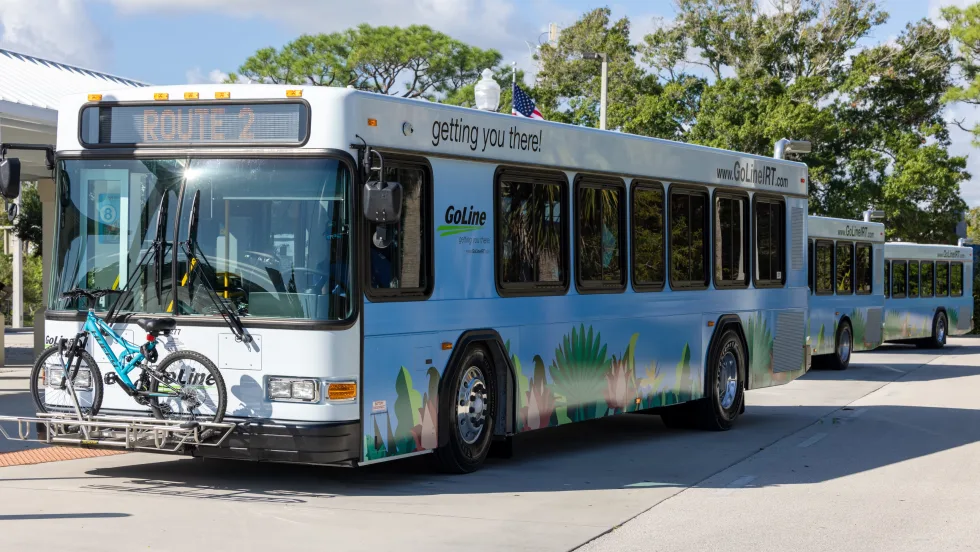
Indian River Transit’s Community-Focused Approach Earns National Recognition
Named APTA’s 2026 Outstanding Public Transportation System in its size category, Florida’s Indian River County transit system continues to grow ridership through fare-free service and a focus on evolving community needs.
Read More →
Everett Transit, Community Transit Outline Consolidation Agreement
The proposed agreement calls for a 50% increase in bus service in Everett, a new microtransit zone, continued paratransit service, and the transfer of Everett Transit operations to Community Transit.
Read More →
Driving Smarter Paratransit
John Hanlon shares how AlphaRoute is leveraging AI-powered technology to help paratransit providers optimize operations, support frontline staff, and enhance the rider experience.
Read More →
People Movement: Dan Dipert Coaches Adds Third-Generation Leader, Keolis Names New Valley Metro VP/GM, and More
In this edition, we also cover recent appointments and announcements at the Wabtec, SilverRide, HNTB, and more, showcasing the individuals helping to shape the future of transportation.
Read More →
Biz Briefs: RIPTA Unveils New Frontrunners, Clevland RTA Adds New Siemens, and More
In METRO's latest installment, we take a look at recent news from Siemens, Prevost, Dodge, and more partnerships making headlines across the transportation sector.
Read More →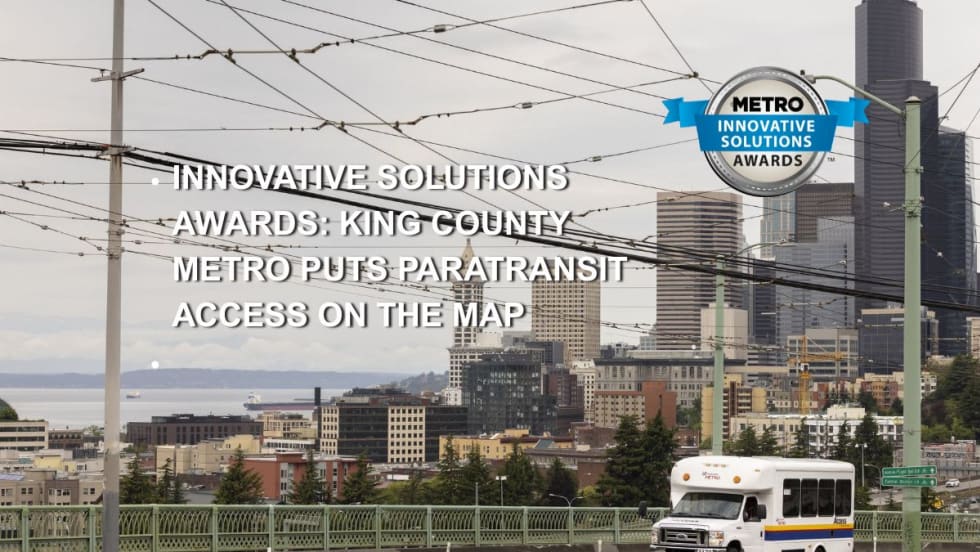
King County Metro Makes ADA Paratransit Easier to Navigate
METRO's Innovative Solutions Award winner replaces complex service-area descriptions with an accessible, interactive map that puts paratransit information directly in customers’ hands.
Read More →
Jacksonville’s NAVI Project Charts a New Course for Autonomous Public Transportation
Through its NAVI program, JTA is showing how autonomous vehicles, intelligent infrastructure, and coordinated operations can work together to deliver everyday public transportation.
Read More →
Driving Smarter Paratransit
John Hanlon shares how AlphaRoute is leveraging AI-powered technology to help paratransit providers optimize operations, support frontline staff, and enhance the rider experience.
Read More →
METRO Magazine Announces 2026 Innovative Solutions Awards Winners
Projects Recognized for Advancing Mobility Through Technology, Accessibility, Workforce Innovation, and Operational Excellence
Read More →
Biz Briefs: STV teams with Amtrak, Motorcoach Operators Boost Fleet and Land Contracts, and More
From manufacturers and suppliers to transit agencies and motorcoach operators, these updates offer a snapshot of the projects, partnerships and business moves driving the industry forward.
Read More →