



Study: Travelers’ use of personal electronic devices rising sharply
The study — the fifth in an annual series by DePaul University’s Chaddick Institute for Metropolitan Development — collected data from 7,034 passengers on 106 bus, train and plane departures during February to June 2014 and made comparisons with a similar sample from 2013.

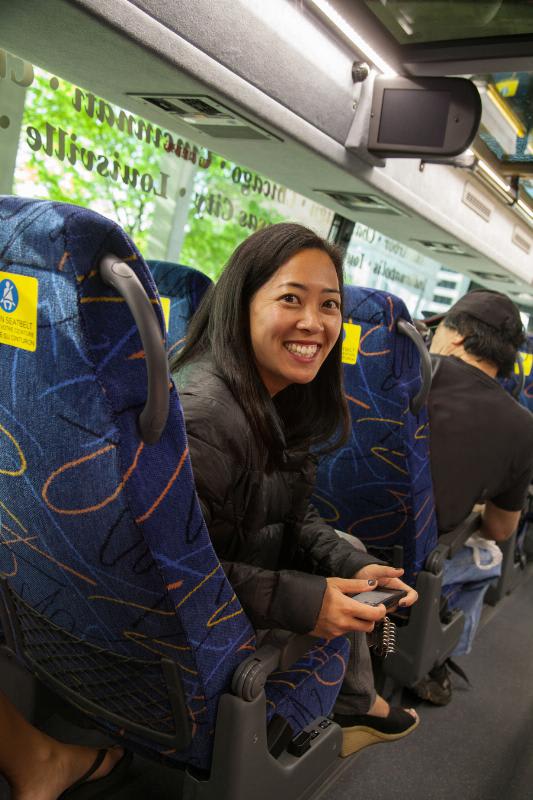
A new study by DePaul University’s Chaddick Institute for Metropolitan Development reveals the use of personal electronic devices on city-to-city trips continues to rise sharply, particularly on low-cost express bus services like megabus.com.
“As opposed to airline customers who cannot surf the Internet, email, text or place phone calls during takeoff or landing, which can consume more than 40 minutes of flight time, customers traveling by an express bus service like megabus.com are able to use their devices from the moment the bus arrives to the time they depart at their destination,” said Joseph Schwieterman, director of the Chaddick Institute and co-author of the study. “Travelers want to stay in control and that means staying digitally connected when and where they want.”
The study — the fifth in an annual series— collected data from 7,034 passengers on 106 bus, train and plane departures during February to June 2014 and made comparisons with a similar sample from 2013. The study found that the use of personal devices among passengers remains on an upward trajectory, noting the following:
“Staying connected with friends, family and co-workers while on the bus has been a priority for megabus.com since we began service in 2006,” said Mike Alvich, megabus.com’s VP, marketing and public relations. “We understand the importance for customers of staying connected while traveling and continue to invest our efforts into improving connectivity.”
“In the past year, megabus.com has nearly doubled the amount of customers using Wi-Fi onboard,” added Alvich. “Data shows that customers surf an average of 90 minutes per trip, using 15 MB per device use despite often traveling through remote areas away from cell towers, which reduces potential bandwidth. Power outlets at every seat are another convenient way for customers to stay connected on the road.”
The DePaul University study, entitled “The Personal Tech Tidal Wave: The Rising Use of Electronic Devices on Intercity Buses, Planes, & Trains: 2014 Update (July 2, 2014),” can be viewed here.
“As travelers feel an ever-rising need to stay connected, technology advances appear poised to continue to transform the way Americans move from place to place,” noted Schwieterman. “The rising use of personal technology will continue to change the way we travel.”
More Motorcoach

METRO Opens Submissions for 2026 Motorcoach Awards
Nominations are now being accepted for METRO Magazine’s Operator of the Year and Innovative Operator of the Year awards.
Read More →
Biz Briefs: Alstom Lands Canadian Contract, LYT to Supply California TSP, and More
In METRO's latest installment, we take a look at recent news from Complete Coach Works, Beep, FlixBus, and more partnerships making headlines across the transportation sector.
Read More →
Biz Briefs: RIPTA Unveils New Frontrunners, Clevland RTA Adds New Siemens, and More
In METRO's latest installment, we take a look at recent news from Siemens, Prevost, Dodge, and more partnerships making headlines across the transportation sector.
Read More →
People Movement: Holly Arnold Joins Transdev and More
In this edition, we also cover recent appointments and announcements at Pace, CamTran, MCI, and more, showcasing the individuals helping to shape the future of transportation.
Read More →
ABA Report: Motorcoach Travel Generates $161.6B Economic Impact
The 2025 analysis finds motorcoach travel supported nearly 900,000 jobs and generated $28 billion in federal, state, and local taxes.
Read More →
CharterUP’s Armir Harris on Technology, AI, and the Future of Group Mobility
In a recent episode of METROspectives, CharterUP Founder/CEO Armir Harris discussed the company’s evolution from an online charter bus marketplace into a technology platform supporting public- and private-sector mobility and much more.
Read More →
People Movement: ABC Names John Walsh as Chief Commercial Officer
In this edition, METRO also covers recent appointments and announcements at the DART, STV, and more, showcasing the individuals helping to shape the future of transportation.
Read More →
From Surviving to Thriving: Building Stronger Transportation Organizations
Bus Business Consultants founder Brian Dickson shares lessons on leadership, organizational health, and creating options for long-term success in a changing transportation industry.
Read More →
Biz Briefs: Luminator Marks Milestone and More
From manufacturers and suppliers to transit agencies and motorcoach operators, these updates offer a snapshot of the projects, partnerships and business moves driving the industry forward.
Read More →
ABAF Study Reveals Growing Insurance Crisis for Motorcoach Operators
Preliminary findings show 98% of operators faced premium increases over the past five years, while shrinking insurer participation is putting added pressure on businesses and customers.
Read More →