




RELATED: How transit agencies can prepare for a driverless world
Texas A&M adding tech to remotely control autonomous shuttle
Can control vehicle in the event of obstructions, challenging road conditions, sensor malfunction, and difficult or hazardous driving.
September 9, 2019
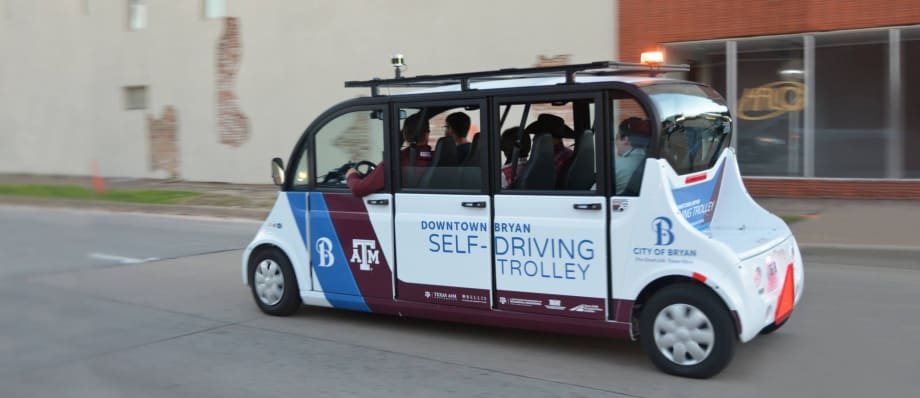
New teleoperation technology enables the control of Texas A&M's autonomous shuttle in the event of of obstructions, challenging road conditions, sensor malfunction, and difficult or hazardous driving.
Texas A&M
2 min to read
New teleoperation technology enables the control of Texas A&M's autonomous shuttle in the event of of obstructions, challenging road conditions, sensor malfunction, and difficult or hazardous driving.
Texas A&M
Texas A&M University is adding technology, which allows remote-controlled guidance of its autonomous shuttles in the event there is a problem. This is the first commercial deployment on public roads for the teleoperation system developed by Portland, Ore.-based company, Designated Driver.
In the first phase of the deployment, Designated Driver's Remote Assistance will be integrated into the Texas A&M shuttle autonomy system to authorize the shuttle to proceed at four-way intersections and stops. Over time, additional functionality will be added, including the ability to provide the shuttle's autonomy system with alternative routes, when needed, enabling it to safely navigate around unanticipated obstacles.
"Among our most important observations over the past six months, we found that four-way intersections and stops were the most common scenarios where our safety driver had to intervene. Designated Driver's technology provides both remote driving and remote assistance — ideal for easily and safely guiding a vehicle through an intersection," said Dr. Srikanth Saripalli, an associate professor in the J. Mike Walker '66 Department of Mechanical Engineering at Texas A&M, who has overseen the shuttle project since its inception in October 2018.
Enabling remote control of vehicles in the event of obstructions, challenging road conditions and sensor malfunction or where operation is difficult or hazardous, Designated Driver offers both remote-driving and remote-assistance models for teleoperation. With remote driving, the teleoperator fully takes charge of the car, using the cameras and sensors in the vehicle to maneuver it. However, in most real-world scenarios, the autonomy system is fully functional but simply unable to determine the safest path forward. In these situations — such as at the stops and intersections encountered by the Texas A&M autonomy system — Designated Driver provides remote-assistance technology.
While Designated Driver technology will eventually replace the safety driver, the shuttles will continue to include a safety navigator who will provide support and educate the passengers on the technology. The shuttles will be controlled and monitored by a dedicated teleoperations center at Texas A&M.
More Security and Safety

Public Transit Conference Returning to GFX in 2027, Call for Papers Now Open
The Call for Papers is now open, allowing transit agency professionals and industry experts to help shape the PTC educational program by submitting session ideas for consideration.
Read More →
Safe Transit Act Proposes New Security Requirements for Federal Transit Funding
Proposed legislation would link federal transit dollars to safety measures while requiring security investments, onboard cameras, and new fare collection standards.
Read More →
FTA Ends Direct Oversight of MBTA Safety Actions
The federal agency closed its remaining special directive to the Massachusetts Department of Public Utilities following a safety review that began in 2022.
Read More →
Transit Agencies Highlight Safety Gains at National Summit
Leaders from 15 major transit systems shared crime-reduction results and safety initiatives while discussing the role of continued federal support.
Read More →
DART Launches Major Security, Fare Enforcement Initiative
The 90-day demonstration will deploy coordinated security teams at five light rail stations while testing controlled access and gathering data to guide future investments.
Read More →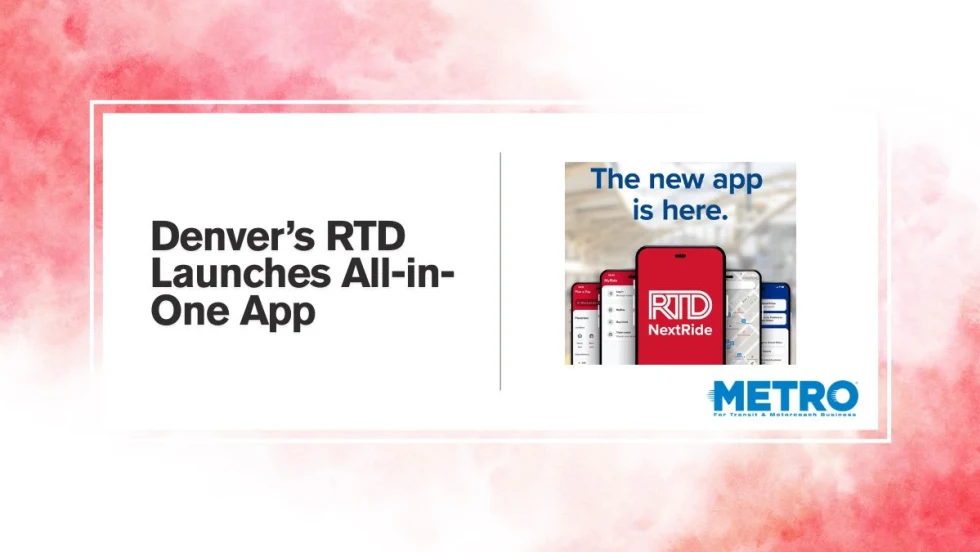
RTD Launches NextRide App to Consolidate Trip Planning, Fares, Security Reporting
The app expands on RTD’s existing NextRide web application and allows customers to view real-time vehicle locations and service alerts, purchase and store digital fares, and access customer support.
Read More →
TAPTCO Updates OSHA Compliance Training for Transit Maintenance Operations
The revamped program addresses 26 OSHA standards for maintenance facilities, with TAPTCO pointing to training, documentation, and everyday shop hazards as continuing challenges for transit operations.
Read More →
FRA Announces $5.3B in Rail Investments, Including $2B for Amtrak
Funding will support grade-crossing improvements, infrastructure upgrades, and new Amtrak equipment in 23 states.
Read More →
Chicago, Maryland Expand Non-Law-Enforcement Safety, Rider Support
The CTA and MTA are launching new programs aimed at de-escalation, crisis response, rider assistance, and greater transparency.
Read More →
LA Metro, City of West Hollywood, and Partners Advance Smarter Bus Lane Enforcement
The award-winning partnership combines AI-powered detection with human oversight to improve bus reliability, accessibility, and enforcement efficiency.
Read More →