




RELATED: How to pick the right sustainability ratings for agency
Transit's top 2017 sustainability achievers recognized by APTA
Amtrak, a Gold Level achiever, reduced electrical consumption of facilities, adopted green building codes, and expanded connectivity options for customers biking to and from stations.
September 12, 2017

4 min to read
The American Public Transportation Association (APTA) recognized eight of its member organizations for continued achievements in sustainability.
Based on specific measurable achievements, organizations are given Platinum, Gold, Silver, and Bronze Level recognition.
Amtrak (Washington, D.C.) and the TRC Companies (Lowell, Mass.) are this year’s recipients of Gold Level recognition. The four Silver Level recipients are Jacksonville Transportation Authority (Jacksonville, Fla.), Regional Transportation Commission of Washoe County (Reno, Nev.), HDR (Omaha, Neb.), and Louis Berger (Washington, D.C.). The two Bronze Level recipients are Transit Authority of River City (Louisville, Ky.) and Wendel (Williamsville, Ky.).
Below are some examples of the sustainable accomplishments that this year’s recipients have achieved.
GOLD Level – Amtrak – Washington, D.C.
Amtrak realized reductions in electrical consumption at facilities through energy efficiency lighting projects, automated building controls, and facility-based energy plans. Sustainability initiatives include adopting green building codes and standards such as the International Green Construction Code and obtaining LEED certifications for stations. The corporation implemented a Waste Minimization Pilot Program at one of its facilities to help Amtrak replicate findings across all facilities towards a waste reduction goal of 20% by 2020. Amtrak has expanded connectivity options for customers to travel to and from the stations on their bikes with equipment upgrades on a growing number of services.
GOLD Level – TRC Companies – Lowell, Mass.
Against baselines set in 2014, TRC achieved a 16% reduction in electricity usage per employee; 2% reduction in natural gas usage per employee; 9% reduction in Scope 1 and 2 emissions, per employee; 19% reduction in paper usage from FY15 to FY16, per dollar of revenue; and 95% of offices recycling at least one waste stream.
The company implemented a Health and Safety Management System aligned with OHSAS 18001, a corporate-wide Sustainability Coordinator Network, and a corporate-wide community engagement initiative centered on Earth Day. Additionally, TRC’s services to the public transit industry have reduced greenhouse gases, minimized water use, developed green construction policies, advanced environmental management systems, and identified innovative energy efficiency opportunities.
SILVER Level – Jacksonville Transportation Authority (JTA) – Jacksonville, Fla.
JTA invested in LED lighting, helping the agency realize reductions of energy use by 13.4% at facilities. The agency also has installed bioremediating parts washers to detoxify runoff prior to disposal, helping protect the ecosystem surrounding the city. Additionally, the agency installed electric vehicle charging stations inside its public parking garages, encouraging more sustainable modes of transportation.
SILVER Level – Regional Transportation Commission (RTC) of Washoe County – Reno, Nev.
In 2014, the RTC replaced four older model diesel buses with fully electric model buses and has plans to add up to 15 more. RTC also constructed two LEED certified major transit stations in downtown Reno and Sparks, Nev., which include low-flow water infrastructure, energy efficient lighting, and a solar PV array. Additionally, the RTC is continuing to work to retrofit existing buildings with more energy efficient LED lighting, solar arrays, and low-flow water fixtures. The combination of all RTC efforts resulted in a 32.3% reduction in facility energy use per Unlinked Passenger Trip from 2010 to 2016.
SILVER Level – HDR – Omaha, Neb.
The company, which has a comprehensive Sustainability Policy and Procedures document and a Waste Prevention and Recycling Standard, demonstrated adherence to APTA’s core sustainability principles at the company’s headquarters and North American office locations. With more than 750 sustainability professionals — 525 LEED Aps, 215 ENV SPs, 12 Greenroads STPs – HDR currently has 135 LEED certified projects, eight Envision projects, and one Greenroads pilot project in its portfolio.
SILVER Level – Louis Berger – Washington, D.C.
Louis Berger enhanced its services with the certification of more than 130 Envision Sustainability Professionals (ENV SPs). Louis Berger regularly engages employees around sustainability through initiatives such as the Reduce Your Foodprint office competition, which challenged employees to take simple actions to reduce the impact of their food choices. The company also partnered with Direct Energy Solar to offer employees a discount on the purchase of a residential solar system.
BRONZE Level – Transit Authority of River City – Louisville, Ky.
At Louisville’s historic Union Station, TARC invested in significant energy efficiency improvements that resulted in a 35% reduction of energy consumption. It also built a LEED Gold-certified training center featuring a graywater system for non-potable uses, a green roof, and 4kW solar PV array on the facility. TARC collaborates with many organizational partners to provide free or greatly reduced transportation to employment and educational programs. The agency is the first in the mid-west to introduce electric battery bus technology to its community.
BRONZE Level – Wendel – Williamsville, N.Y.
As part of Wendel’s 2020 Strategic Plan, a Stewards of Environment leadership group has been established to help drive forward the company’s sustainability goals. The company established metrics to measure environmental, social, and economic impacts for both internal operations as well as project development. Wendel has achieved a reduction in energy and water consumption, greenhouse gas emissions, and increased the percent of material being diverted from landfills.
More Technology

ETA CEO John Maglio on Transit Technology, Innovation, and Building Agency Trust
ETA founder and CEO John Maglio explores the evolution of transit technology, the importance of reliable systems, and how stronger partnerships can help agencies improve operations and the passenger experience.
Read More →
Lextran, Via Team for On Demand, HDR to Work on Twin Cities BRT, and More
In METRO's latest installment, we also take a look at recent news from Keolis, Complete Coach Works, Anchor Transportation, and more partnerships making headlines across the transportation sector.
Read More →
Caltrain’s Electrification Drives a New Era of Ridership Growth
The railroad’s shift to electric service has brought more frequent trains, stronger customer satisfaction, and increased ridership, earning it APTA’s Outstanding Public Transportation System award.
Read More →
Video Surveillance in Public Transit: What Riders Really Think
As video surveillance gains public acceptance, new research from Axis Communications reveals what transit riders expect from agencies when it comes to safety, privacy, and AI.
Read More →
New York MTA Launches Historic $1.9B Signal, Track Modernization Project
Funded in part by congestion pricing revenue, the project will replace nearly century-old signals along the A and C lines in Brooklyn and Queens.
Read More →
Biz Briefs: New Electric Offering from Alexander Dennis/Volvo, Transdev in Boston, and More
In METRO's latest installment, we also take a look at recent news from STV, WSP, Prevost, and more partnerships making headlines across the transportation sector.
Read More →
Roman Cornell on ABC Companies’ Evolution and the Future of Passenger Transportation
The company’s CEO discusses carrying forward a third-generation family legacy, ABC’s continued evolution in passenger transportation, support for increasingly complex fleets, and how technology and continued investment could help operators improve uptime.
Read More →
ETA CEO John Maglio on Transit Technology, Innovation, and Building Agency Trust
ETA founder and CEO John Maglio explores the evolution of transit technology, the importance of reliable systems, and how stronger partnerships can help agencies improve operations and the passenger experience.
Read More →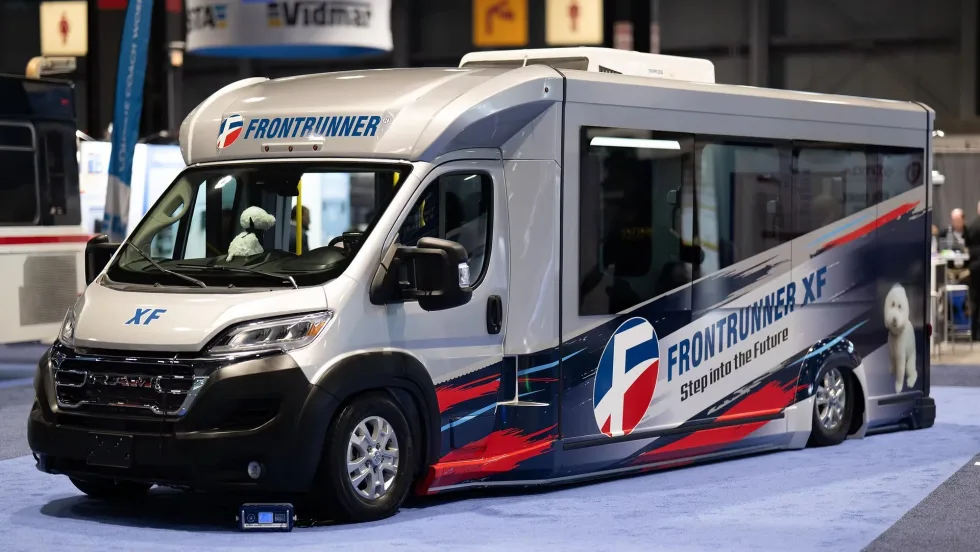
Frontrunner Bus Group Introduces XF Low-Floor Bus with Enhanced Accessibility
The new mid-sized bus features a full flat-floor design, eight-inch curbside step-in height, and zero-entry rear ramp to improve passenger access and operational flexibility.
Read More →
Building a Flexible Path to Transit Electrification with BAE's John Hroncich
John Hroncich discusses BAE Systems’ modular and scalable approach, lessons learned from decades of real-world operations, and how agencies can identify electrification strategies that fit their fleets.
Read More →