



TriMet puts audible pedestrian warning system on hold
The system, installed on 10 buses, was activating the announcement either too soon or too late in the course of making a turn, but did activate at other times, such as when the bus was making a lane change. The agency began testing the system on March 1.

After nearly three months of testing an audible pedestrian warning system on 10 buses, TriMet on Friday stopped the test because the announcement didn't activate at the appropriate time, — either too soon or too late in the turn — but did activate at other times, such as when the bus was making a lane change.
The external announcement "Pedestrians, bus is turning" was in both English and Spanish and was triggered by a full rotation of the steering wheel, which caused the announcement to be too late into the turn.
TriMet also tested having the announcement trigger at a half rotation of the steering wheel to test if it provided earlier warning. That activated the announcement too early, as well as during lane changes.
Review of an audible warning device was suggested as part of the comprehensive safety review initiated following last April's fatal bus crash. TriMet began the test on March 1, and after receiving feedback from operators, riders and TriMet safety and training staff, it was determined that the technology has not advanced enough to make it an effective tool to help alert pedestrians and people riding bikes that a bus is turning.
The system was not intended to change TriMet's legal and professional obligation to operate safely, be alert and scan the intersection before turning.
As the technology advances in this area, TriMet would be interested in testing an audible system in the future.
More Bus
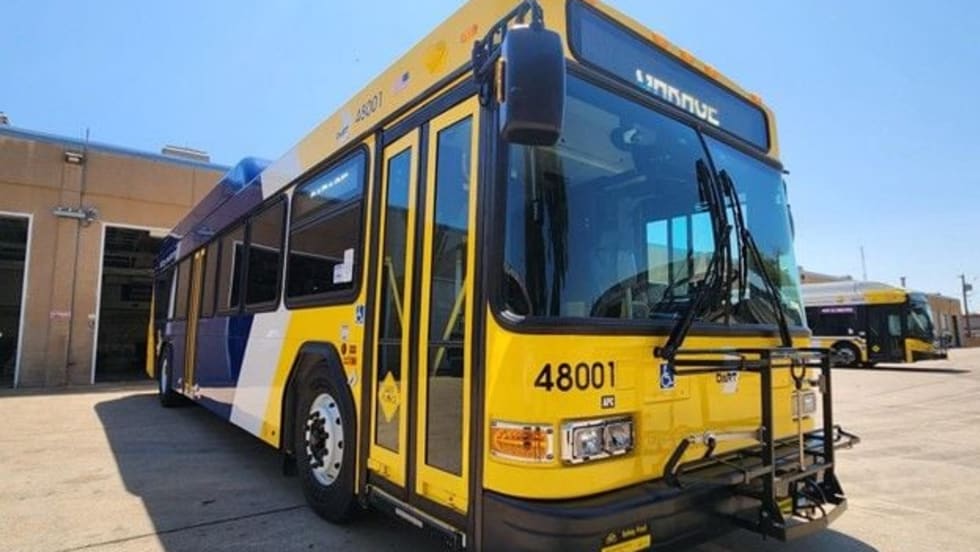
DART Customer Satisfaction Reaches Six-Year High
Overall satisfaction rose to 74.9%, while the agency’s Net Promoter Score reached a record 33.7.
Read More →
How DART's GoPass Is Redefining Regional Mobility
Serving 14 transit agencies, GoPass simplifies multimodal travel by allowing riders to plan, pay for, and manage an entire trip through one app.
Read More →
Biz Briefs: OCTA Taps Clean Energy for Hydrogen Station, Stadler to Supply Via Rail Vehicles, and More
From manufacturers and suppliers to transit agencies and motorcoach operators, these updates offer a snapshot of the projects, partnerships and business moves driving the industry forward.
Read More →
METRO Magazine Announces 2026 Innovative Solutions Awards Winners
Projects Recognized for Advancing Mobility Through Technology, Accessibility, Workforce Innovation, and Operational Excellence
Read More →
Biz Briefs: STV teams with Amtrak, Motorcoach Operators Boost Fleet and Land Contracts, and More
From manufacturers and suppliers to transit agencies and motorcoach operators, these updates offer a snapshot of the projects, partnerships and business moves driving the industry forward.
Read More →
LA Metro Marks Banner Year, Sets Ambitious Goals for New Fiscal Year
Incoming LA Metro Board Chair and Los Angeles Mayor Karen Bass joined outgoing Board Chair Fernando Dutra and LA Metro CEO Stephanie Wiggins to review accomplishments from fiscal year 2026, which included the opening of new rail extensions, advancement of major transit projects, expanded safety programs, and new rider amenities.
Read More →
DART Taps Nathaniel P. Ford Sr. as Next President/CEO
Since 2012, Ford has served as the CEO of the Jacksonville Transportation Authority
Read More →
AC Transit’s Cecil Blandon on Building the Next Generation of Transit Maintenance Leaders
The agency’s maintenance chief discusses leadership, workforce development, zero-emission technology, and preparing technicians for the future of public transportation.
Read More →
Building the Next Generation of Transit Technology
In this edition of METROspectives, Luminator CEO Magnus Friberg discusses the company's transformation, the growing role of AI and software, and what's next for transit technology.
Read More →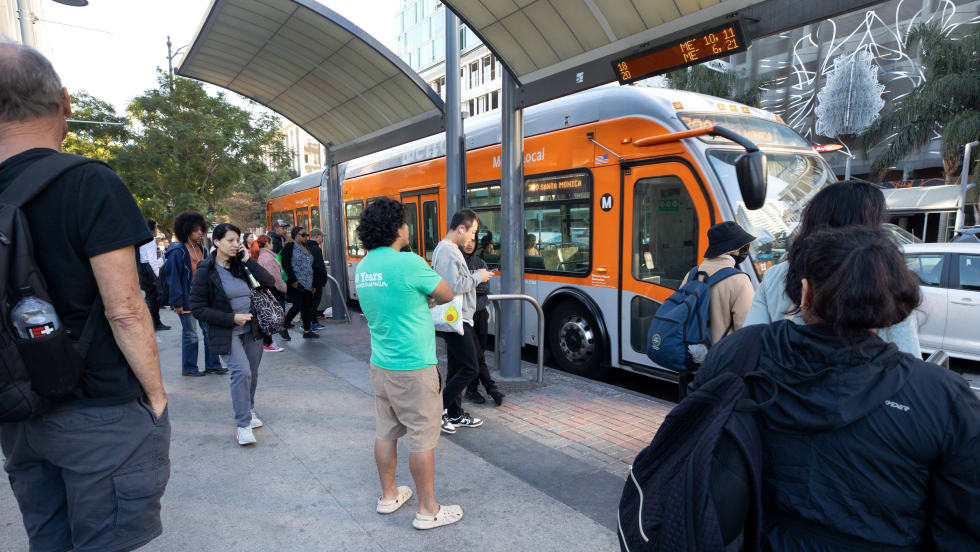
June LA Metro Ridership Surges 2 Million Year Over Year
Total June ridership increased for both weekdays and weekends. Weekday ridership was 953,820, which grew 8.4% from June 2025; Saturdays increased nearly 13% year-over-year to 708,826; and Sundays increased 7.7% to 611,534 from June 2025, according to LA Metro.
Read More →