



UT Survey: Holiday travel services
Campus transit operators offer a wide range of additional transit options, ranging from charter bus services to partnerships with Greyhound and Megabus to coordinating with Amtrak for students going home for the holidays. Additionally, one operator extended its late-night demand-response service for students who stay on campus during Thanksgiving and winter breaks.

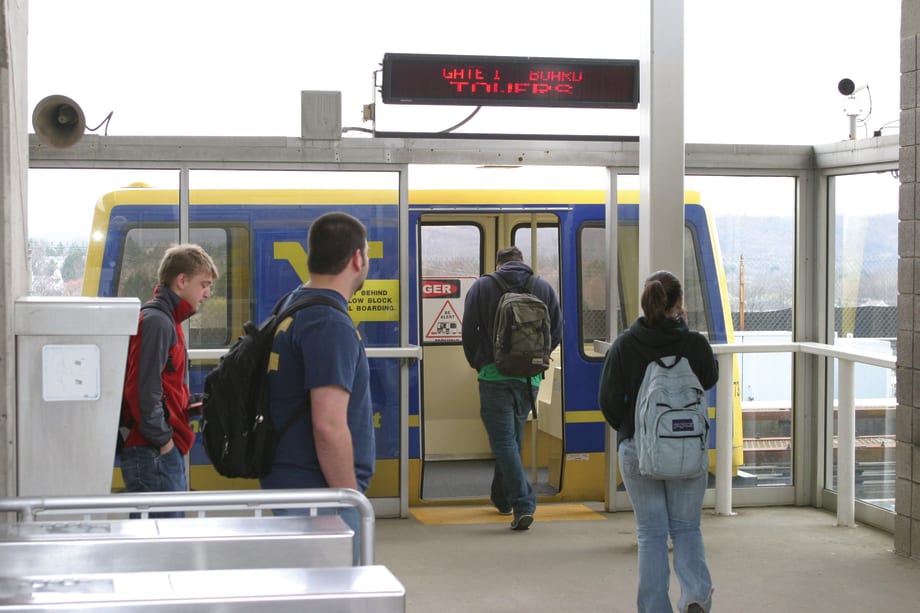
Just around the corner, the winter holidays present special transportation challenges for universities and colleges. We asked university transit operators what additional services they offer for students going home for the holidays. Here are their responses:
“WVU does provide charter bus services for the WVU Parents Club to a variety of destinations along the eastern seaboard for students that live in Pennsylvania, [the] NYC area [and] Maryland. Additionally, WVU coordinates with the local transit provider, Mountain Line on bus services to the Pittsburgh Greyhound and Airport terminals and through Megabus that provides service from Morgantown to Pittsburgh and Washington, D.C. Finally through our online carpool matching system — Zimride — we promote carpools home for the Thanksgiving, Winter Break and Spring Break.”
Hugh Kierig, director, department of transportation and parking
West Virginia University
Morgantown, W.V.
“We have campus shuttles that also take students to the rapid stop at University Circle. We have two [Greater Cleveland] RTA rapid stops near campus: University Circle stop on the south side and then one on the north side of campus. The rapid goes into the airport terminal. Both are within walking distances from residential dorm areas.”
Susan Griffith, senior news and information specialist
Case Western Reserve University
Cleveland
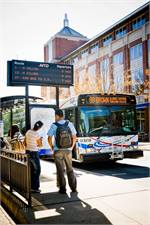
“MTD doesn’t have any special services per se for holiday travel. However, the Amtrak station serving Champaign-Urbana is located at Illinois Terminal, the intermodal center in downtown Champaign owned and operated by MTD. Illinois Terminal is also a departure point for regional bus services including Megabus, Peoria Charter, Lex Express, Greyhound and Burlington Trailways. Illinois Terminal is an important hub for MTD services and is directly served by six routes that come from the [University of Illinois] (UI) campus; the frequency of service from campus to Illinois Terminal is very high. We also have a route, the 27/270 Air Bus, that serves the UI campus and Willard Airport, making it easy for travelers to get from UI to the airport.
MTD increased operation of its SafeRides late-night demand-response service this semester. It is now available for those students who stay on campus during Thanksgiving and winter break; UI has the largest international student body of any public university in the U.S., so there is a large number of students who stick around during breaks and who need this service.”
Jan Kijowski, marketing director
Champaign-Urbana MTD (serves the University of Illinois)
Urbana, Ill.
“We coordinate our holiday service with Amtrak to know exactly how many students have purchased tickets. Many times, at least six or seven extra cars are needed on the train. When we find this out, we are able to add enough extra service to deliver everyone on time. Conversely, we know exactly how many students are on a given train and can have enough buses there to get them from the train station to the campus. We also know exactly when the train will get in, through coordination with Amtrak, and the buses can be used more efficiently as a result. On most holidays, over 70% of the riders on the train also use the bus.”
Jude Kiah, director
Go West Transit (serves Western Illinois University)
Macomb, Ill.
More Bus
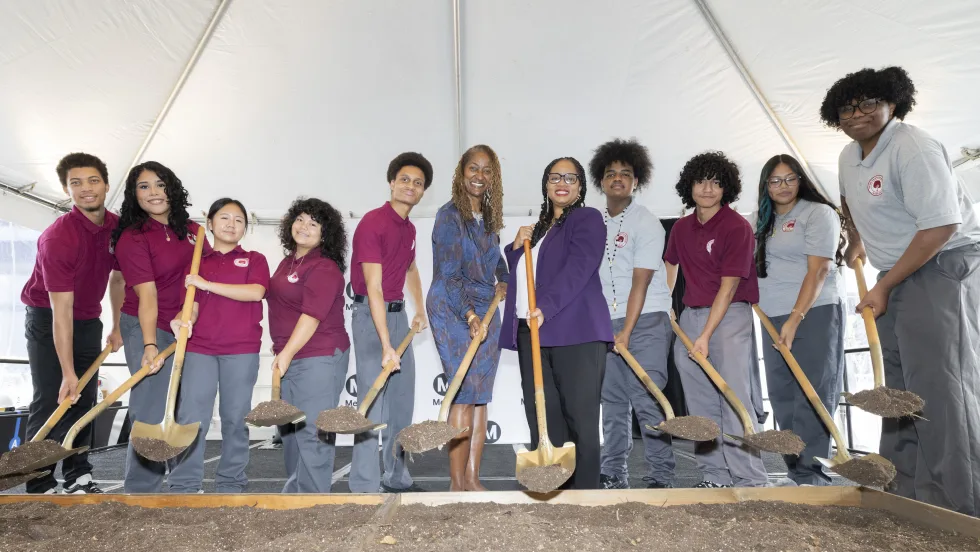
LA Metro Breaks Ground on Vermont BRT Project
The 12.4-mile corridor is projected to serve 66,200 daily riders, reduce travel times by up to 24%, and create the nation's busiest bus rapid transit corridor.
Read More →
Roman Cornell on ABC Companies’ Evolution and the Future of Passenger Transportation
The company’s CEO discusses carrying forward a third-generation family legacy, ABC’s continued evolution in passenger transportation, support for increasingly complex fleets, and how technology and continued investment could help operators improve uptime.
Read More →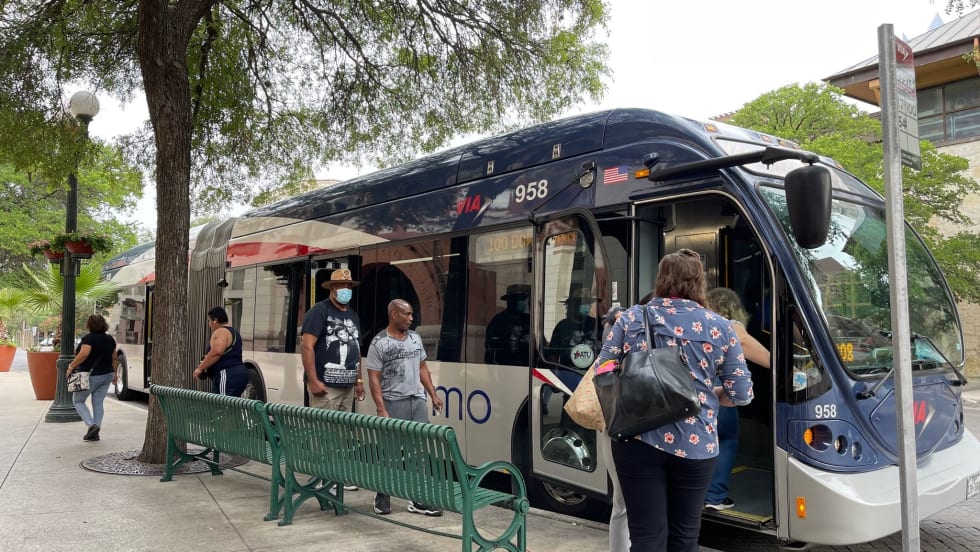
VIA Bus Ridership Grows 10.1% Through August 2026
San Antonio's VIA Metropolitan Transit reported the highest bus ridership growth among major Texas transit systems. Federal Transit Administration data ranked it second among the nation's 50 largest transit systems.
Read More →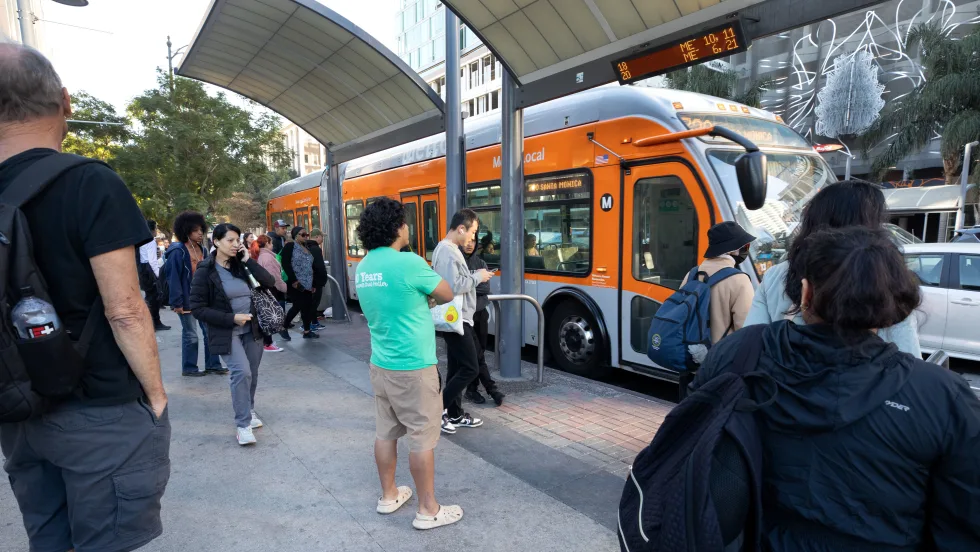
LA Metro September Ridership Climbs 3.9%, Led by Rail Growth
The agency recorded more than 27.2 million boardings, with rail ridership increasing 12.4% year over year and the D Line posting the largest gains.
Read More →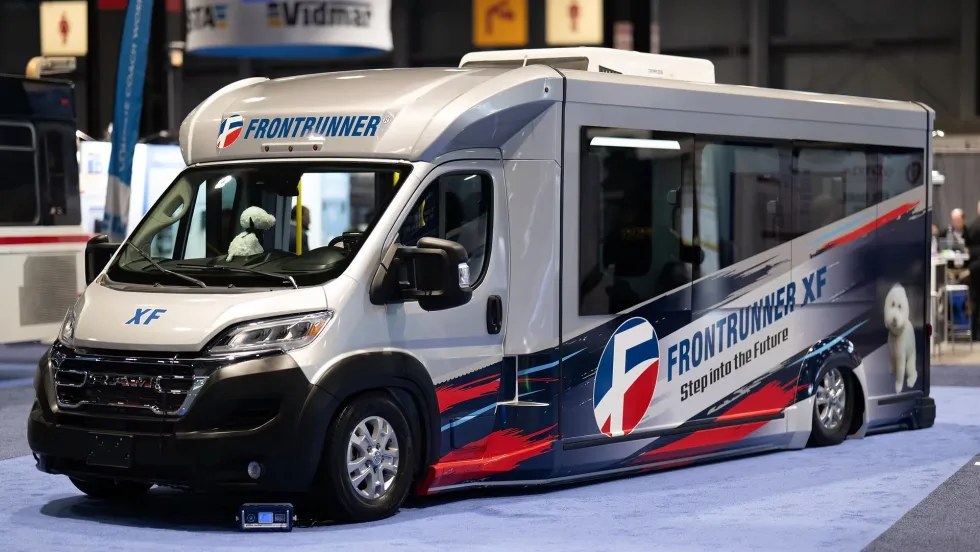
Frontrunner Bus Group Introduces XF Low-Floor Bus with Enhanced Accessibility
The new mid-sized bus features a full flat-floor design, eight-inch curbside step-in height, and zero-entry rear ramp to improve passenger access and operational flexibility.
Read More →
Scenes from APTA TRANSform & EXPO 2026
Transit leaders, manufacturers, and industry professionals gathered in Chicago to explore new technologies, share ideas, and discuss the future of public transportation.
Read More →
More Than a Summer Job: Building the Next Generation of Transit Talent
The Delaware River Port Authority and PATCO have transformed their internship program into a hands-on professional development experience that introduces students to the breadth of transportation careers — and creates a pipeline for future employees.
Read More →
LA Metro Board Awards 220 Battery-Electric Bus Contract to ENC
The contract, which is the largest base award of battery-electric buses by a U.S. transit agency, will be built in Southern California, sustaining good jobs as LA prepares to welcome the world in 2028
Read More →
Public Transit Conference Returning to GFX in 2027, Call for Papers Now Open
The Call for Papers is now open, allowing transit agency professionals and industry experts to help shape the PTC educational program by submitting session ideas for consideration.
Read More →
Indian River Transit’s Community-Focused Approach Earns National Recognition
Named APTA’s 2026 Outstanding Public Transportation System in its size category, Florida’s Indian River County transit system continues to grow ridership through fare-free service and a focus on evolving community needs.
Read More →