



Web Extra: Has your U. transit system employed new green practices?
Operators from Utah, Colorado, Illinois and Virginia weighed in on their conversions to alternative fuel to go greener and reduce noise pollution.

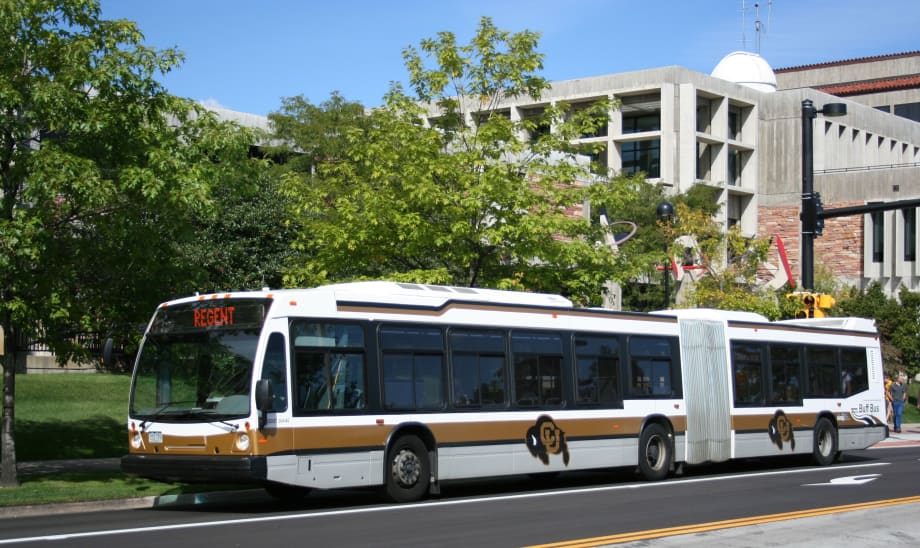
It looks like fueling conversion is the way to go for many university transit systems to not only reduce their carbon footprint but noise pollution as well. We asked operators about any green practices they recently implemented.
Here are their responses:
“One of our biggest accomplishments, in my opinion, is we were one of the first institutions of higher education to convert all of our transit, our bus fleet, to biodiesel, B20. There was another university that started it but we were the first one to do the whole fleet. We have continued the practice from 2003 to present. With our last new bus punches we switched from the traditional hydraulic radiator cooling fans to an electric fan. This change generated an additional 10% in fuel reduction.”
Bryan Flansburg, director of transportation services, Buff Bus
University of Colorado Boulder
Boulder, Colo.
“The electric shuttle is under way…that’s probably a year from now. We are also converting all of our diesel fleet to compressed natural gas. That will significantly lower our carbon footprint. We’re about one-third of the way through it. We basically have to pay for these through parking permits fees and things like that so it takes us a while. We usually buy about two shuttles a year, and we’ve got a fleet of about 28 shuttles. About eight of them are now converted over.”
Alma Allred, director, university community services
University of Utah
Salt Lake City
“MTD has added hybrid diesel-electric 60-foot buses to its fleet providing service to the University of Illinois campus. Now, 25% of the 60-foot fleet are hybrids, and future vehicles purchased will also be hybrids. In addition to saving fuel, hybrids generate lower levels of pollutants and are significantly quieter, reducing noise pollution. MTD will be participating in a Go Green on Green Street event in April to encourage use of public transportation and bicycling.”
Jan Kijowski, marketing director
Champaign-Urbana Mass Transit District
Urbana, Ill.
“Our shuttles have now all been transformed over to propane. We have five university vans and five shuttle buses. We went through the conversion process last summer.”
Natalia Green, director of parking services
University of Richmond, Va.
Richmond, Va.
More Technology

From Hardware to Digital Partner: Luminator Charts Its Next Chapter
CEO Magnus Friberg discusses Luminator’s shift toward becoming a digital partner, the growing importance of software and interoperability, and how AI can help agencies improve operations and passenger experience.
Read More →
Beyond the Checklist: A Structured Approach to Transit Maintenance
Reliability-Centered Maintenance helps transit agencies move beyond routine checklists to focus limited resources on the assets and failures that have the greatest impact on safety, reliability, and service.
Read More →
NJ TRANSIT Advances Bus Technology Upgrades Across Statewide Fleet
More than 1,500 buses now feature upgraded technology designed to improve arrival predictions and provide free Wi-Fi, with deployment expected to reach nearly 2,000 buses by the end of 2026.
Read More →

Building a Flexible Path to Transit Electrification
John Hroncich discusses BAE Systems’ modular and scalable approach, lessons learned from decades of real-world operations, and how agencies can identify electrification strategies that fit their fleets.
Read More →
Biz Briefs: Alstom Lands Canadian Contract, LYT to Supply California TSP, and More
In METRO's latest installment, we take a look at recent news from Complete Coach Works, Beep, FlixBus, and more partnerships making headlines across the transportation sector.
Read More →
From Legacy Silos to Conversational Intelligence
What if transit leaders could ask any operational question and get a trusted answer in seconds? Conversational AI is transforming how agencies use their data.
Read More →
USDOT Announces Rail Vehicle Replacement Grants, Chattanooga AV Shuttle Funding
More than $191 million in federal funding will help three transit agencies replace aging rail vehicles and support a new autonomous shuttle service in Chattanooga.
Read More →
Bus Tech Talk: Keeping Transit Technicians Ahead of the Technology Curve
LA Metro’s Obed Mejia discusses technician training, evolving maintenance technology, fleet replacement, and strategies for getting the most out of today’s transit fleets.
Read More →
Biz Briefs: RIPTA Unveils New Frontrunners, Clevland RTA Adds New Siemens, and More
In METRO's latest installment, we take a look at recent news from Siemens, Prevost, Dodge, and more partnerships making headlines across the transportation sector.
Read More →
Why Simulating Pedestrian Movement Has Become Essential for Modern Rail Stations
Pedestrian microsimulation is helping rail planners identify bottlenecks, test station designs, and prepare complex transit hubs for growing passenger volumes.
Read More →