



WMATA Expands U-Pass Program
Approved as part of WMATA’s Strategic Transformation Plan, the expanded program introduces new pricing and participation options that make it easier for colleges and universities to join and for more students, such as part-time, community college, and graduate students, to benefit from accessible transportation.

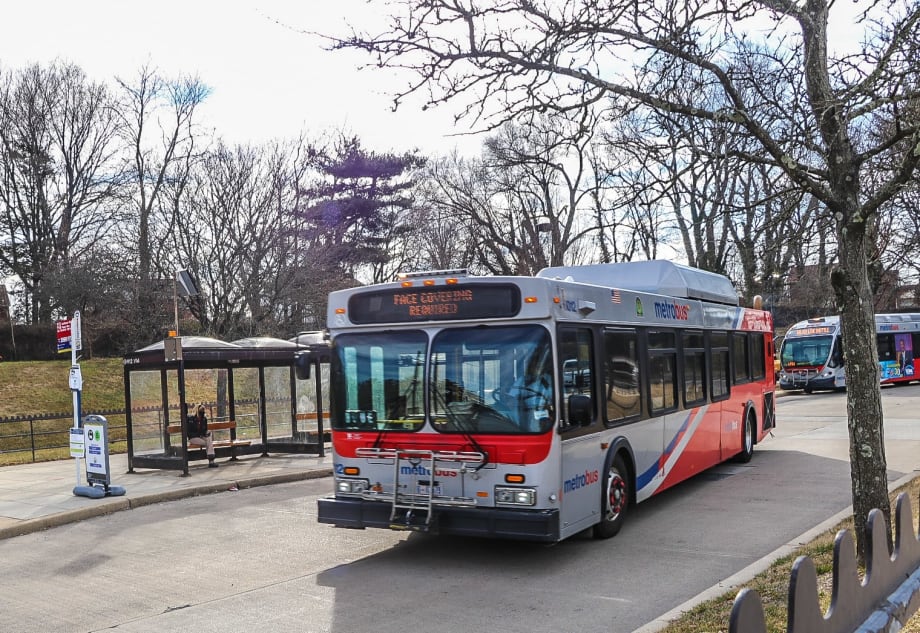
Since launching as a pilot in 2016 with American University, U-Pass has grown into a regional mobility program serving more than 35,000 students and generating roughly 4.6 million trips in fiscal year 2025.
Larry Levine/WMATA
- WMATA has expanded its U-Pass Program as part of its Strategic Transformation Plan.
- The program now offers new pricing and participation options to facilitate college and university involvement.
- The expansion aims to provide accessible transportation benefits to a wider range of students, including part-time, community college, and graduate students.
*Summarized by AI
The Washington Metropolitan Area Transit Authority (WMATA) board voted to approve a major expansion and modernization of the agency’s University Pass (U-Pass) program, an initiative designed to give more college students affordable, unlimited access to transit while supporting ridership growth and institutional partnerships.
Approved as part of WMATA’s Strategic Transformation Plan, the expanded program introduces new pricing and participation options that make it easier for colleges and universities to join and for more students, such as part-time, community college, and graduate students, to benefit from accessible transportation.
“U-Pass is a win for students, universities, and the entire region and another example of continuous improvements for our customers,” said Metro GM/CEO Randy Clarke. “By expanding the program and introducing flexible options, we’re opening the door for more institutions to participate, giving more students affordable, reliable access to transit every day.”
WMATA’s U-Pass Program
Since launching as a pilot in 2016 with American University, U-Pass has grown into a regional mobility program serving more than 35,000 students and generating roughly 4.6 million trips in fiscal year 2025.
Regionwide, 43 colleges and universities are eligible to participate, representing a potential reach of about 360,000 students across the National Capital region.
The new program changes will be implemented during the fall 2026-2027 school year.
New Program Options
Currently, the daily transit cost for participating students is about $1 with U-Pass, compared with roughly $7.20 in standard daily fares for students not using U-Pass.
The updated U-Pass structure provides colleges and universities with flexible participation models:
- Universal Model: Retains the current base rate of about $1 per day for unlimited rides when 100% of eligible students participate.
- Opt-In Model: Offers an alternative structure of about $1.75 per day with a minimum student participation level of 33%.
- Customizable Terms: Institutions can customize enrollment eligibility, such as part-time, community college, undergraduate, and graduate, and adjust annually to fit campus needs. The new program would also tie future respective daily rates to board-approved fare increases.
WMATA’s growth strategy aims to expand eligibility beyond current parameters and attract additional educational partners. Future opportunities under evaluation include extending access to part-time students, faculty, and staff, as well as introducing more flexible pricing models for institutions.
The initiative also aligns with the agency’s broader goals of improving service excellence, strengthening financial sustainability, and expanding regional partnerships, a focus of DMVMoves.
Quick Answers
The WMATA U-Pass Program offers students at participating colleges and universities access to affordable public transportation, typically covering unlimited rides on Metrobus and Metrorail.
*Summarized by AI
More Management

METRO Opens Submissions for 2026 Motorcoach Awards
Nominations are now being accepted for METRO Magazine’s Operator of the Year and Innovative Operator of the Year awards.
Read More →
New York MTA Advances Final Contract for Second Avenue Subway Expansion
Contract Four is the largest in the Second Avenue Subway Phase 2 project and includes construction of station infrastructure, tracks, and signals for the subway expansion, MTA officials said. Work on Contract Four will begin in 2027.
Read More →
Transit Agencies Highlight Safety Gains at National Summit
Leaders from 15 major transit systems shared crime-reduction results and safety initiatives while discussing the role of continued federal support.
Read More →

NITA Names New Leadership, Expands Reduced-Fare Program at First Board Meeting
The new regional transit authority appointed its first board chair and interim executive director while extending reduced fares across CTA, Metra, and Pace for eligible riders.
Read More →
Beyond the Checklist: A Structured Approach to Transit Maintenance
Reliability-Centered Maintenance helps transit agencies move beyond routine checklists to focus limited resources on the assets and failures that have the greatest impact on safety, reliability, and service.
Read More →
APTA 2026 Nominating Committee Selects Leadership Slate, Names Chair and Vice Chair Nominees
Leadership changes will help shape the association’s priorities and its representation of the transportation industry during the 2026–2027 term.
Read More →
DART Launches Major Security, Fare Enforcement Initiative
The 90-day demonstration will deploy coordinated security teams at five light rail stations while testing controlled access and gathering data to guide future investments.
Read More →
Advancing Fare Collection Through Technology and Innovation
Learn about delivering 1300 gates at 91 stations while managing fare evasion. Explore the large scale deployment, solution customization and real-world results that affect the region. Prepare for deployment in your region now.
Read More →
Game Day in Motion: Moving Millions During the 2026 World Cup
Between packed transit stations and team motorcoaches, see how agencies and operators across North America tackled the transportation demands of the 2026 FIFA World Cup.
Read More →
Surface Transportation Extension Averts Shutdown, Leaves Transit Funding Gap
The stopgap keeps federal transportation programs moving, but missing advance funding could complicate the transit and rail projects agencies are planning next.
Read More →