



New 2026 Plan Aims to Expand Transportation Access Across Virginia
Over the next four years during the Spanberger Administration, DRPT will use the plan to prioritize funding for human service transportation projects and programs that reduce barriers, expand access, and promote equitable mobility, said department officials.

METRO
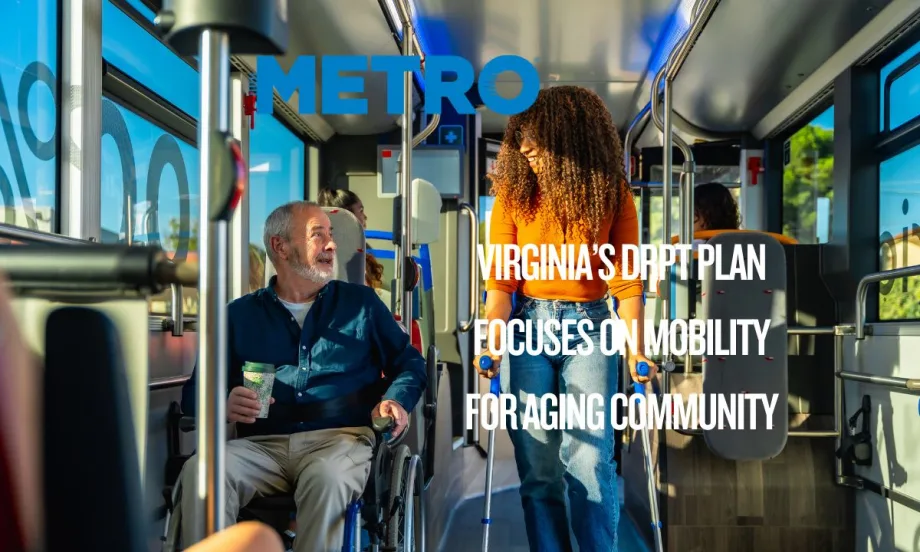
The Virginia Department of Rail and Public Transportation (DRPT) released the 2026 Coordinated Human Services Mobility (CHSM) Plan Update — a people‑centered strategy to improve access to transportation for older adults, people with disabilities, veterans, and low‑income Virginians who rely on human services mobility to reach health care, work, grocery stores, and daily needs.
Over the next four years during the Spanberger Administration, DRPT will use the plan to prioritize funding for human service transportation projects and programs that reduce barriers, expand access, and promote equitable mobility, said department officials.
Strengthening Coordination through Mobility
A key emphasis is on strengthening coordination among transit providers, human service agencies, and local partners to ensure services are more seamless and effective for riders who rely on them most.
The plan aims to:
- Diversify funding sources.
- Provide additional existing service capacity.
- Implement service expansion.
- Increase support for riders.
- Provide consistent information.
- Include human service transportation in the broader planning conversation.
- Give structured and consistent technical assistance.
In response to the plan, DRPT will continue working with other state agencies and regional partners to put these strategies into action, officials said.
In the coming years, the agency will focus on better coordinating federal funding and strengthening collaboration across regions. While some goals can be addressed at the state level, real progress will also require strong partnerships with regional and local stakeholders to create a more coordinated and accessible transportation system.
“The need for improved mobility to connect our state’s aging and disability populations to health care and human services is growing. This plan reflects our dedication to listening to voices across Virginia and turning those insights into action,” said DRPT Director Mariia Zimmerman. “Through collaboration with local agencies, service providers, and riders, we are building a transportation network that truly serves the needs of all the Commonwealth.”
Stepping Up to Address Challenges
As Virginia’s demographics shift, more residents are facing transportation challenges. An estimated 17.6% of Virginians are age 65 or older, a share that is expected to grow in the coming decade, and 8.5% of Virginians under age 65 report living with a disability.
In many rural communities, where transportation options are limited, these populations represent an even larger share of residents who depend on coordinated transportation services.
The development of the plan included extensive public and stakeholder input over 12 months beginning in 2025, with 10 stakeholder meetings, two public surveys, and multiple pop‑up events to hear directly from riders, providers, and communities.
The result is a comprehensive, people‑focused roadmap designed to improve access, expand transportation choices, and enhance efficiency across the Commonwealth.
More Management

METRO Opens Submissions for 2026 Motorcoach Awards
Nominations are now being accepted for METRO Magazine’s Operator of the Year and Innovative Operator of the Year awards.
Read More →
New York MTA Advances Final Contract for Second Avenue Subway Expansion
Contract Four is the largest in the Second Avenue Subway Phase 2 project and includes construction of station infrastructure, tracks, and signals for the subway expansion, MTA officials said. Work on Contract Four will begin in 2027.
Read More →
Transit Agencies Highlight Safety Gains at National Summit
Leaders from 15 major transit systems shared crime-reduction results and safety initiatives while discussing the role of continued federal support.
Read More →

NITA Names New Leadership, Expands Reduced-Fare Program at First Board Meeting
The new regional transit authority appointed its first board chair and interim executive director while extending reduced fares across CTA, Metra, and Pace for eligible riders.
Read More →
Beyond the Checklist: A Structured Approach to Transit Maintenance
Reliability-Centered Maintenance helps transit agencies move beyond routine checklists to focus limited resources on the assets and failures that have the greatest impact on safety, reliability, and service.
Read More →
APTA 2026 Nominating Committee Selects Leadership Slate, Names Chair and Vice Chair Nominees
Leadership changes will help shape the association’s priorities and its representation of the transportation industry during the 2026–2027 term.
Read More →
DART Launches Major Security, Fare Enforcement Initiative
The 90-day demonstration will deploy coordinated security teams at five light rail stations while testing controlled access and gathering data to guide future investments.
Read More →
Advancing Fare Collection Through Technology and Innovation
Learn about delivering 1300 gates at 91 stations while managing fare evasion. Explore the large scale deployment, solution customization and real-world results that affect the region. Prepare for deployment in your region now.
Read More →
Game Day in Motion: Moving Millions During the 2026 World Cup
Between packed transit stations and team motorcoaches, see how agencies and operators across North America tackled the transportation demands of the 2026 FIFA World Cup.
Read More →
Surface Transportation Extension Averts Shutdown, Leaves Transit Funding Gap
The stopgap keeps federal transportation programs moving, but missing advance funding could complicate the transit and rail projects agencies are planning next.
Read More →