




Miss This? WMATA Board Adopts Updated Strategic Transformation Plan
WMATA Introduces Priority Seating Reminder Pilot for Metro Riders
The agency is testing floor decals on select railcars to improve awareness of priority seating and support a more accessible transit experience.
March 11, 2026
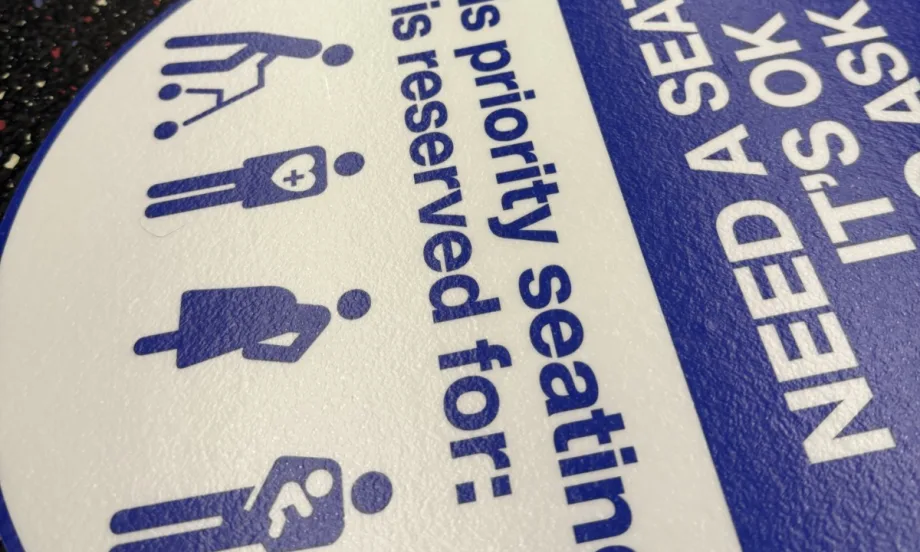
The agency's pilot program will place decals in 20% of the 7000-series fleet for approximately three months.
Credit:
Washington Metropolitan Area Transit Authority
2 min to read
A recent implementation by the Washington Metropolitan Area Transit Authority introduces new decals that will appear on the floors of some of the agency’s trains, reminding customers in priority seats to offer them to those in need.
According to an agency release, priority seating is intended for people with disabilities, people who use mobility devices, older adults, pregnant people, and others with not-always-visible disabilities. Priority seats are next to the center doors of each railcar. The seats are marked with signs above the seat, but they can be difficult to see in crowded trains or when customers are seated.
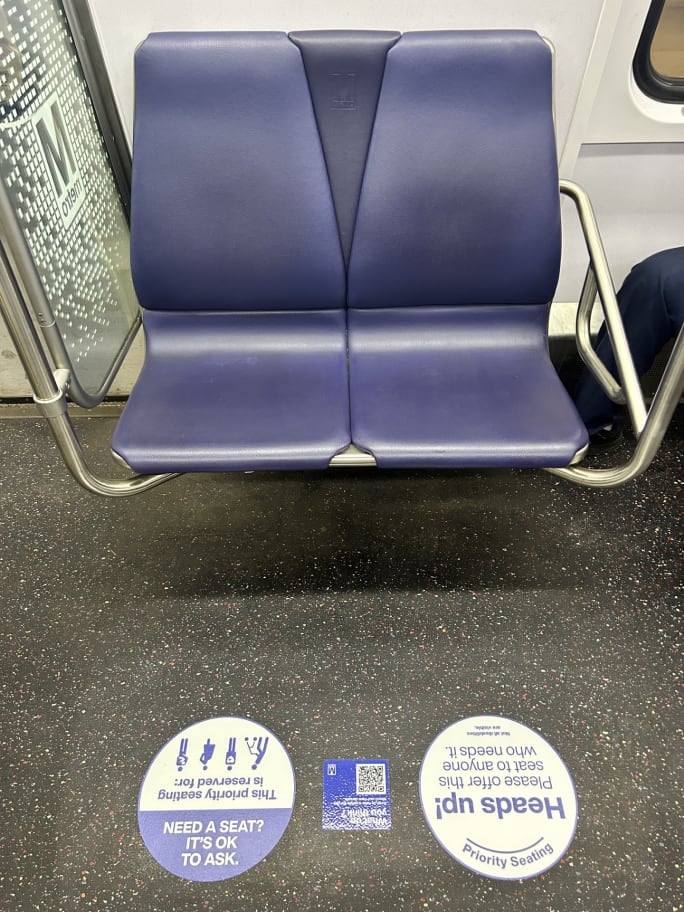
New decals have appeared on the floors of some of WMATA's trains.
Credit:
Washington Metropolitan Area Transit Authority
The floor decals will remind customers to look up and proactively offer the seat to fellow passengers who may need it more.
“Accessible transit is as much about infrastructure as it is about culture. In a world where many of us are distracted by our phones and plugged into noise-cancelling headphones, we sometimes forget about our surroundings,” said WMATA’s Chief Customer Officer Sarah Meyer. “These decals are a simple but powerful reminder that we all share responsibility in making Metro welcoming and accessible to everyone.”
The pilot program will place decals in 20% of the 7000-series fleet for approximately three months. The decals follow best practices from transit agencies worldwide and are non-slip.
The agency will use feedback from customers, WMATA’s Office of ADA Policy & Planning, and the Accessibility Advisory Committee to evaluate the pilot’s effectiveness before deciding the next steps.
WMATA’s upcoming fleet of 8000-series railcars will also include more accessibility features, including a dedicated spot for wheelchair users.
More Management

LA Metro Board Approves 220 Battery-Electric Bus Contract to ENC
The contract, which is the largest base award of battery-electric buses by a U.S. transit agency, will be built in Southern California, sustaining good jobs as LA prepares to welcome the world in 2028
Read More →
What’s Behind San Diego MTS’s Award-Winning Transit Strategy
Named one of APTA’s 2026 Outstanding Public Transportation Systems with 50 million or more annual passenger trips, California’s San Diego Metropolitan Transit System points to gains in ridership, safety, technology, and reliability as foundations of its success.
Read More →
Public Transit Conference Returning to GFX in 2027, Call for Papers Now Open
The Call for Papers is now open, allowing transit agency professionals and industry experts to help shape the PTC educational program by submitting session ideas for consideration.
Read More →
Indian River Transit’s Community-Focused Approach Earns National Recognition
Named APTA’s 2026 Outstanding Public Transportation System in its size category, Florida’s Indian River County transit system continues to grow ridership through fare-free service and a focus on evolving community needs.
Read More →
ENC Lands MATA Contract and More in Biz Briefs
In this edition of Biz Briefs, we spotlight the latest developments shaping the future of mobility.
Read More →
From Surviving to Thriving: Building Stronger Transportation Organizations
Bus Business Consultants founder Brian Dickson shares lessons on leadership, organizational health, and creating options for long-term success in a changing transportation industry.
Read More →
Everett Transit, Community Transit Outline Consolidation Agreement
The proposed agreement calls for a 50% increase in bus service in Everett, a new microtransit zone, continued paratransit service, and the transfer of Everett Transit operations to Community Transit.
Read More →
Strada360’s Steve Lassey on Turning Transit Data Into Better Decisions
From breaking down data silos to preparing for AI, Strada360 CEO Steve Lassey discusses how transit agencies can use technology to improve operations, customer information, and long-term decision-making.
Read More →
People Movement: Phil Washington Joins HNTB, Denver RTD Launches CEO Search, and More
In this edition, we also spotlight recent personnel moves at STV, the Eno Center for Transportation, and more, highlighting the people taking on new roles across the transportation industry.
Read More →
SEPTA Details Accelerate Vision for Transit System
The plan outlines investments in trolley modernization, new Metro and Regional Rail vehicles, accessible stations, and more frequent bus and rail service.
Read More →