



WMATA, Maryland Officials to Extend Bus Lane Pilot
The bus-only lanes along Georgia Avenue and Colesville Road were installed this summer to help move shuttle bus customers along faster during the Red Line construction work.

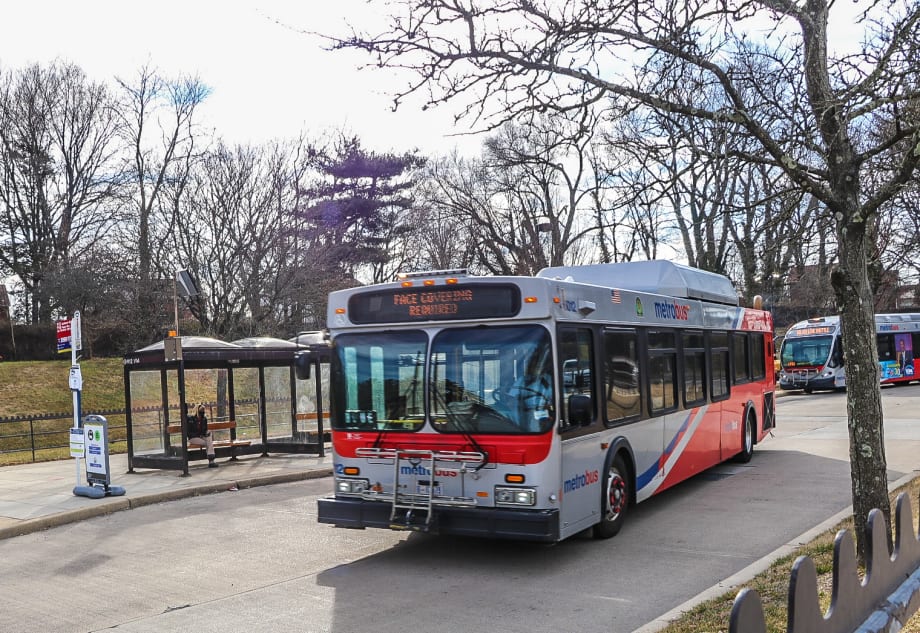
More than a million transit customer trips benefited from faster travel times or improved reliability since the bus lanes were implemented, which provided a viable alternative to driving during the WMATA shutdown and offset CO2 emissions.
Photo: WMATA/Larry Levine
Almost seven miles of bus-only lanes on state roads within Montgomery County, Md., will stay in place through at least December as part of an extended pilot project agreement among the Maryland and Montgomery County Departments of Transportation and the Washington Metropolitan Area Transit Authority (WMATA).
The bus-only lanes along Georgia Avenue and Colesville Road were installed this summer to help move shuttle bus customers along faster during the Red Line construction work.
Building on Success
More than a million transit customer trips benefited from faster travel times or improved reliability since the bus lanes were implemented, which provided a viable alternative to driving during the WMATA shutdown and offset CO2 emissions.
The agency closed a section of the Red Line to allow construction crews to build connections with the Maryland Transit Administration’s Purple Line light rail project. WMATA also performed maintenance and station upgrades at five stations, which are set to reopen in September.
Metro, the Maryland Department of Transportation State Highway Administration (MDOT SHA), and the Montgomery County Department of Transportation will continue to evaluate the success of the lanes, working collaboratively to alleviate congestion and speed up buses.
“These temporary bus lanes are a successful collaboration between the Maryland Department of Transportation, Montgomery County, and WMATA and highlight a low-cost project that has a high impact on the communities it serves,” said Maryland Transportation Secretary Paul J. Wiedefeld. “Extending the pilot through the end of the year will allow us to evaluate the project’s effectiveness and examine opportunities to speed up buses through additional targeted bus lane improvements in Maryland.”
Benefits of Bus Lanes
More than 15,000 average daily riders use the Metrobus and Ride On routes on Georgia Avenue and Colesville Road.
“We are thankful for the collaboration with Maryland and Montgomery County,” said WMATA GM Randy Clarke. “Dedicated bus lanes are one of the best tools to move many people through a corridor quickly. We are excited to see the results of this pilot and are encouraged by Maryland’s efforts to increase bus speeds.”
With dedicated lanes, buses don’t get stuck behind other traffic. This summer local bus service moved the fastest it ever has, despite additional bus volumes with the shuttle buses. Meanwhile, travel times for drivers in the corridor remained constant.
During the fall, MDOT and Montgomery County DOT will analyze data and make changes to the lanes to make them more efficient. They will also review how dedicating travel lanes to buses affects traffic when schools are in session and the region’s workers are back from summer travels.
The pilot extension is a regional effort by transportation departments to advance faster, more convenient bus service in the Washington metro area.
More Bus

New York MTA Plans Largest Bus Fleet Upgrade in More Than a Decade
The agency is seeking manufacturers for 650 new CNG buses to replace aging vehicles, improve reliability, and advance its broader fleet modernization strategy.
Read More →
Building a Flexible Path to Transit Electrification
John Hroncich discusses BAE Systems’ modular and scalable approach, lessons learned from decades of real-world operations, and how agencies can identify electrification strategies that fit their fleets.
Read More →
Bus Tech Talk: Keeping Transit Technicians Ahead of the Technology Curve
LA Metro’s Obed Mejia discusses technician training, evolving maintenance technology, fleet replacement, and strategies for getting the most out of today’s transit fleets.
Read More →
Biz Briefs: RIPTA Unveils New Frontrunners, Clevland RTA Adds New Siemens, and More
In METRO's latest installment, we take a look at recent news from Siemens, Prevost, Dodge, and more partnerships making headlines across the transportation sector.
Read More →
People Movement: Holly Arnold Joins Transdev and More
In this edition, we also cover recent appointments and announcements at Pace, CamTran, MCI, and more, showcasing the individuals helping to shape the future of transportation.
Read More →
The High Cost of Transit Buses: Industry Leaders Look to Procurement Reform
Transit leaders and policymakers examine how standardized bus designs, streamlined procurement, and predictable funding could help agencies stretch budgets and deliver better service.
Read More →
The Business Voice Behind Public Transportation
As chair of APTA’s Business Members Board of Governors, Ray Melleady explains how more than 850 business members are partnering with transit agencies to advance funding, innovation, and industry-wide collaboration.
Read More →
From Surviving to Thriving: Building Stronger Transportation Organizations
Bus Business Consultants founder Brian Dickson shares lessons on leadership, organizational health, and creating options for long-term success in a changing transportation industry.
Read More →
Finding the ‘Happy Medium’: Optimizing Maintenance Without Sacrificing Reliability
The key to maintenance optimization isn’t doing less work—it’s doing the right work at the right time on the right assets.
Read More →
LA Metro, City of West Hollywood, and Partners Advance Smarter Bus Lane Enforcement
The award-winning partnership combines AI-powered detection with human oversight to improve bus reliability, accessibility, and enforcement efficiency.
Read More →