



World’s largest metro regions serve only half their populations (at best) with mass transit
The rapid transit systems of Seoul and Beijing, the two largest cities in the survey, served the most people by far. Almost 11 million people live within 1 km (.62 miles) of each system.

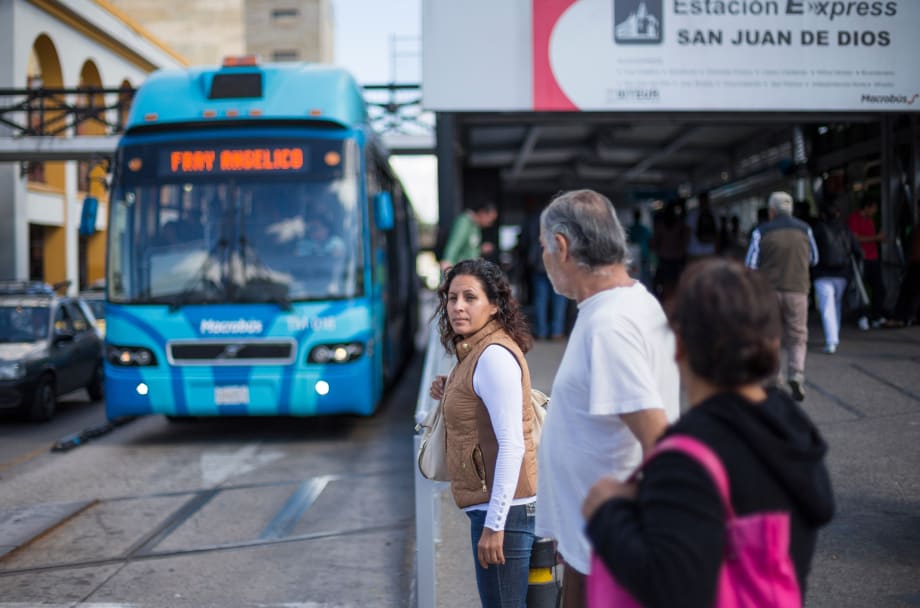
Photos courtesy ITDP
Photos courtesy ITDP
Many of the world’s most important cities are expanding rapidly without adequate transportation planning, according to a new report released by the Institute for Transportation and Development Policy (ITDP). The report measures the number of urban residents who are within a short walking distance to rapid transit with a new metric, People Near Rapid Transit (PNT), and applies the metric to 26 major cities and their greater metro regions around the world. Of the cities surveyed, the city of Paris earned a perfect score and the metro regions of Washington, D.C., and Los Angeles were among the worst.
“The PNT metric illustrates how unplanned urban and suburban growth focuses on automobiles and only those who can afford to drive,” said Clayton Lane, ITDP’s CEO. “Washington, D.C., Paris, and Beijing are major examples of cities that have expanded beyond prescribed political boundaries without effective regional transport plans. Larger integrated rapid-transit networks serve more people and limit climate change — but they don’t grow without foresight and planning.”
The PNT metric was established by ITDP researchers to measure the number of residents who live within 1 km (.62 miles) of rapid transit. The report, People Near Transit: Improving Accessibility and Rapid Transit Coverage in Large Cities, applies the metric to 26 cities around the world with high-capacity mass transit systems and the greater metropolitan regions anchored by these cities.
ITDP
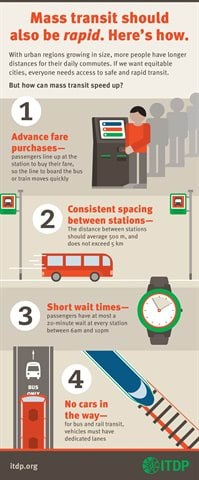
The report establishes five basic criteria for high-quality rapid transit, drawn from ITDP’s BRT Standard and other publications:
Passengers purchase their fare in the station before boarding;
Transit has consistent distances between stations that does not exceed 5km (3 miles);
Passengers have at most a 20-minute wait at every station between 6am and 10pm;
For bus transit, vehicles must have their own lanes and a dedicated Right-of-Way; and
For rail transit, tracks must have a dedicated Right-of-Way physically separated from street traffic.
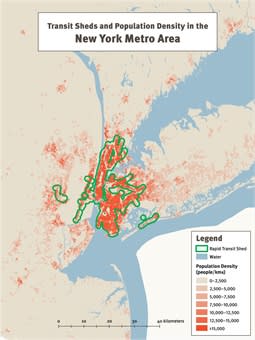
Very few cities are investing in the rapid transit systems that serve the less wealthy communities living outside of the urban core, even in Europe and especially in North America. For the 13 cities in industrialized countries that were scored, the average PNT was 68.5%, while those cities’ metropolitan regions averaged 37.3%. The metro regions of the six US cities averaged a score of 17.2%.
“Mass transit systems should grow as cities grow; yet in most cities, governments still rely on automobile traffic as the primary way of getting people around,” noted Lane. “In today’s megacities, road space is already massively congested with car ownership presently at only 10-30 percent, yet building more roads remains a misguided top infrastructure priority. Governments need to better serve the other 70-90 percent of the population without cars, and provide better mobility choices for everyone.”
The rapid transit systems of Seoul and Beijing, the two largest cities in the survey, served the most people by far. Almost 11 million people live within 1 km (.62 miles) of each system and their scores reflect the population density.
Rapid Transit is Vitally Important for Lower Income Communities
Increasingly, the outlying regions of cities are home to less wealthy communities. A recent report from the Brookings Institution found that the poor population in U.S. suburbs grew faster than anywhere else in the country, surging 64 percent in the past decade. Similar trends have already emerged in most countries around the world. Without a corresponding increase in rapid transit access, the poverty in these areas becomes entrenched, as the lack of transportation limits access to jobs and education in other parts of the cities.
For the cities measured in low- and middle-income countries, the average PNT score was 40.3%, while the metropolitan regions averaged 23.7%. Of these cities, the rapid transit systems in Jakarta and Quito did not extend past the city borders. Almost all of the other systems only served a small fraction of the population living in these outlying areas.
“In many cities, it’s far too easy for municipal governments to ignore the problems on the other side of their borders,” Lane observed. “But cities today do not exist in a vacuum. All metropolitan regions have an urban core, as well as surrounding communities. People in the outer regions cannot thrive without better transportation connections to the core and other outer communities. Government relationships across city and state lines are crucial to meeting the needs of their populations.”
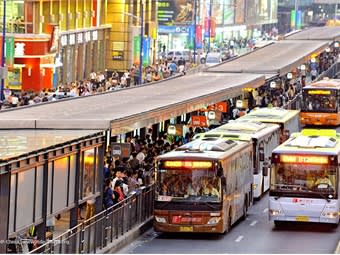
ITDP
A Critical Tool in Efforts to Limit Climate Change
Expanding and optimizing rapid transit is also critical to achieving climate change targets. According to the U.S. Environmental Protection Agency, cars, light trucks and SUVs generate one-fifth of all carbon dioxide emissions in 2014 that result from burning fossil fuels in the U.S.
Governments cannot limit these emissions without rapid transit and compact urban development. In a report released two years ago that ITDP produced in collaboration with the University of California, Davis, researchers estimated that more than $100 trillion in cumulative public and private spending, and 1,700 megatons of annual carbon dioxide (CO2) — a 40 percent reduction of urban passenger transport emissions — could be eliminated by 2050 if the entire world expands public transportation, walking and cycling in cities.
ITDP
“The impacts from climate change could still be mitigated if there is enough political will,” concluded Lane. “The continuing construction of car-oriented development found in metropolitan regions all over the world is a perfect example of this tragedy. Rapid transit integration, including rail, bus, cycling, walking, and shared car networks could connect these places sustainably to a wealth of opportunities.”
More Management
People Movement: Dan Dipert Coaches Adds Third-Generation Leader, Keolis Names New Valley Metro VP/GM, and More
In this edition, we also cover recent appointments and announcements at the Wabtec, SilverRide, HNTB, and more, showcasing the individuals helping to shape the future of transportation.
Read More →
METRO Opens Submissions for 2026 Motorcoach Awards
Nominations are now being accepted for METRO Magazine’s Operator of the Year and Innovative Operator of the Year awards.
Read More →
New York MTA Advances Final Contract for Second Avenue Subway Expansion
Contract Four is the largest in the Second Avenue Subway Phase 2 project and includes construction of station infrastructure, tracks, and signals for the subway expansion, MTA officials said. Work on Contract Four will begin in 2027.
Read More →

Transit Agencies Highlight Safety Gains at National Summit
Leaders from 15 major transit systems shared crime-reduction results and safety initiatives while discussing the role of continued federal support.
Read More →
NITA Names New Leadership, Expands Reduced-Fare Program at First Board Meeting
The new regional transit authority appointed its first board chair and interim executive director while extending reduced fares across CTA, Metra, and Pace for eligible riders.
Read More →
Beyond the Checklist: A Structured Approach to Transit Maintenance
Reliability-Centered Maintenance helps transit agencies move beyond routine checklists to focus limited resources on the assets and failures that have the greatest impact on safety, reliability, and service.
Read More →
APTA 2026 Nominating Committee Selects Leadership Slate, Names Chair and Vice Chair Nominees
Leadership changes will help shape the association’s priorities and its representation of the transportation industry during the 2026–2027 term.
Read More →
DART Launches Major Security, Fare Enforcement Initiative
The 90-day demonstration will deploy coordinated security teams at five light rail stations while testing controlled access and gathering data to guide future investments.
Read More →
Advancing Fare Collection Through Technology and Innovation
Learn about delivering 1300 gates at 91 stations while managing fare evasion. Explore the large scale deployment, solution customization and real-world results that affect the region. Prepare for deployment in your region now.
Read More →
Game Day in Motion: Moving Millions During the 2026 World Cup
Between packed transit stations and team motorcoaches, see how agencies and operators across North America tackled the transportation demands of the 2026 FIFA World Cup.
Read More →