



ZF Aftermarket Introduces ZF Bus Connect
The new digital product provides a cloud-based tool for bus fleets, service providers, and OEMs to increase safety and efficiency, improve uptime, and decrease total cost of ownership.

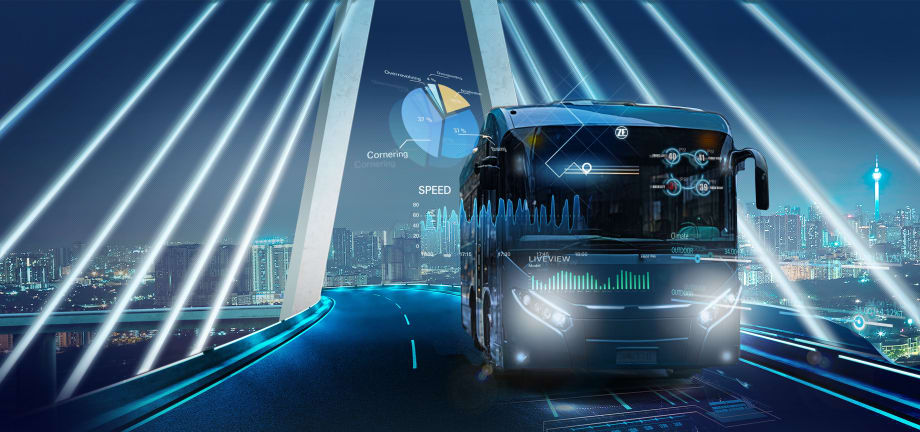
A robust digital solution for bus fleets, service providers, and OEMs, ZF Bus Connect consists of three elements: a small, on-board unit in the vehicle, the cloud, and a web-based portal or mobile app.
ZF
ZF Aftermarket is introducing its advanced digital solution, ZF Bus Connect, in North America at APTA EXPO.
The new digital product provides a cloud-based tool for bus fleets, service providers, and OEMs to increase safety and efficiency, improve uptime, and decrease total cost of ownership (TCO) by turning remote vehicle data into actionable insights.
ZF Bus Connect
A robust digital solution for bus fleets, service providers, and OEMs, ZF Bus Connect consists of three elements: a small, on-board unit in the vehicle, the cloud, and a web-based portal or mobile app. Users can configure this all-in-one solution as a package, or use their own compatible on-board unit connect to the cloud and access the information via the ZF Bus Connect portal or app.
ZF Health Check, a module within ZF Bus Connect, enables aftermarket providers to identify and address maintenance needs for ZF transmissions, reducing the risk of unexpected breakdowns and minimizing downtime.
“With ZF Bus Connect we are empowering fleets, service providers, and OEMs to leverage vehicle data to improve operations, lower their costs, and serve customers better,“ said Anuj Gupta, head of digital for ZF Aftermarket in North America. “It’s a powerful digital tool that helps users bring greater value to their customers while moving toward a more sustainable model of operations.”
ZF Bus Connect Availability
ZF Bus Connect is compatible with city buses and coaches with both electric and combustion engines, or hybrid systems in a mixed fleet. Operators can use it to check every aspect of a vehicle in operation, including its location in real-time, current energy or fuel consumption, battery charge, brake wear, and status of vehicles parts and systems.
As an advanced fleet management tool, ZF Bus Connect addresses three important aspects of operation:
Safety:Geofencing and monitoring of driver behavior to detect risks, thereby preventing accidents and protecting against unauthorized operation.
Efficiency: Live data evaluation of individual vehicles allows fleet operators to optimize driving and route plans, reducing mileage as well as stops and starts, which improves fuel consumption.
Uptime: Predictive remote detection of damage or wear and tear, as well as diagnosis and secure over-the-air updates to reduce unplanned downtime. Improved vehicle maintenance also contributes to safer operation.
Together, these aspects can have a significant impact on reducing TCO.
Service Providers
With easy-to-install onboard units, ZF Bus Connect equips service providers with early warnings and insights into potential issues and maintenance requirements. This gives maintenance shops the information they need to serve their customers proactively, creating opportunities for stronger customer centricity and captivity.
OEMs
For original equipment manufacturers, ZF Bus Connect addresses the need to deploy new, advanced technology and to offer customers a dedicated connectivity platform. Continuous high-frequency or event-based data logging and storage can provide transparency and rich insights to optimize performance and unlock new value.
More Technology

From Hardware to Digital Partner: Luminator Charts Its Next Chapter
CEO Magnus Friberg discusses Luminator’s shift toward becoming a digital partner, the growing importance of software and interoperability, and how AI can help agencies improve operations and passenger experience.
Read More →
Beyond the Checklist: A Structured Approach to Transit Maintenance
Reliability-Centered Maintenance helps transit agencies move beyond routine checklists to focus limited resources on the assets and failures that have the greatest impact on safety, reliability, and service.
Read More →
NJ TRANSIT Advances Bus Technology Upgrades Across Statewide Fleet
More than 1,500 buses now feature upgraded technology designed to improve arrival predictions and provide free Wi-Fi, with deployment expected to reach nearly 2,000 buses by the end of 2026.
Read More →

Building a Flexible Path to Transit Electrification
John Hroncich discusses BAE Systems’ modular and scalable approach, lessons learned from decades of real-world operations, and how agencies can identify electrification strategies that fit their fleets.
Read More →
Biz Briefs: Alstom Lands Canadian Contract, LYT to Supply California TSP, and More
In METRO's latest installment, we take a look at recent news from Complete Coach Works, Beep, FlixBus, and more partnerships making headlines across the transportation sector.
Read More →
From Legacy Silos to Conversational Intelligence
What if transit leaders could ask any operational question and get a trusted answer in seconds? Conversational AI is transforming how agencies use their data.
Read More →
USDOT Announces Rail Vehicle Replacement Grants, Chattanooga AV Shuttle Funding
More than $191 million in federal funding will help three transit agencies replace aging rail vehicles and support a new autonomous shuttle service in Chattanooga.
Read More →
Bus Tech Talk: Keeping Transit Technicians Ahead of the Technology Curve
LA Metro’s Obed Mejia discusses technician training, evolving maintenance technology, fleet replacement, and strategies for getting the most out of today’s transit fleets.
Read More →
Biz Briefs: RIPTA Unveils New Frontrunners, Clevland RTA Adds New Siemens, and More
In METRO's latest installment, we take a look at recent news from Siemens, Prevost, Dodge, and more partnerships making headlines across the transportation sector.
Read More →
Why Simulating Pedestrian Movement Has Become Essential for Modern Rail Stations
Pedestrian microsimulation is helping rail planners identify bottlenecks, test station designs, and prepare complex transit hubs for growing passenger volumes.
Read More →