



Caltrain plan suggests ridership could increase 300% by 2040
The projections were part of an unconstrained assessment of the market for rail service along the Caltrain corridor.

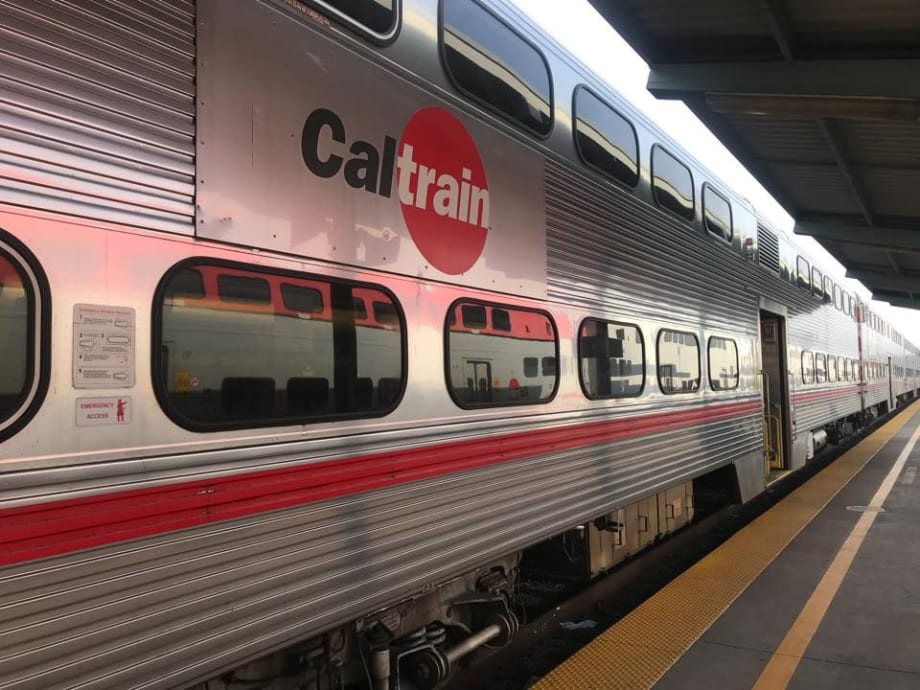
Electrification of the Caltrain system is currently underway, and creates the potential for increased service levels and enhanced frequency.
Via Facebook
Electrification of the Caltrain system is currently underway, and creates the potential for increased service levels and enhanced frequency.
Via Facebook
As work continues on the development of the Caltrain Business Plan, projections of potential future demand show that by 2040 as many as 250,000 customers would want to ride the train if service were frequent and abundant — a nearly 300% increase over the number of passengers carried by the system today.
An update on the development of the Business Plan provided to the Caltrain Board of Directors shows that significantly increased Caltrain service could capture ridership demand that increases from 65,000 daily riders in 2018, to 243,000 daily riders in 2040. The projections were part of an unconstrained assessment of the market for rail service along the Caltrain corridor. Over the coming months, the Business Plan will analyze the choices the railroad will face as it considers options for growing service to meet this expanded demand.
The Business Plan will be completed with input from communities along the corridor through monthly and public meetings, and is anticipated to be a year-long process.
Electrification of the Caltrain system is currently underway, and creates the potential for increased service levels and enhanced frequency. When the Business Plan is complete next year, it will include a Service Vision that details how the system will grow over time, taking advantage of the potential that an electrified system provides.
Over the last 10 years, Caltrain has seen unprecedented ridership growth at an average of 6% per year and even before the Business Plan is complete, Caltrain is taking steps to increase capacity to accommodate current and future demand. The board reviewed plans to invest recently approved state gas tax revenues in the purchase of 37 new electric train cars. Electric trains, already in production, are set to replace 75% of the system’s current diesel fleet. The 37 additional cars will allow the system to replace more diesel trains and extend the electric trains from six cars to seven cars.
Electric trains are planned to begin operation in 2022.
Background
The Business Plan’s strategy and scope, which was approved by the Joint Powers Board (JPB) in February, will define the long-term vision for the fast-growing commuter rail system that connects San Francisco and Silicon Valley. The JPB is collaborating with policymakers, stakeholders, Caltrain riders, and community members to make sure the Caltrain Business Plan considers everyone’s needs.
The Caltrain Business Plan will allow the railway to identify a service model that supports long-term regional job and population growth, and surging ridership demand. This work will involve an exploration of economic, policy, and technical approaches that will provide a better understanding of passenger needs and opportunities to maximize the value of Caltrain for local communities.
The plan will also look at long-range opportunities to integrate regional rail services that could traverse and connect to the Caltrain corridor. The final business plan will include specific targets for service and capacity growth that will describe how Caltrain should grow to meet market demand.
Work on the Caltrain Business Plan began in 2017 after the agency awarded contracts for construction of the Caltrain Electrification project that allows the system to replace decades-old diesel equipment with modernized electric trains. When complete, Caltrain Electrification will immediately improve the system’s capacity, service frequency, and travel times, but the strategies recommended in the final Business Plan will need to be implemented to fully realize the benefits that electrification makes possible.
More Rail

New York MTA Advances Final Contract for Second Avenue Subway Expansion
Contract Four is the largest in the Second Avenue Subway Phase 2 project and includes construction of station infrastructure, tracks, and signals for the subway expansion, MTA officials said. Work on Contract Four will begin in 2027.
Read More →
San Diego MTS Breaks Monthly Trolley Ridership Record
Agency officials said July’s ridership indicates MTS’s continued recovery from the pandemic.
Read More →
Report Examines NJ TRANSIT Reliability, Funding Challenges
The Garden State Initiative analysis examines the roles of Amtrak infrastructure, fleet management, and agency operations while recommending a more performance-based approach to improving reliability.
Read More →
Stadler, CapMetro Sign Long-Term Rail Fleet Support Agreement
Beginning in 2027, Stadler will provide on-site technical expertise, spare parts support, training, and obsolescence management to help extend the reliability and longevity of CapMetro’s GTW fleet.
Read More →
Biz Briefs: Alstom Lands Canadian Contract, LYT to Supply California TSP, and More
In METRO's latest installment, we take a look at recent news from Complete Coach Works, Beep, FlixBus, and more partnerships making headlines across the transportation sector.
Read More →
CATS Gold Line Marks 5 Years of Service, 2.8M Passenger Trips
With a six-mile expansion planned, the Charlotte streetcar is positioned to connect more neighborhoods and major transit hubs across the region.
Read More →
Why Simulating Pedestrian Movement Has Become Essential for Modern Rail Stations
Pedestrian microsimulation is helping rail planners identify bottlenecks, test station designs, and prepare complex transit hubs for growing passenger volumes.
Read More →
Amtrak Begins Major Construction at New York’s Sunnyside Yard
The new maintenance facility will support Amtrak’s Airo trainsets while improving maintenance efficiency and turnaround times in New York.
Read More →
Chicago Leaders Unveil Plans for O’Hare Airport Express Train
The privately developed project would offer a 15-minute trip between downtown and O’Hare’s Terminal 2, with trains operating every 15 minutes on a dedicated track. The service would use battery-electric trains and three existing freight rail rights-of-way.
Read More →
OCTA Maps Out 30-Year Strategy to Protect Coastal Rail Corridor
The draft feasibility report identifies strategies to protect the coastal rail line for decades as the agency continues near-term stabilization and sand placement efforts.
Read More →