



Chicago set to launch Red-Purple Bypass construction this fall
The RPM Phase One project will make commuting better for CTA riders with improved service and modern, fully accessible stations.

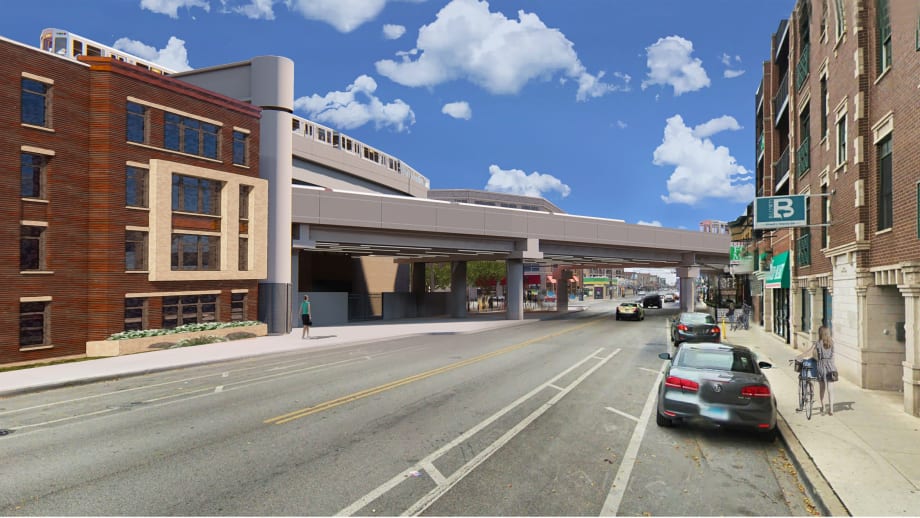
A rendering of Clark Street after construction.
Purple Group
A rendering of Clark Street after construction.
Purple Group
Chicago Transit Authority (CTA) announced construction for the Red-Purple Bypass is set to begin this fall, a major component of CTA’s Red Purple Modernization (RPM) Phase One Project to rebuild the century-old rail system. The RPM Phase One project will make commuting better for CTA riders with improved service and modern, fully accessible stations.
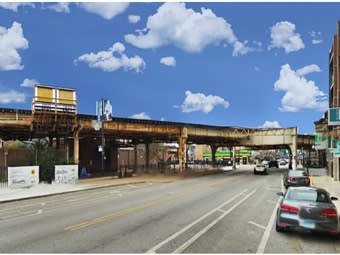
A photo of Clark Street before construction.
Purple Group
This fall, CTA will begin constructing new track foundations in the Lakeview community for a new rail bypass bridge that will replace an existing rail junction built in 1907 just north of the Belmont station. The new structure will be a bypass that will carry Kimball-bound CTA Brown Line trains over north and southbound Red and Purple Line tracks just north of Belmont station.
The bypass will improve service reliability on the Red, Purple, and Brown lines, increasing train speeds, easing overcrowding on rail cars and providing CTA the ability to increase the number of trains it can run during the busiest travel periods for the nearly 150,000 rides it currently carries.
Additionally, the project improves the local community by creating a brighter, cleaner, safer, and more pleasant pedestrian environment and will complement the comprehensive Transit Oriented Development Plan that CTA prepared in 2018 with the local community for parcels of land that will be available for development when construction is completed.
CTA is finalizing construction start dates with the project’s contractor, Walsh-Fluor Design Build Team and will continue to provide advance notification of construction impacts. Red Line service will continue throughout the entire project.
Since RPM Phase One was announced in 2014, public meetings have been held to gather community input regarding the project. As a result, CTA has responded to the community’s needs and concerns in preparation to construction in several ways, including the installation of flower boxes, butterfly sculptures and landscaping on Wilton Avenue and School Street along the fence bordering the CTA-owned lot. CTA has also helped promote construction-affected businesses during utility work with Open for Business banners, social media posts, and encouraging workers to eat and shop locally.
More Rail

New York MTA Advances Final Contract for Second Avenue Subway Expansion
Contract Four is the largest in the Second Avenue Subway Phase 2 project and includes construction of station infrastructure, tracks, and signals for the subway expansion, MTA officials said. Work on Contract Four will begin in 2027.
Read More →
San Diego MTS Breaks Monthly Trolley Ridership Record
Agency officials said July’s ridership indicates MTS’s continued recovery from the pandemic.
Read More →
Report Examines NJ TRANSIT Reliability, Funding Challenges
The Garden State Initiative analysis examines the roles of Amtrak infrastructure, fleet management, and agency operations while recommending a more performance-based approach to improving reliability.
Read More →
Stadler, CapMetro Sign Long-Term Rail Fleet Support Agreement
Beginning in 2027, Stadler will provide on-site technical expertise, spare parts support, training, and obsolescence management to help extend the reliability and longevity of CapMetro’s GTW fleet.
Read More →
Biz Briefs: Alstom Lands Canadian Contract, LYT to Supply California TSP, and More
In METRO's latest installment, we take a look at recent news from Complete Coach Works, Beep, FlixBus, and more partnerships making headlines across the transportation sector.
Read More →
CATS Gold Line Marks 5 Years of Service, 2.8M Passenger Trips
With a six-mile expansion planned, the Charlotte streetcar is positioned to connect more neighborhoods and major transit hubs across the region.
Read More →
Why Simulating Pedestrian Movement Has Become Essential for Modern Rail Stations
Pedestrian microsimulation is helping rail planners identify bottlenecks, test station designs, and prepare complex transit hubs for growing passenger volumes.
Read More →
Amtrak Begins Major Construction at New York’s Sunnyside Yard
The new maintenance facility will support Amtrak’s Airo trainsets while improving maintenance efficiency and turnaround times in New York.
Read More →
Chicago Leaders Unveil Plans for O’Hare Airport Express Train
The privately developed project would offer a 15-minute trip between downtown and O’Hare’s Terminal 2, with trains operating every 15 minutes on a dedicated track. The service would use battery-electric trains and three existing freight rail rights-of-way.
Read More →
OCTA Maps Out 30-Year Strategy to Protect Coastal Rail Corridor
The draft feasibility report identifies strategies to protect the coastal rail line for decades as the agency continues near-term stabilization and sand placement efforts.
Read More →