
Metro Magazine

 MENU
 SEARCHMENUSEARCH
Loading data...

BLE beacons enable capable nearby mobile devices to receive useful and relevant information. Using this signal, Google Maps can automatically and seamlessly provide information that is valuable to riders, including transit schedules and alerts to their mobile devices.
Read More →




In the three months since the release of official apps for railroad customers, LIRR Train Time and Metro-North Train Time, approximately 120,000 people have downloaded the apps for iPhone and Android.
Read More →Implementation of the TrueTime system began on buses in 2013. The entire fleet of more than 700 buses was online by early 2015.
Read More →Travelers can now create personalized alerts on their mobile phone to be warned in real-time when a bus is arriving at their stop.
Read More →Powered by automated passenger counter sensors, the ACT RealTime Rider Capacity feature offers onboard crowding information, exclusively on the agency's Tempo Line 1T.
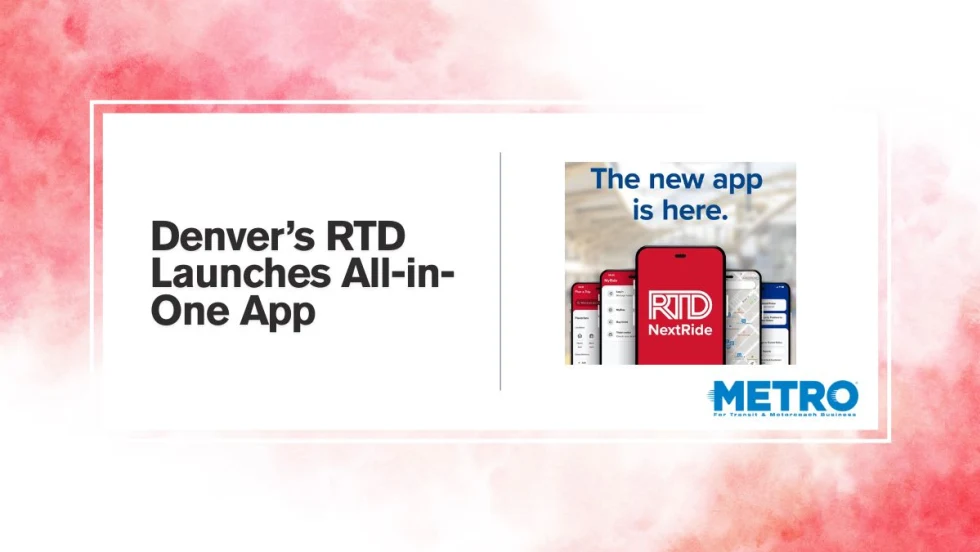
Read More →The app expands on RTD’s existing NextRide web application and allows customers to view real-time vehicle locations and service alerts, purchase and store digital fares, and access customer support.
Read More →Real-time data, cross-agency partnerships and coordinated operations make it possible to deploy hundreds of vehicles when communities need them most.
Read More →John Hroncich discusses BAE Systems’ modular and scalable approach, lessons learned from decades of real-world operations, and how agencies can identify electrification strategies that fit their fleets.
Read More →More than 1,500 buses now feature upgraded technology designed to improve arrival predictions and provide free Wi-Fi, with deployment expected to reach nearly 2,000 buses by the end of 2026.
Read More →The system, Bus on the Go, or BONGO, provides information about bus routes, schedules and the exact location of buses. The initial project cost nearly $300,000, with annual operating costs of about $100,000.
Read More →