




RELATED: Zero tolerance of workplace harassment: Striking the right balance
D.C. Metro campaign aims to 'STOP' harassment
The ads empower riders to report and intervene if they witness or experience an incident of harassment.
April 9, 2019

Larry Levine/WMATA
2 min to read

Larry Levine/WMATA
Washington, D.C.'s Metro announced the launch of a new public awareness campaign to stop harassment. The new ads will begin running in stations April 9, 2019, in conjunction with Sexual Assault Awareness Month and Stop Street Harassment Week.
The ads, developed in partnership with Stop Street Harassment and Collective Action for Safe Spaces (CASS), empower riders to report and intervene if they witness or experience an incident of harassment. The campaign features the message “You can help STOP harassment” with four simple strategies that spell out STOP – Sidetrack, Tell, Observe and Postpone.
“Harassment of any kind is unacceptable in the Metro system,” said Metro Transit Police Chief Ron Pavlik. “It’s important for riders to have the tools to know how to report harassment and how they can help if they see it happening.”
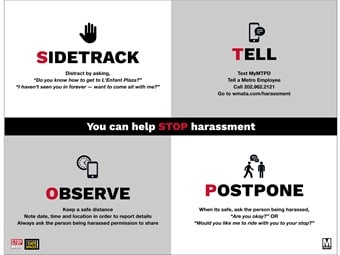
D.C. Metro's new anti-harassment ads empower riders to report and intervene if they witness or experience an incident of harassment.
WMATA
The latest campaign is part of an ongoing effort that began in 2012 to raise awareness and combat sexual harassment in the Metro system. In a report last year, Understanding Sexual Harassment on Public Transportation, Metro found that familiarity with the campaign increased the likelihood of reporting incidents of harassment.
"Everyone can help make our transit system a more welcoming place by taking action when they witness sexual harassment. We hope this new PSA campaign can empower riders to know what to say and do in those situations," said Holly Kearl, founder of Stop Street Harassment.
Metro has developed a variety of tools to provide a safe, convenient way to report incidents of harassment. Customers may text Metro Transit Police at MyMTPD or call 202-962-2121, tell a Metro employee or go to wmata.com/harassment.
More Security and Safety

Transit Agencies Highlight Safety Gains at National Summit
Leaders from 15 major transit systems shared crime-reduction results and safety initiatives while discussing the role of continued federal support.
Read More →
DART Launches Major Security, Fare Enforcement Initiative
The 90-day demonstration will deploy coordinated security teams at five light rail stations while testing controlled access and gathering data to guide future investments.
Read More →
RTD Launches NextRide App to Consolidate Trip Planning, Fares, Security Reporting
The app expands on RTD’s existing NextRide web application and allows customers to view real-time vehicle locations and service alerts, purchase and store digital fares, and access customer support.
Read More →

TAPTCO Updates OSHA Compliance Training for Transit Maintenance Operations
The revamped program addresses 26 OSHA standards for maintenance facilities, with TAPTCO pointing to training, documentation, and everyday shop hazards as continuing challenges for transit operations.
Read More →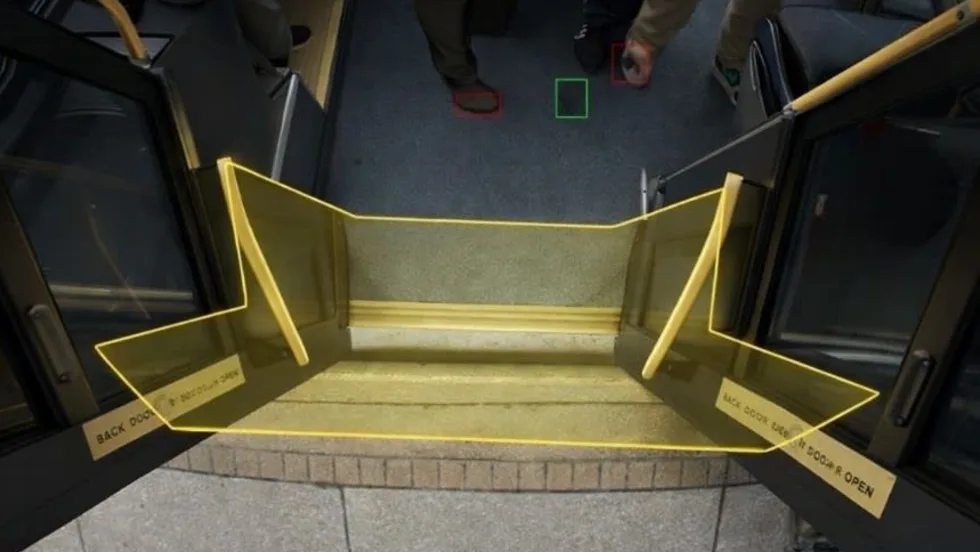
Sponsored•August 18, 2026
How VaporVision Adds Value to Transit Door Systems
Wabtec engineers explain how the system improves doorway detection, strengthens diagnostics and gives transit agencies and OEMs greater operating flexibility.
Read More →
FRA Announces $5.3B in Rail Investments, Including $2B for Amtrak
Funding will support grade-crossing improvements, infrastructure upgrades, and new Amtrak equipment in 23 states.
Read More →
Chicago, Maryland Expand Non-Law-Enforcement Safety, Rider Support
The CTA and MTA are launching new programs aimed at de-escalation, crisis response, rider assistance, and greater transparency.
Read More →
LA Metro, City of West Hollywood, and Partners Advance Smarter Bus Lane Enforcement
The award-winning partnership combines AI-powered detection with human oversight to improve bus reliability, accessibility, and enforcement efficiency.
Read More →
LA Metro Reports 57% Decline in Homelessness on Transit System Since 2024
The agency's latest homelessness count offers new data on how care-based services and cross-sector partnerships can complement traditional transit security strategies.
Read More →
FTA Launches 'Transit Moves America' Dashboard to Highlight Agency Safety and Performance
The online dashboard transforms National Transit Database information into a public-facing resource that allows users to compare transit agencies on key operational and safety metrics.
Read More →