



RELATED: Nearly 80% see public transit as backbone of mobility
How Collaborative Technology is Driving the Transportation Revolution
Organizations recognize need to offer diverse accessible transportation options and are rethinking the way they plan, build, and operate assets.
by Werner Maritz
August 26, 2019
The new generation is looking beyond car ownership to get around, making infrastructure demands more complex.
Oracle
5 min to read
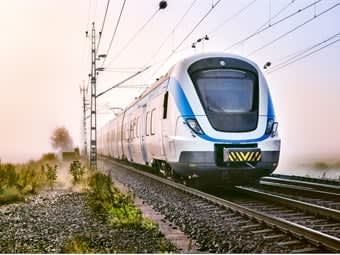
The new generation is looking beyond car ownership to get around, making infrastructure demands more complex.
Oracle
As cities become smarter and the needs of the public change, the infrastructure sector — and specifically transportation — has increasingly recognized it needs to digitize — fast. A recent study from the American Public Transportation Association found that 77% of commuters view public transit as the backbone of an everyday lifestyle that is increasingly reliant on emerging technologies and alternate transportation methods, including ride-sharing and autonomous vehicles.
The new generation is looking beyond car ownership to get around, making infrastructure demands more complex. Citizens are demanding things like more bike lanes along major roads and even ride-hailing public transit buses. This means the government agencies and organizations overseeing transportation must ensure that they are not only maintaining infrastructure and completing new developments in an timely and cost-effective manner, but adapting to these evolving demands as well. These organizations recognize the need to provide citizens with a diverse range of accessible transportation options and are rethinking the way they plan, build, and operate assets.
Transportation infrastructure projects tend to be large in scale — it costs approximately $3 million to $5 million to build one mile of a four-lane highway in an urban area. One of the biggest challenges transit organizations face during construction projects is ensuring efficient collaboration across all members of the team — from owners to builders to contractors and even the public who will be using the transportation.
Due to the massive scope of these infrastructure construction projects, most companies are not large enough to manage the scope alone, which often leads to the need for JVs and consortiums, such as the Connect Plus consortium that is managing major capital projects and maintaining London’s M25, one of the busiest roadways in Europe. Additionally, globally,there is not enough public funding available to deliver the required infrastructure, so alternative delivery instruments, such as public-private partnerships (P3s), are increasingly being employed.
All of these relationships bring up cross-organization collaboration challenges, and P3s in particular have legal reporting requirements that make a clear case for use of a common platform to avoid onerous, manual compilation of data. Many transportation projects also take place in spaces the public is continuing to use, so coordination to ensure use and safety also makes overall collaboration critical. Technology is enabling these teams to connect digitally, providing complete insight into prioritization and planning, project progress, materials delivery, and scope changes to avoid costly rework and delays.
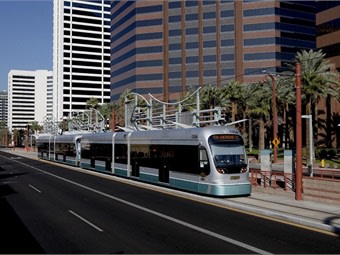
For Valley Metro, the use of technology is imperative to support its rapidly growing transit system.
HDR Inc.
Sharing Files at the Speed of Business
Faced with a state mandate to meet specific standards for the management of all aspects of public-private partnership projects, the Colorado Department of Transportation (CDOT) knew it needed to go beyond its limited enterprise file-sharing software for a highly visible highway project. The project focused on the reconstruction of 16 miles of U.S.Highway 36 and featured many firsts for the state of Colorado, including the first buffer-separated express lanes, the first bus-on-shoulder program, and the first commuter-specific bike lanes along a Colorado highway.
CDOT transformed its process management with Oracle Aconex, a cutting-edge, project-wide platform that enabled communication and collaboration between all organizations on the project, speeding processes and reducing errors and delays. The result — a 20% reduction in request for information (RFI) review times and the ability to locate documents 60% faster than before.
Fueling More Accurate Cost Forecasts
For Valley Metro, the use of technology is imperative to support its rapidly growing transit system, which includes a regional bus system and the development and operation of 26 miles of light rail in the greater Phoenix area. Valley Metro’s use of collaboration technology has enabled it to forecast costs more accurately and receive early warnings into cost impact, while managing multiple projects and enabling visibility across municipalities. These implementations have helped the company save 4,500 to 6,000 hours per project on submittal processing and four to five days per design review, while RFI cycles have been reduced by four to eight hours.
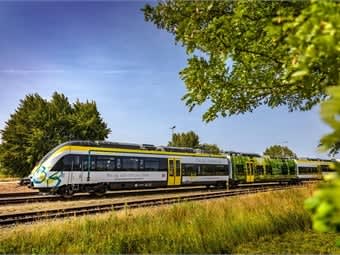
Bombardier has created a data architecture built on organization-wide open systems that defined consistent company-wide rules for planning.
Bombardier
Data-Driven Solutions
The danger of having your organization’s data operate in isolation is a common reason for failed technology investments. Bombardier has created a data architecture built on organization-wide open systems that defined consistent company-wide rules for planning. They also developed clear and consistent methodologies to avoid the dangers of siloed data and successfully integrated systems.
These company-wide standards help the company gain the benefits of data consistency across the organization, reducing friction, and enabling more data-driven insights. For example, Bombardier’s time-booking information detailing how much time employees spend on various tasks can now interface back into the finance system. Data consistency across departments is improved and time spent on timesheet generation is cut in half.
Enabling a More Sustainable Commute
The transition to a flexible software-based system has also allowed Valley Metro to support another priority on the minds of many commuters — sustainability. The organization has virtually eliminated hard copy design package distribution to their contractors, resulting in approximately $200,000 worth of savings for every 1.8 miles of rail extension. Now, all drawings and revisions are housed in a highly secure cloud-based platform, with the latest version and complete history easily available to the entire project team.
Collaboration software and other emerging technologies are revolutionizing the transportation industry and helping to deliver smarter solutions to the public. With the ability to collaborate across teams more effectively, transportation organizations will be better equipped to maintain and develop infrastructure projects that support citizens’ evolving needs for diverse and modern transit options.
Werner Maritz is Director, Public Sector and Infrastructure Industry Strategy, Construction and Engineering Global Business Unit, for Oracle.
Subscribe to Our Newsletter
More Technology

From Hardware to Digital Partner: Luminator Charts Its Next Chapter
CEO Magnus Friberg discusses Luminator’s shift toward becoming a digital partner, the growing importance of software and interoperability, and how AI can help agencies improve operations and passenger experience.
Read More →
Beyond the Checklist: A Structured Approach to Transit Maintenance
Reliability-Centered Maintenance helps transit agencies move beyond routine checklists to focus limited resources on the assets and failures that have the greatest impact on safety, reliability, and service.
Read More →
NJ TRANSIT Advances Bus Technology Upgrades Across Statewide Fleet
More than 1,500 buses now feature upgraded technology designed to improve arrival predictions and provide free Wi-Fi, with deployment expected to reach nearly 2,000 buses by the end of 2026.
Read More →

Building a Flexible Path to Transit Electrification
John Hroncich discusses BAE Systems’ modular and scalable approach, lessons learned from decades of real-world operations, and how agencies can identify electrification strategies that fit their fleets.
Read More →
Biz Briefs: Alstom Lands Canadian Contract, LYT to Supply California TSP, and More
In METRO's latest installment, we take a look at recent news from Complete Coach Works, Beep, FlixBus, and more partnerships making headlines across the transportation sector.
Read More →
Sponsored•September 8, 2026
From Legacy Silos to Conversational Intelligence
What if transit leaders could ask any operational question and get a trusted answer in seconds? Conversational AI is transforming how agencies use their data.
Read More →
USDOT Announces Rail Vehicle Replacement Grants, Chattanooga AV Shuttle Funding
More than $191 million in federal funding will help three transit agencies replace aging rail vehicles and support a new autonomous shuttle service in Chattanooga.
Read More →
Bus Tech Talk: Keeping Transit Technicians Ahead of the Technology Curve
LA Metro’s Obed Mejia discusses technician training, evolving maintenance technology, fleet replacement, and strategies for getting the most out of today’s transit fleets.
Read More →
Biz Briefs: RIPTA Unveils New Frontrunners, Clevland RTA Adds New Siemens, and More
In METRO's latest installment, we take a look at recent news from Siemens, Prevost, Dodge, and more partnerships making headlines across the transportation sector.
Read More →
Why Simulating Pedestrian Movement Has Become Essential for Modern Rail Stations
Pedestrian microsimulation is helping rail planners identify bottlenecks, test station designs, and prepare complex transit hubs for growing passenger volumes.
Read More →