With gas prices topping $4 a gallon, Americans are changing
how they get around. People in small towns are increasingly using the bus to
get to work, go grocery shopping and visit friends.
According to APTA, bus ridership in communities with fewer
than 100,000 residents rose a whopping 6.7 percent in 2007. In cities,
commuters are choosing to take public transit instead of drive: subway use in Atlanta, for example,
rose more than 10 percent this past year. In cities like Santa
Fe, N.M., or Nashville, Tenn.,
commuter rail use doubled or even tripled. The story is the same across the
country. But while Americans’ increasing use of transit is newsworthy, there is
a part of the story that’s not getting told. Public transit does more than just
save money for commuters; it plays a key role in the fight against climate
change.
Shrinking footprints
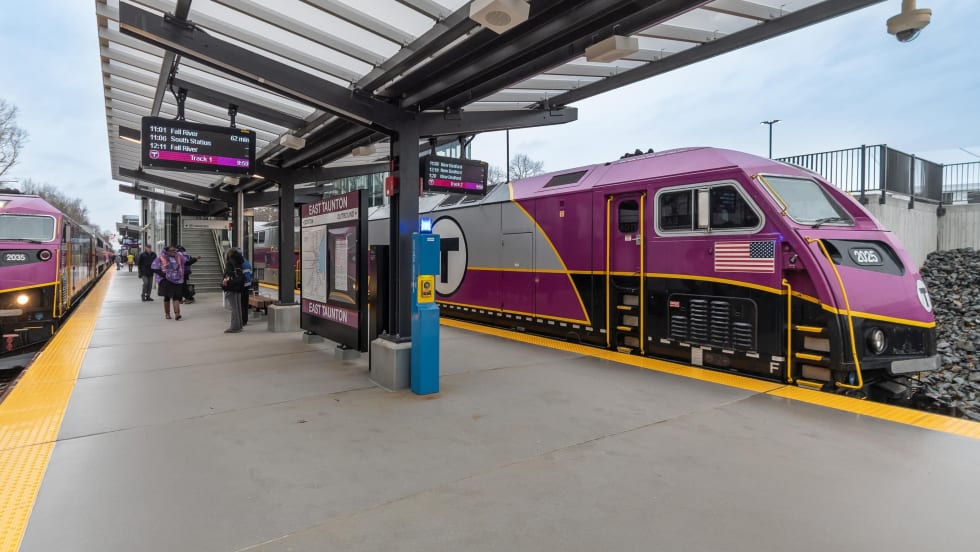
By taking cars off the road, public transit has a direct
effect on the greenhouse gas emissions that cause global warming: according to
APTA, a single commuter taking public transit to work instead of driving can
reduce carbon dioxide emissions by 4,800 pounds a year. People who are choosing
to leave their cars in the driveway may not be aware of the broader impact of
their choice, but it turns out that by taking public transit they are shrinking
their personal carbon footprint. For people in a two-car household, the impact
of leaving one car idle means the household is emitting 25 percent to 30 percent
less carbon. Other ways to reduce carbon, such as switching to compact
fluorescent light bulbs, while good to do, don’t even come close in terms of
impact.
This is an important story in itself, because climate change
has become more prominent in the news. The latest reports from scientists
indicate that the consequences of global warming are happening faster than
anyone expected. To take one example: according to the U.S. National Academy of
Sciences, the growth rate of carbon emissions has tripled since 2000. This is
faster than the most pessimistic scenario predicted by the Intergovernmental
Panel on Climate Change (IPCC), the Nobel prize-winning, international climate
science body. Another example: the National Oceanic and Atmospheric Administration
has found that the tropical belt is expanding faster than the IPCC’s extreme
scenario. Another: a third U.S.
body predicts that the Arctic will be ice-free
by 2040, not 2080.
Drastic consequences
The consequences predicted in the IPCC’s current models are
drastic enough: they indicate that climate change could result in up to 250
million people facing water shortages by 2020; a decrease in crop yields of up
to 30 percent; increasing severity of droughts, cyclones and heat waves; sea
level rise, sea ice shrinkage and glacier loss; and huge species losses. Yet,
scientists are now telling us that the consequences of global warming are
potentially more severe and immediate than we had thought.
For the transit community, this means that there is a
significant opportunity to tell the transit story in a new way. Local
transportation planning must begin to incorporate transit’s climate benefits,
and transit agencies should communicate these benefits to their customers.
At the national level, climate legislation will
be one of the major items on the agenda for the new President and Congress as
they take office in January. Thanks to transit and efficient land use patterns,
which have resulted in the reduction of 37 million metric tons of carbon
dioxide annually, increased funding for transit can and should be an integral
part of that legislation. And, given the need to reduce our greenhouse gas
emissions significantly, there is an equally important opportunity in making
sure that the upcoming transportation authorization bill is consistent with
larger climate goals.
Of course, the story doesn’t end with new legislation. The
next step — designing smart, livable communities with transit at the center —
is the real work, and it’s not easy. But transit’s contribution to the fight
against global warming means that the transit community has the opportunity to
help reshape American communities, while becoming part of the solution to one
of the most difficult challenges facing the world today. That’s a story worth
being a part of.