



How and When to Use DBOMs
For transit projects, finding the right fit for design/build/ operate/maintain contracts is essential. Complex factors, including risk assessment and oversight tasking, need to be carefully weighed.
For the uninitiated, DBOM isn't a new super weapon devised by the U.S. military. It's an acronym used to describe contracts that include:
Design
Build
Operation
Maintenance
Under such arrangements, one contract is awarded to a single entity to design and construct the facility and then subsequently operate and maintain it for a fixed period of time. The arrangement can also be taken one step further, with the contractor (or concessionaire) financing all or part of the project's capital cost. Variations can also exist in the form of payment. Where the project has no dedicated revenue stream, regular payments are made to the contractor over the period of the contract (concession). Where clearly identifiable revenue streams are present, the contractor may be directly reimbursed either fully or partly from such revenue, e.g., farebox.
Why use DBOM? In recent years, owners have seen tremendous growth in contract values from the original signed agreements. These increases have come from design changes or claims related to design issues. Owners have spent considerable time and cost in arbitrating between designer and contractor. It soon became apparent that the risks associated with design could be eliminated if one contract could be awarded for both design and construction. A further perceived advantage of such an arrangement is that contractor involvement early in the design process could result in cheaper solutions, particularly where construction methods heavily influenced cost. Schedule advantages could also be achieved by overlapping the design and construction activities. This is particularly advantageous for a transit project, which traditionally involves numerous design and construction contracts. Hence the growth of design/build (DB) contracts. A further factor moving toward DBOM has been a worldwide drive to privatize and downsize public agencies with the thought that such moves could lead to private-sector efficiencies and innovation and prevent the growth of bureaucracies. Certainly, the size of owner project teams can be considerably reduced as more and more responsibilities are moved over to the contractor's side.
Not a panacea However, while proponents responding to requests for DB proposals strive to provide the lowest-cost solution, this is often done at the expense of lifecycle operating and maintenance costs. To avoid such pitfalls the DB contracts have been extended to make the contractor also responsible for the operation and maintenance of the facilities. The thought here is that contractors will pay more attention to lifecycle issues if they are affected in the long term, resulting in a move to DBOM contracts. That the owner can simply turn over all responsibilities for the design/construction/operations/maintenance of a transit line sounds too good to be true, and it is. Some owners have been ill-advised and have not truly understood the consequences of such a decision. Similarly, some contractors have failed to appreciate the extent and nature of the responsibilities they are taking on. If not properly structured, a DBOM can enhance the profits of one entity - the lawyer. The following provides some guidance on the characteristics of suitable DB and DBOM projects and how they can be structured to provide a win-win situation for both owner and contractor.
Easily defined output First and foremost, the project must be easily definable in terms of its output, both in respect to the design and construction of the facilities and the performance standards that must be met during operation, e.g., service availability. While this is relatively easy for some components of a project - track work, travel times and schedule adherence - it is less easy to define in terms of aesthetics, maintenance, customer relations and the like.
Equitable risk sharing There has to be a clear and equitable sharing of the risk on the basis that the party best able to manage a particular risk assumes responsibility for it. Some owners feel that all risks can be passed to the contractor without cost under a DB or DBOM arrangement. Not so. Contractors will assume risks, but at a cost. Particular risks that can be passed over are design, system integration, system performance, schedule and cost, within the defined scope of work. Risks best left with the owner include property acquisition, environmental clearances and force majeure. Risks that need to be carefully considered include ground conditions, utilities and third-party works. Some of these risks can be mitigated by taking the preliminary designs to a higher level of completion, e.g., 30% and beyond. Although this has some advantages, it is not to be encouraged because it begins to limit the scope for innovation. Owners, and their consultants, have been embarrassed at times when a lower-priced alternative is bid.
Stay out of the way Some owners find it very difficult to operate under a DB or DBOM arrangement in which they are relegated to the role of "monitors" and "payers." Owners have gotten into trouble when they have assumed responsibility for the full checking of designs and the close supervision of construction. Owners must "get out of the way" while at the same time having suitably qualified staff to ensure that their responsibilities under the contract are met. Responsibility for quality must be delegated to the contractor. The owner does not abdicate its responsibilities, but obtains the assurance it needs through a process of review and monitoring with the appropriate level of auditing. More involvement will cost money and cause delays. The operations and maintenance periods for DBOMs can extend from five to 35 years or beyond. These are long-range partnerships. Teams must be selected on their ability to develop and maintain positive relationships over these long terms. These are not just construction contracts, and the experience and capabilities of the operators must be a key factor in selection of a contractor. An adversarial relationship will not survive these long periods. The two sides must have people with the right attitude and trust for the project to be a success.
Settle disputes quickly A fully packaged DBOM contract does not mean disputes will not happen. These need to be resolved quickly because they will only mushroom and create uncertainty and animosity between the parties. Owners must understand the high overhead associated with mobilizing a full DBOM team and the financial consequences associated with delay. There will likely be fewer claims and changes under a DBOM contract, but the individual claims and changes have the potential to be much larger. Owners must empower their senior representative to resolve issues and provide them with the authority to make financial settlements quickly without continued recourse to a board or other such body.
Fair procurement It costs a lot of money to pursue a large DBOM contract, particularly when considerable design has to be advanced at the proponent's cost. Owners should be aware of this and develop procurement procedures that are the least onerous possible. Short lists should be no more than three. If more, a staged process could be adopted to gradually reduce the number to two through a progressive process leading to a "best and final offer." Owners should pay a stipend to the losing proponent who carries on through the full process. This stipend will provide the owner with access to any particular ideas that the loser had offered.
Examples of DBOMs In the transit industry, most DBOM contracts have been undertaken overseas, particularly in the United Kingdom and Australia, where they are commonly referred to public/private partnerships (3Ps) and include an element of financing. They have met with mixed success as illustrated below: Croydon LRT - England - A 18-mile system built and operating under a 99-year concession. The term was chosen to match the life of the civil assets and to avoid the concern that the asset might not be fully maintained as the concession reaches expiry. The concessionaire is taking full ridership and revenue risk, and is experiencing some financial difficulties. Manchester LRT - England - Phase 1 was a DBOM contract for 19 miles of light rail with a 17-year concession. Financing was almost entirely government. The concession was re-awarded four years later with a 17-year concession period and very limited private-sector equity. Further expansion is being tendered under DBOM arrangements covering the extensions and existing network. The concession will be for 25 years with the concessionaire receiving all fares and revenues and bidding a combination of upfront grant and annual performance payments. A higher level of private-sector funding is being called for. Sydney Airport Rail Link-Australia - The private sector constructed and operates railway stations at Sydney Airport and a number of other stations on the route, and the public sector owns the line structures and operates the trains. The project went into receivership within the first six months of operation mainly due to lower-than-forecast ridership. North American projects include:
Hudson-Bergen Light Rail
South Jersey Light Rail DMU
JFK Airtrain
Puerto Rico Tren Urbano
These are not all single DBOM contracts. For example, Tren Urbano in Puerto Rico has a DBOM for systems and vehicles and a number of DB civil contracts. The interfaces between the DBOM and DB contracts have caused large delays and cost overruns. The decision on whether to award one single large contract for a complex transit project is worthy of consideration. While reducing the number of interfaces, the resulting single contract is large and limits the numbers of bidders. The BART Turnkey Demonstration Project in San Francisco, for example, started with a single contract but eventually split the work into four DB contracts because of concerns that the size and scope of one contract would limit bidding competition. On the recently completed Millennium Line in Vancouver, Canada, a decision was made to award four large DB contracts for tunnel, elevated guideway, vehicles and systems (including track work). The stations were procured traditionally because the owner wanted more control over the design. Another good example is the Copenhagen Metro, which was opened at the end of last year. A short-list of proponents was asked to bid on civil works, systems and vehicles or the full project (civil works and systems and vehicles). The expectation was that some economies would result from a single contract. This was not the case, and the owner awarded two separate contracts at a lower price.
Conclusions Transit projects are very complex, involving many interfaces between vehicles, systems and civil structures. While it is tempting to pass responsibility for the management of these interfaces to a single contractor, careful consideration of the implications and outcomes must be made before adopting such an approach. DBOMs will work and have the potential to deliver projects earlier and at a lower cost - if structured and managed properly. These are long-term relationships and require different approaches and attitudes on both sides of the contract if the partnership is to succeed.
More Rail
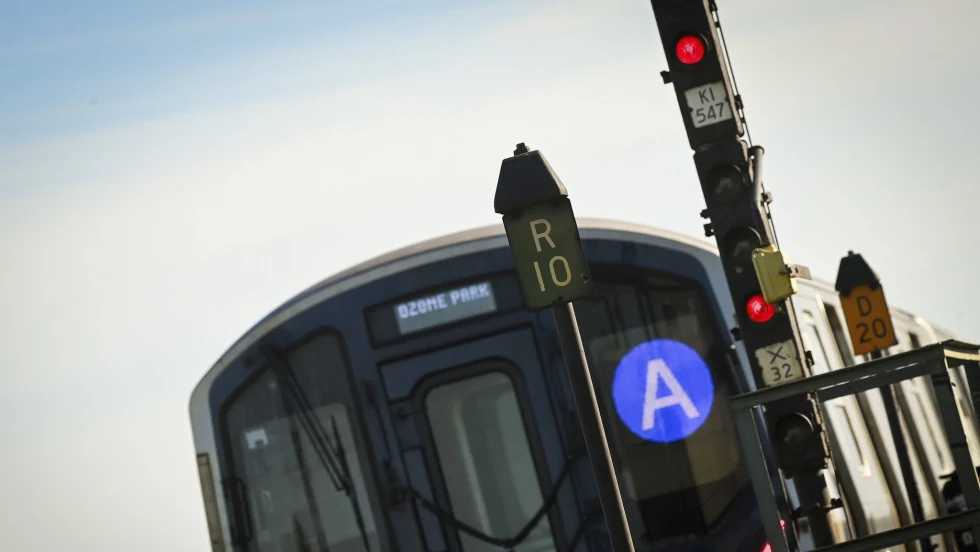
New York MTA Launches Historic $1.9B Signal, Track Modernization Project
Funded in part by congestion pricing revenue, the project will replace nearly century-old signals along the A and C lines in Brooklyn and Queens.
Read More →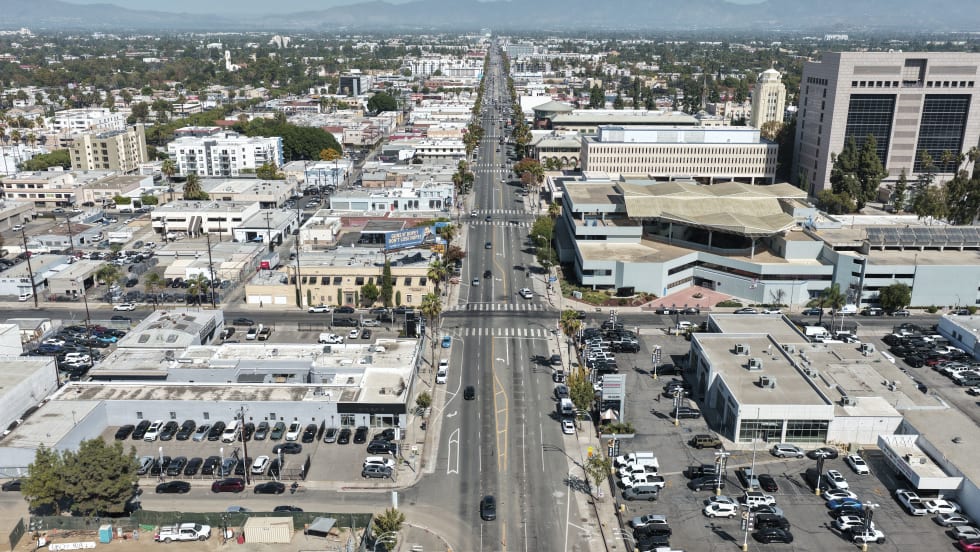
LA Metro Breaks Ground on East San Fernando Valley Light Rail Project
The 6.7-mile line will add 11 stations along Van Nuys Boulevard, expand access to jobs and regional transit connections, and support Metro’s broader efforts to improve mobility as rail ridership grows.
Read More →
CSA Group Releases Climate Resilience Standard for Transit, Passenger Rail
Developed with support from the Standards Council of Canada, CSA D700 guides assessing climate-related risks and planning adaptation measures for transit and passenger rail systems.
Read More →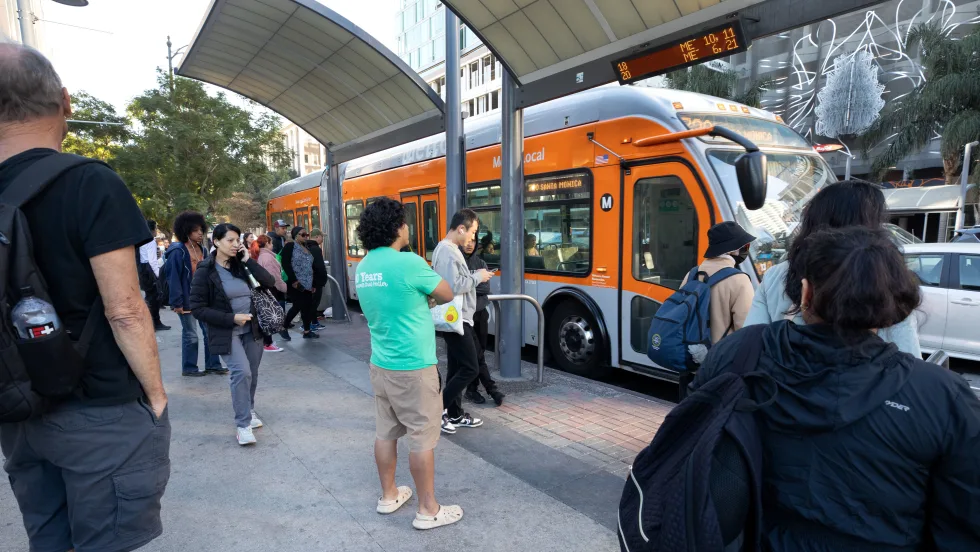
LA Metro September Ridership Climbs 3.9%, Led by Rail Growth
The agency recorded more than 27.2 million boardings, with rail ridership increasing 12.4% year over year and the D Line posting the largest gains.
Read More →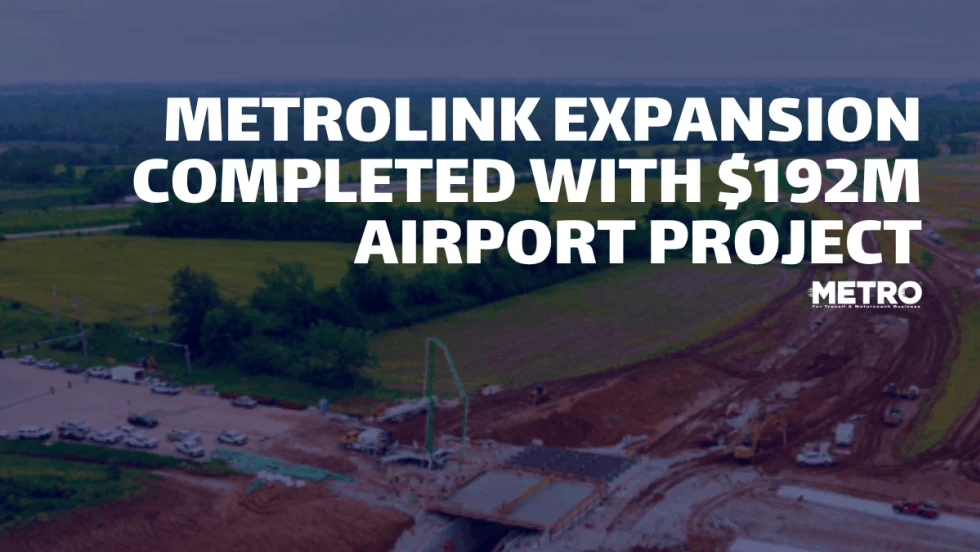
First Full MetroLink Rail Expansion Completed in 20 Years with $192M Airport Project
The project links two St. Louis-area airports by light rail while adding roadway and bike trail connections to improve regional access and mobility.
Read More →
Utilimarc Launches SmartReplace to Optimize Fleet Replacement Decisions
AI-powered SmartReplace helps fleets prioritize vehicle replacements, model budget scenarios, and build more defensible long-term strategies.
Read More →
Scenes from APTA TRANSform & EXPO 2026
Transit leaders, manufacturers, and industry professionals gathered in Chicago to explore new technologies, share ideas, and discuss the future of public transportation.
Read More →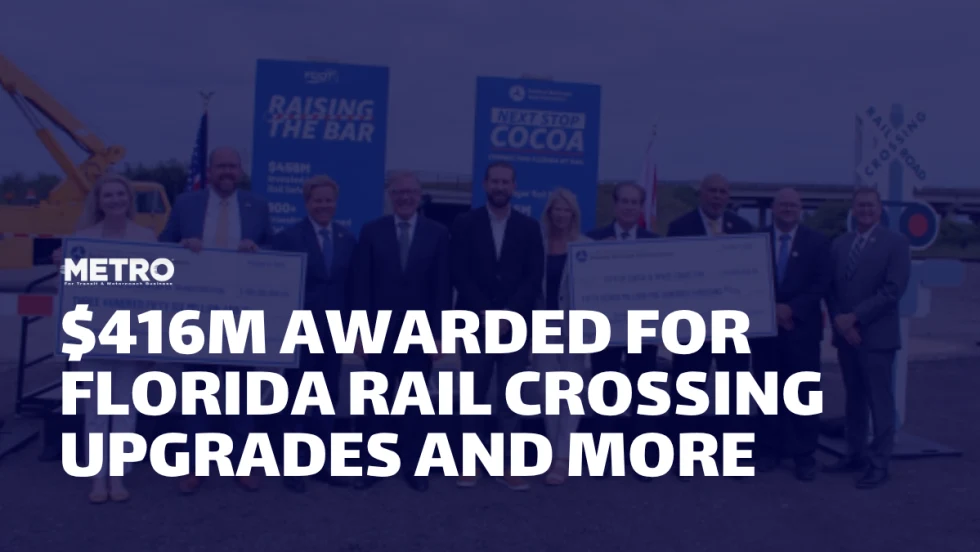
USDOT Awards $416 Million for Florida Rail Crossing Safety Upgrades, New Brightline Station
The projects aim to reduce risks for motorists and pedestrians at rail crossings while expanding passenger rail access along Florida’s Space Coast.
Read More →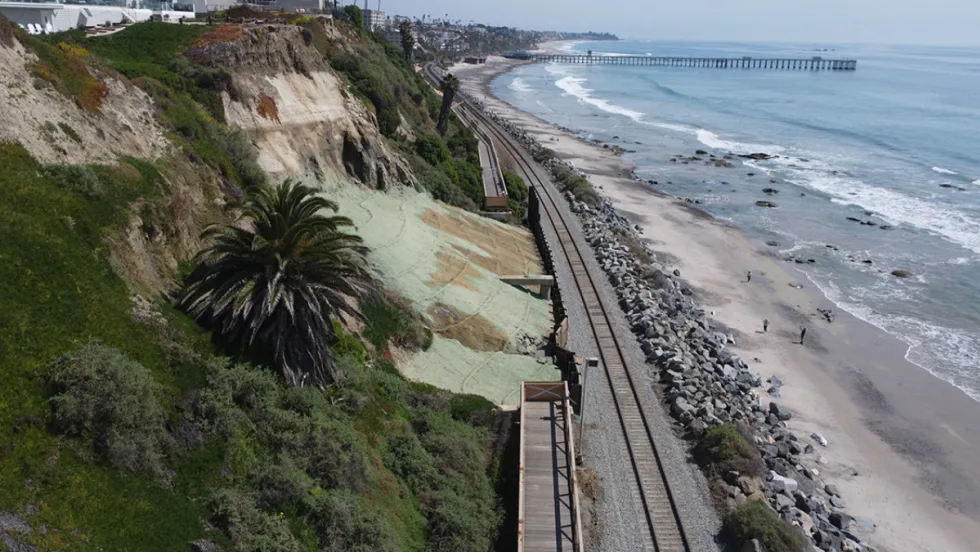
OCTA Declares Emergency to Protect Rail Corridor From Coastal Erosion
The California agency is accelerating shoreline protection and plans to place approximately 690,000 cubic yards of sand along the San Clemente coast to protect a key passenger and freight rail link.
Read More →
More Than a Summer Job: Building the Next Generation of Transit Talent
The Delaware River Port Authority and PATCO have transformed their internship program into a hands-on professional development experience that introduces students to the breadth of transportation careers — and creates a pipeline for future employees.
Read More →