




RELATED: WAVE partners with PSTA for wireless bus charging tech
Ill.'s MetroLINK, Fla.'s PSTA recognized for sustainability initiatives
First started in 2009, 154 public transit agencies and businesses have signed on to the APTA Sustainability Commitment.
August 2, 2019
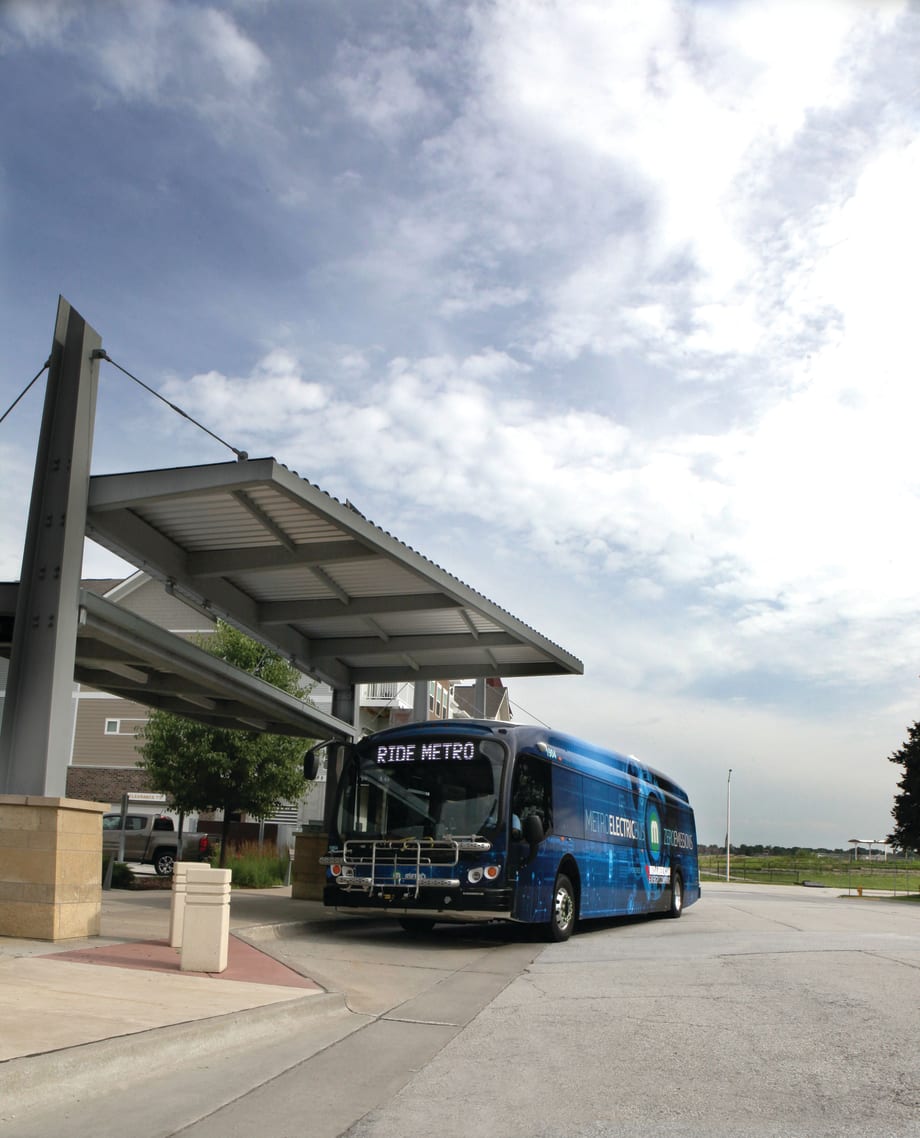
MetroLINK deployed its first eight zero emission battery electric buses and accompanying charging system over the last 18 months.
Gunter Schwarz
2 min to read
MetroLINK deployed its first eight zero emission battery electric buses and accompanying charging system over the last 18 months.
Gunter Schwarz
The American Public Transportation Association (APTA) recognized the 2019 sustainability award winners in the Silver category: Pinellas Suncoast Transit Authority (PSTA) in St. Petersburg, Fla.; and Rock Island County Metropolitan Mass Transit District (MetroLINK) in Moline, Ill. The prizes were announced at APTA’s annual Sustainability & Multimodal Planning Workshop in Boston.
“Making this commitment to sustainability lays the groundwork that will allow for future investment in new technologies and practices that will make for a brighter future for many generations to come,” APTA President/CEO Paul P. Skoutelas said.
Pinellas Suncoast Transit Authority - PSTA operates Florida’s largest fleet of hybrid-electric vehicles, with over 80 buses in the fleet. In addition, two all-electric buses are currently in operation, with four more planned for 2020. PSTA has implemented a variety of sustainability programs to benefit Pinellas County residents and visitors, including reducing electricity consumption, an internal recycling program, and operation of an after-hours service that provides Uber/taxi rides to low-income riders going to or from work when buses are not running.
Rock Island County Metropolitan Mass Transit District (MetroLINK) – MetroLINK is focused on a sustainable Quad Cities through voluntary efforts to reduce vehicle emissions, building efficient and sustainable infrastructure, and communicating transit’s environmental benefits to the community. Over 75% of MetroLINK’s fixed-route fleet is powered by CNG buses, and the system deployed its first eight zero-emission battery electric buses and accompanying charging system over the last 18 months. Recent infrastructure investments include a USGBC LEED Silver passenger terminal, which was part of a larger transit-oriented development project with residential housing, and a state-of-the-art Operations and Maintenance Facility with a rooftop solar array, solar thermal hot water system, and a bus wash water-reclamation system.
First started in 2009, 154 public transit agencies and businesses have signed on to the APTA Sustainability Commitment. Public transit agencies and businesses voluntarily choose to join the program and pledge to implement processes and actions that create continuous improvements in environmental, social, and economic sustainability. Organizations are given Platinum, Gold, Silver, and Bronze Level recognition based on specific measurable achievements.
More Technology
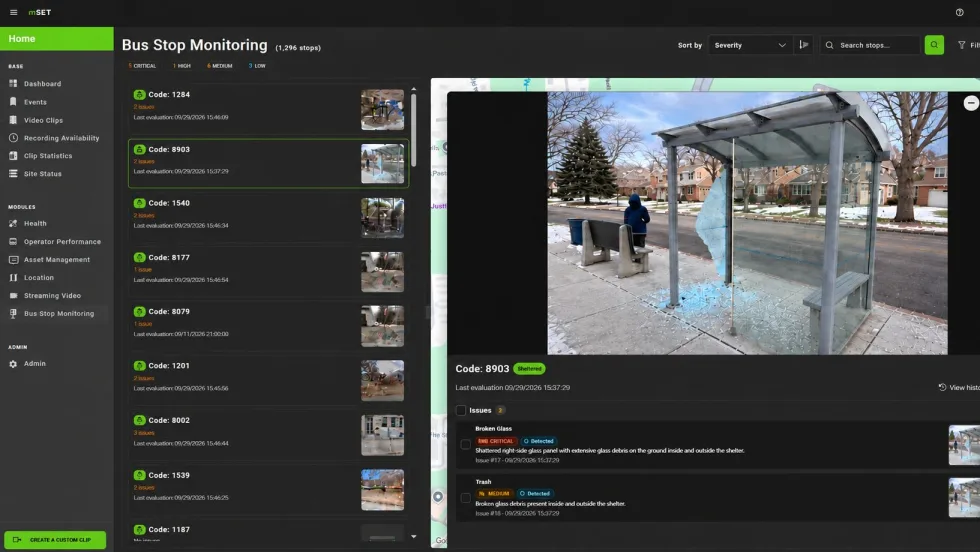
Biz Briefs: Luminator Launches AI Technology to Monitor Bus Stop Conditions and More
In METRO's latest installment, we also take a look at recent news from Masabi, Troman Industries, ioki, CCW, and more partnerships making headlines across the transportation sector.
Read More →
Public Transit Conference Returning to GFX in 2027, Call for Papers Now Open
The Call for Papers is now open, allowing transit agency professionals and industry experts to help shape the PTC educational program by submitting session ideas for consideration.
Read More →
ENC Lands MATA Contract and More in Biz Briefs
In this edition of Biz Briefs, we spotlight the latest developments shaping the future of mobility.
Read More →

Strada360’s Steve Lassey on Turning Transit Data Into Better Decisions
From breaking down data silos to preparing for AI, Strada360 CEO Steve Lassey discusses how transit agencies can use technology to improve operations, customer information, and long-term decision-making.
Read More →
Almaviva Looks to Open Architecture to Advance Transit Technology
Eric Reese discusses how interoperability, open architecture, and modular design can help transit agencies control costs, reduce vendor lock-in, and upgrade technology without starting over.
Read More →
Driving Smarter Paratransit
John Hanlon shares how AlphaRoute is leveraging AI-powered technology to help paratransit providers optimize operations, support frontline staff, and enhance the rider experience.
Read More →
From Hardware to Digital Partner: Luminator Charts Its Next Chapter
CEO Magnus Friberg discusses Luminator’s shift toward becoming a digital partner, the growing importance of software and interoperability, and how AI can help agencies improve operations and passenger experience.
Read More →
Beyond the Checklist: A Structured Approach to Transit Maintenance
Reliability-Centered Maintenance helps transit agencies move beyond routine checklists to focus limited resources on the assets and failures that have the greatest impact on safety, reliability, and service.
Read More →
NJ TRANSIT Advances Bus Technology Upgrades Across Statewide Fleet
More than 1,500 buses now feature upgraded technology designed to improve arrival predictions and provide free Wi-Fi, with deployment expected to reach nearly 2,000 buses by the end of 2026.
Read More →
Building a Flexible Path to Transit Electrification
John Hroncich discusses BAE Systems’ modular and scalable approach, lessons learned from decades of real-world operations, and how agencies can identify electrification strategies that fit their fleets.
Read More →