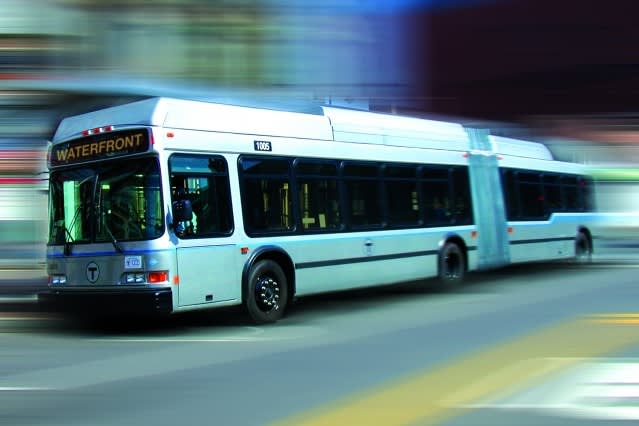
The MBTA had the highest vehicle maintenance costs per hour of bus operations among the 25 largest U.S. public transit agencies in 2015, according to the most recent data available from the National Transit Database.
The data also found that reducing those maintenance costs to the average of the five agencies comparable to the T would have saved $43.7 million that year, according to a new study published by Pioneer Institute.
MBTA vehicle maintenance costs per hour of bus operations in 2015 were 70.6 percent higher than the average of the five U.S. transit agencies most similar to the T.
Ad Loading...
“As the MBTA’s Fiscal and Management Control Board considers outsourcing bus maintenance, the data show that the T’s costs are much higher than those of comparable transit systems and that estimates of the savings that could be achieved by outsourcing appear to be accurate,” said Pioneer Research Director and former state Inspector General Greg Sullivan, author of “2015 MBTA Bus Maintenance Costs Were Nation’s Highest.”
The five transit agencies identified as comparable to the MBTA — Maryland Transit Administration, Washington Metropolitan Area Transit Authority, Southeastern Pennsylvania Transit Authority, Miami-Dade Transit and Metropolitan Atlanta Rapid Transit Authority — were selected using the automated transit agency peer selection process of the Integrated National Database Analysis System, which is partially funded by the Federal Transit Administration.
The MBTA also had the highest total vehicle maintenance labor salaries per hour of bus operations among the 25 largest U.S. public transit systems, 71.2 percent higher than the average of its peer agencies.
In terms of number of vehicle maintenance labor hours per hour of bus operations, the MBTA was second among the 25 largest U.S. public transit agencies in 2015. The T’s vehicle labor hours per hour of bus operations were the highest among its peer agencies, 33.8 percent above the average of the five.
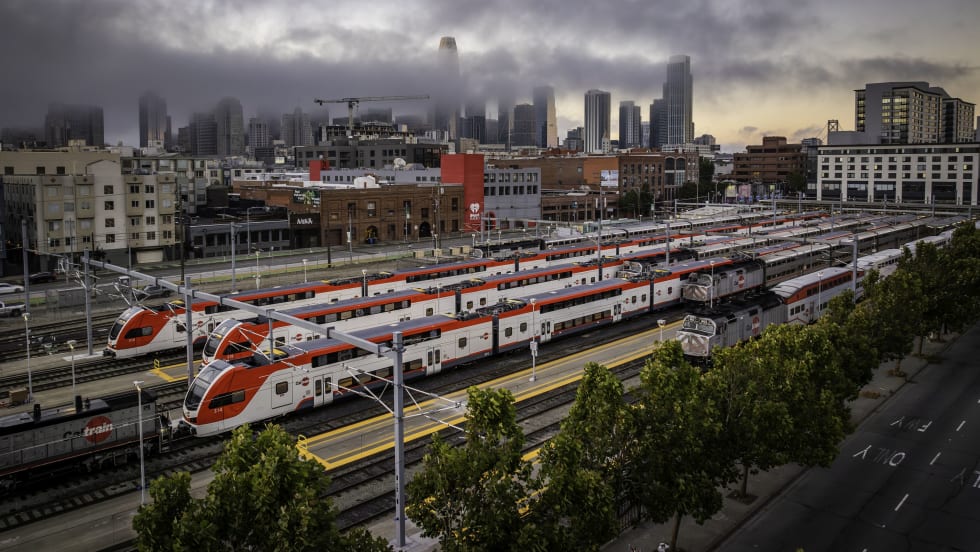
The Peninsula Corridor Joint Powers Board recently met for a budget workshop, during which staff outlined the significant service reductions Caltrain could be forced to make without new external funding.
In this edition, we cover recent appointments and announcements at Alstom, VIA Metropolitan Transit, Transdev US, and more, showcasing the individuals helping to shape the future of transportation.
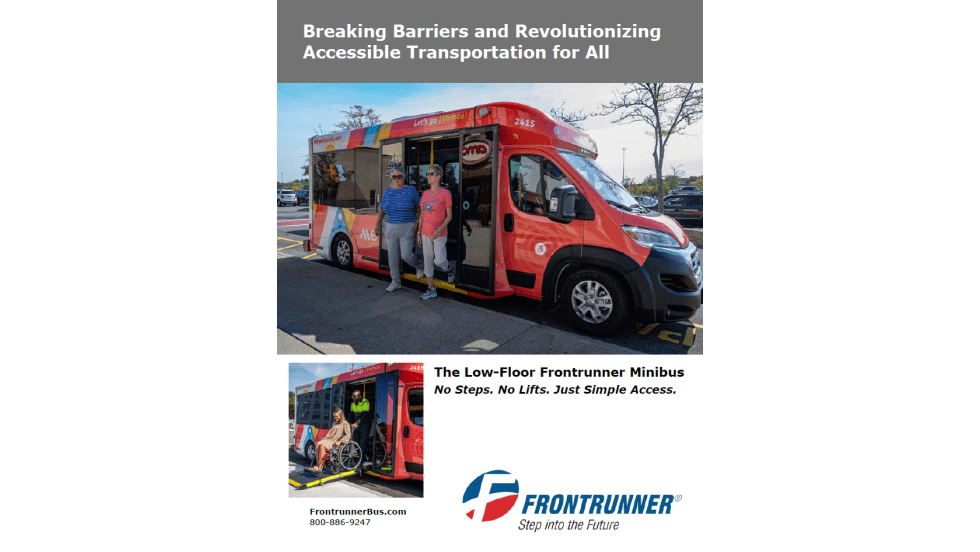
Accessible transit isn’t a feature—it’s a responsibility. This whitepaper explores how the Low-Floor Frontrunner is redefining mobility with a breakthrough design that removes barriers, empowers riders, and delivers measurable operational advantages for agencies. Discover why this next generation minibus is setting a new standard for inclusive transportation.
With major events and increased travel expected across the state this summer, the Administration is focused on making sure people have a reliable, affordable alternative to driving so we can reduce congestion, support daily commuters, and keep Massachusetts moving.
As the American Bus Association marks its 100th year, a new ABA Foundation report highlights the Marketplace’s role as a key revenue engine for the bus and group travel industry.
As motorcoaches navigate increasingly congested urban corridors filled with pedestrians, cyclists, scooters, and distracted drivers, safety leaders across the industry are confronting a growing challenge: visibility.