Amtrak to install PTC, upgrade high-speed corridor in 2014
Also plans to expand station accessibility for passengers with disabilities, with continuation of existing construction work at eight stations in three states and new construction activities at 21 stations in eight additional states.
Amtrak plans to move forward on key improvement projects in 2014, including continued installation of positive train control (PTC), the start of major construction to upgrade Northeast Corridor (NEC) high-speed rail and expansion of station accessibility for passengers with disabilities.
“With limited federal capital funding, we are doing the work that needs to be done to keep the railroad operating and taking action where we can to achieve safety, operational and passenger travel improvements,” said President/CEO Joseph Boardman. “However, to truly realize the mobility and economic benefits offered by passenger rail, there must be dedicated federal funding to support a multi-year planning and construction program.”
Ad Loading...
PTC
The agency is continuing its aggressive program to install PTC on an additional 1,200 track-miles beyond the approximately 530 track-miles where it is already in operation on some Amtrak-owned sections of the Northeast Corridor and all of its Michigan Line.
Amtrak is also taking action to obtain needed radio spectrum to transmit data critical to make PTC operational in the new areas. The agency is currently on target to meet the 2015 federal deadline.
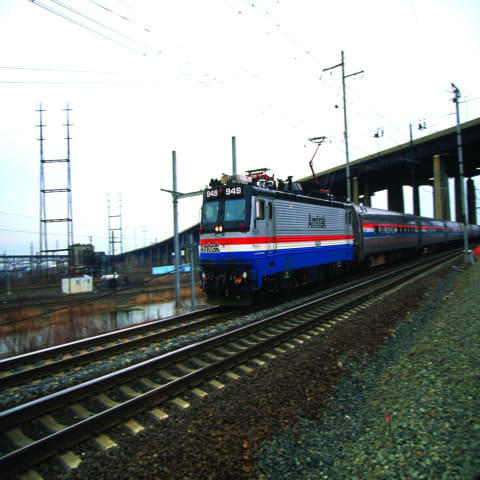
Photo courtesy Loco Steve via flickr
NEC high-speed rail
Amtrak is beginning major construction activities on a 23-mile section of the NEC between Trenton and New Brunswick, N.J., to increase top train speeds to 160 mph from 135 mph and improve reliability along this heavily-used section.
Ad Loading...
The project will upgrade track and various elements of the electrical and signal systems to support the higher speeds and reconfigure track switches at Penn Station New York to mitigate congestion issues.
ADA accessibility
Also this year, the agency will advance its Accessible Stations Development Program with continuation of existing construction work at eight stations in three states and new construction activities at 21 stations in eight additional states.
Additionally, necessary ADA-related design work will be completed for 61 stations in 20 states.
Other upgrades, replacement programs
Ad Loading...
Finally, Amtrak will move forward on other infrastructure projects, including various planning elements of the Gateway Program to expand track, tunnel and station capacity between Newark, N.J. and New York’s Penn Station; the installation or replacement of nearly 165,000 cross ties, 23 miles of rail, and several dozen track switches, turnouts and interlockings; the upgrading of numerous sections of its electrical and signal systems along the Northeast and Keystone Corridors; and state-led projects to upgrade tracks and signal systems.
With major events and increased travel expected across the state this summer, the Administration is focused on making sure people have a reliable, affordable alternative to driving so we can reduce congestion, support daily commuters, and keep Massachusetts moving.
As the American Bus Association marks its 100th year, a new ABA Foundation report highlights the Marketplace’s role as a key revenue engine for the bus and group travel industry.
As motorcoaches navigate increasingly congested urban corridors filled with pedestrians, cyclists, scooters, and distracted drivers, safety leaders across the industry are confronting a growing challenge: visibility.
In part 1 of a two-part conversation, AC Transit’s director of maintenance joins co-hosts Alex Roman and Mark Hollenbeck to discuss his journey from the U.S. Marines to public transit and the role mentorship plays in developing the next generation of industry leaders.
In reaching its decision, the board considered the District’s mounting long-term structural deficits, with current projections forecasting annual operating deficits of about $50 million beginning in FY 2027-28 and continuing in the years ahead.
The $143 million spending plan represents a 2.4% reduction from last year’s budget. Increasing expenses, along with depleted federal COVID-19 funds, continue to impact the overall budget, CDTA officials said.
Nadine S. Lee, who has served as president/CEO since July 2021, said the decision comes after careful reflection on the agency’s progress and its path forward.
The Executive Order has two parts. Within 45 days from signing, the Commissioner of Transportation, in her capacity as Chair of the NJ TRANSIT board, will develop and send to the Governor a comprehensive plan to improve riders’ experiences.