



Calif. agency adds triple bike racks
Gold Coast Transit will install new Sportworks racks on all 54 of its buses.


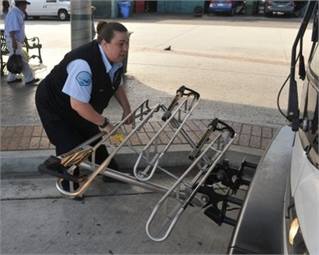
Oxnard, Calif.-based Gold Coast Transit (GCT) is installing a triple-bike rack on their full fleet of 54 buses.
Until recently, only two-bicycle racks had measurements that met state vehicle code, which limits 40-foot buses to bike racks that extend at most 36 inches from the front of the vehicle when fully deployed, and handlebars that do not extend more than 42 inches from the bus.
Last year, Sportworks developed a triple-bike rack that complies with codes. In turn, the Ventura County Transportation Commission (VCTC) authorized the purchase of as many as 100 Sportsworks “slim” triple-bike racks to be installed on VISTA intercity buses as well as on GCT, Moorpark Transit, Simi Valley Transit and Thousand Oaks Transit.
Additionally, Gov. Jerry Brown signed Assembly Bill 2488 last fall, which extends the allowable length of folding bicycle racks by four inches, giving GCT yet another option to accommodate this third bike rack.
“We are thrilled to have the ability to now accommodate the highly anticipated third bike rack. We are making every effort to ensure the successful installation of these racks and offer them to our passengers as quickly as possible,” said GCT GM Steven P. Brown.
More Bus

More Than a Summer Job: Building the Next Generation of Transit Talent
The Delaware River Port Authority and PATCO have transformed their internship program into a hands-on professional development experience that introduces students to the breadth of transportation careers — and creates a pipeline for future employees.
Read More →
LA Metro Board Awards 220 Battery-Electric Bus Contract to ENC
The contract, which is the largest base award of battery-electric buses by a U.S. transit agency, will be built in Southern California, sustaining good jobs as LA prepares to welcome the world in 2028
Read More →
Public Transit Conference Returning to GFX in 2027, Call for Papers Now Open
The Call for Papers is now open, allowing transit agency professionals and industry experts to help shape the PTC educational program by submitting session ideas for consideration.
Read More →
Indian River Transit’s Community-Focused Approach Earns National Recognition
Named APTA’s 2026 Outstanding Public Transportation System in its size category, Florida’s Indian River County transit system continues to grow ridership through fare-free service and a focus on evolving community needs.
Read More →
ENC Lands MATA Contract and More in Biz Briefs
In this edition of Biz Briefs, we spotlight the latest developments shaping the future of mobility.
Read More →
From Surviving to Thriving: Building Stronger Transportation Organizations
Bus Business Consultants founder Brian Dickson shares lessons on leadership, organizational health, and creating options for long-term success in a changing transportation industry.
Read More →
Everett Transit, Community Transit Outline Consolidation Agreement
The proposed agreement calls for a 50% increase in bus service in Everett, a new microtransit zone, continued paratransit service, and the transfer of Everett Transit operations to Community Transit.
Read More →
SEPTA Details Accelerate Vision for Transit System
The plan outlines investments in trolley modernization, new Metro and Regional Rail vehicles, accessible stations, and more frequent bus and rail service.
Read More →
Report: Transit Bus Manufacturing Supports 34,100 Jobs, $5.1B in GDP
The “Buses Mean Business” report examines the transit bus manufacturing industry’s economic footprint, supply chain, and rising demand for vehicle replacements.
Read More →
Biz Briefs: New Flyer Delivers in Columbus, Houston, Beep and Freebee Merge, and More
In this edition of Biz Briefs, we spotlight the latest developments shaping the future of mobility.
Read More →