



Icomera report measures return of ridership through Wi-Fi usage
The company measured levels from 30,000-plus trains, trams, buses, and coaches across Europe and North America.
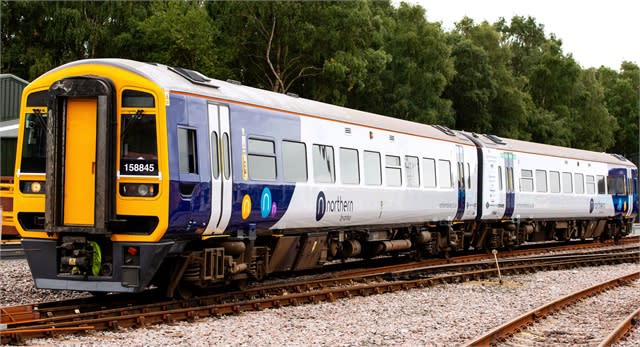
While all regions have clearly felt the impact, the session volume data illustrates that some fell further than others, and the subsequent recovery rates do vary.
Icomera
Icomera Passenger Wi-Fi usage levels from 30,000-plus trains, trams, buses, and coaches across Europe and North America have been combined to measure public transport’s rate of recovery as COVID-19 restrictions are eased.
As expected, all regions saw a dramatic drop-off in weekly passenger Wi-Fi usage through March — tracked as a percentage of usage levels in the corresponding weeks in 2019 — reaching their respective low points between late March and late April. While all regions have clearly felt the impact, the session volume data illustrates that some fell further than others, and the subsequent recovery rates do vary.
In Eastern Europe, Passenger Wi-Fi usage has currently made a plus-54 percentage point recovery from its lowest point (4%), to now sit at 58% of its 2019 levels.
Western Europe has made an 30 percentage points recovery to 43%.
Northern Europe (excluding the United Kingdom and the Republic of Ireland) is up 14 percentage points to 28%.
North America is up 12 percentage points to 18%.
The UK and the Republic of Ireland are up 5 percentage points to 12%.
Southern Europe is up 9 percentage points to 11%.
Eastern Europe has experienced a positive step change in recent weeks, with many restrictions in the region being lifted during the weeks of May 25 and June 1. Western Europe is also showing a gradual recovery from a comparatively less impacted position.
Some regions are only now seeing the passenger Wi-Fi usage levels that Northern and Western Europe saw at their lowest points. The UK and Ireland are experiencing the slowest return, while Southern Europe is still feeling the after-effects of the toughest lockdowns and is climbing back from the heaviest reduction in passenger Wi-Fi usage.
More Technology
California Law Extends AC Transit’s Bus Lane Camera Enforcement
The new law allows AC Transit to continue using forward-facing bus cameras to enforce parking violations in bus-only lanes and at bus stops.
Read More →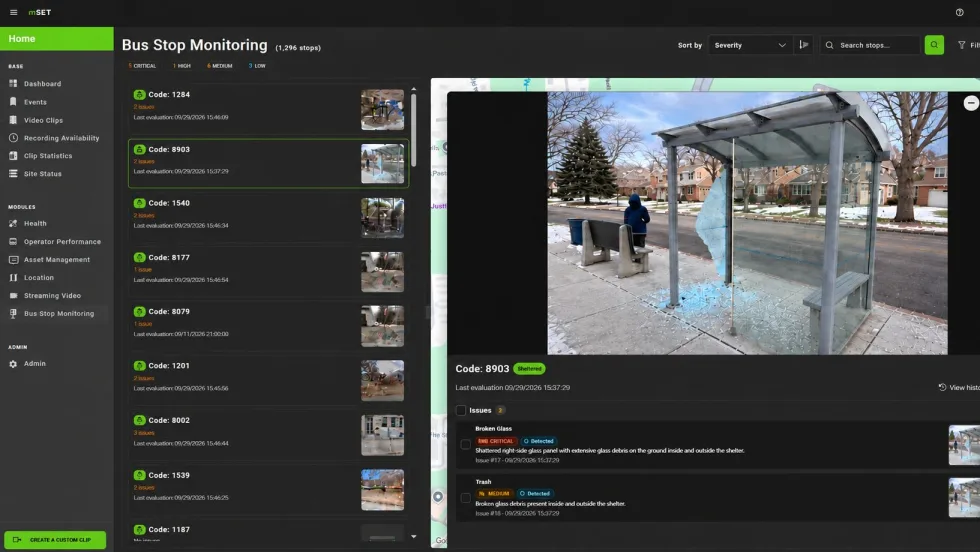
Biz Briefs: Luminator Launches AI Technology to Monitor Bus Stop Conditions and More
In METRO's latest installment, we also take a look at recent news from Masabi, Troman Industries, ioki, CCW, and more partnerships making headlines across the transportation sector.
Read More →
Public Transit Conference Returning to GFX in 2027, Call for Papers Now Open
The Call for Papers is now open, allowing transit agency professionals and industry experts to help shape the PTC educational program by submitting session ideas for consideration.
Read More →

ENC Lands MATA Contract and More in Biz Briefs
In this edition of Biz Briefs, we spotlight the latest developments shaping the future of mobility.
Read More →
Strada360’s Steve Lassey on Turning Transit Data Into Better Decisions
From breaking down data silos to preparing for AI, Strada360 CEO Steve Lassey discusses how transit agencies can use technology to improve operations, customer information, and long-term decision-making.
Read More →
Almaviva Looks to Open Architecture to Advance Transit Technology
Eric Reese discusses how interoperability, open architecture, and modular design can help transit agencies control costs, reduce vendor lock-in, and upgrade technology without starting over.
Read More →
Driving Smarter Paratransit
John Hanlon shares how AlphaRoute is leveraging AI-powered technology to help paratransit providers optimize operations, support frontline staff, and enhance the rider experience.
Read More →
From Hardware to Digital Partner: Luminator Charts Its Next Chapter
CEO Magnus Friberg discusses Luminator’s shift toward becoming a digital partner, the growing importance of software and interoperability, and how AI can help agencies improve operations and passenger experience.
Read More →
Beyond the Checklist: A Structured Approach to Transit Maintenance
Reliability-Centered Maintenance helps transit agencies move beyond routine checklists to focus limited resources on the assets and failures that have the greatest impact on safety, reliability, and service.
Read More →
NJ TRANSIT Advances Bus Technology Upgrades Across Statewide Fleet
More than 1,500 buses now feature upgraded technology designed to improve arrival predictions and provide free Wi-Fi, with deployment expected to reach nearly 2,000 buses by the end of 2026.
Read More →