



San Diego MTS Donates 39 More Trolleys to City of Mendoza, Argentina
After almost 30 years, MTS has decommissioned the Trolleys in favor of lowering maintenance costs and improving the customer experience.
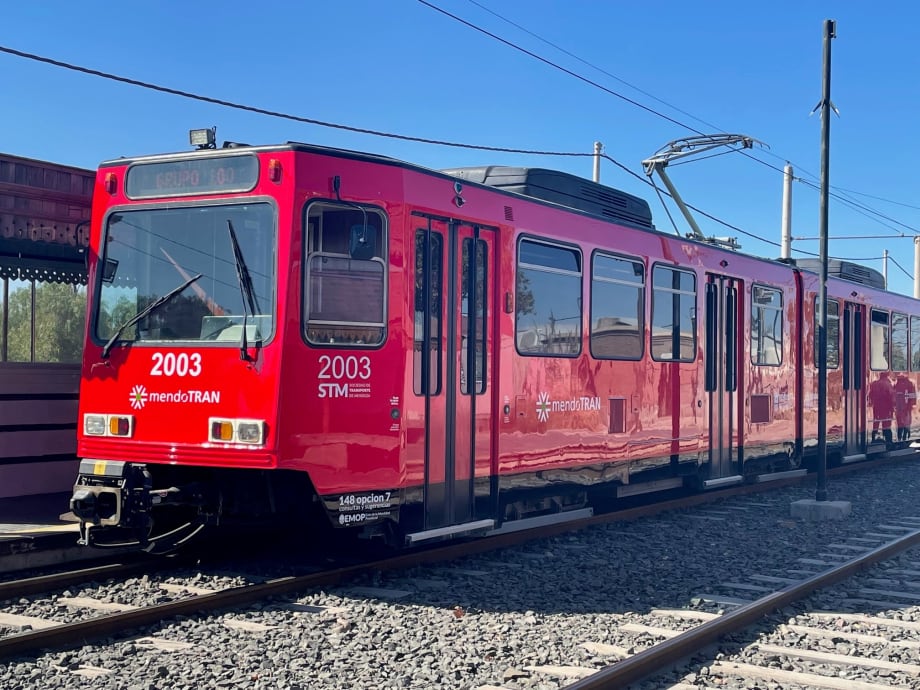
The LRVs arriving in Mendoza are part of the second generation of Trolleys at MTS, the Siemens SD100 series.
MTS
San Diego’s Metropolitan Transit System (MTS) finalized an agreement with the City of Mendoza, Argentina, to donate up to 39 older Trolleys that began operating in 1995, making room for more of the newest generation of light rail vehicles (LRV) for MTS.
The LRVs arriving in Mendoza are part of the second generation of Trolleys at MTS, the Siemens SD100 series. After almost 30 years, MTS has decommissioned the Trolleys in favor of lowering maintenance costs and improving the customer experience. Given their excellent and durable condition, they have been donated to the Province of Mendoza and will become part of the Metrotranvia Mendoza (MTM) light rail fleet.
“As MTS modernizes its Trolley fleet, we are very glad to see our older models continue to be put to use, serving the people of Mendoza to carry residents to work, school and other activities, just like they’ve been doing in San Diego for almost 30 years,” said Sharon Cooney, MTS CEO. “I’d like to personally thank our friends from the City of Mendoza for this partnership. It’s great to see light rail flourish in other parts of the world the way it has in San Diego, while also keeping these vehicles from the ‘scrap’ heap or landfill.”
This is the second time MTS is sending vehicles to Mendoza. Given the compatibly of the city’s light rail infrastructure with San Diego’s LRVs manufactured by Siemens, back in 2012, MTS sold 24 Trolleys to Mendoza from its first-generation fleet.
“The exceptional condition of our Trolleys is a testament to the excellent work of our maintenance workers, technicians, and Trolley operators,” said Wayne Terry, MTS COO, rail division. “Donating these light rail vehicles to Mendoza benefits the city’s economy and residents. It will also cost MTS zero dollars to execute. It is a win-win for both transportation agencies.”
The government of Mendoza is covering all costs associated with the donation and shipping, including labor for a team of MTS workers to reassemble the cars, and plans to send technicians to San Diego in the near future for more in-depth Maintenance and Operations training.
To make the trip, the vehicles must be dismantled into two pieces and encased in plastic. The LRVs are being transported by truck to Long Beach, by boat to Antofagasta, Chile, and then by truck the remaining distance to Mendoza through the lower Andes. The first three cars have just arrived in Mendoza, and shipments are expected to continue over the course of the year. Terry and a small team of MTS LRV maintenance staff made the trip to Mendoza to oversee the arrival.
More Rail

New York MTA Advances Final Contract for Second Avenue Subway Expansion
Contract Four is the largest in the Second Avenue Subway Phase 2 project and includes construction of station infrastructure, tracks, and signals for the subway expansion, MTA officials said. Work on Contract Four will begin in 2027.
Read More →
San Diego MTS Breaks Monthly Trolley Ridership Record
Agency officials said July’s ridership indicates MTS’s continued recovery from the pandemic.
Read More →
Report Examines NJ TRANSIT Reliability, Funding Challenges
The Garden State Initiative analysis examines the roles of Amtrak infrastructure, fleet management, and agency operations while recommending a more performance-based approach to improving reliability.
Read More →
Stadler, CapMetro Sign Long-Term Rail Fleet Support Agreement
Beginning in 2027, Stadler will provide on-site technical expertise, spare parts support, training, and obsolescence management to help extend the reliability and longevity of CapMetro’s GTW fleet.
Read More →
Biz Briefs: Alstom Lands Canadian Contract, LYT to Supply California TSP, and More
In METRO's latest installment, we take a look at recent news from Complete Coach Works, Beep, FlixBus, and more partnerships making headlines across the transportation sector.
Read More →
CATS Gold Line Marks 5 Years of Service, 2.8M Passenger Trips
With a six-mile expansion planned, the Charlotte streetcar is positioned to connect more neighborhoods and major transit hubs across the region.
Read More →
Why Simulating Pedestrian Movement Has Become Essential for Modern Rail Stations
Pedestrian microsimulation is helping rail planners identify bottlenecks, test station designs, and prepare complex transit hubs for growing passenger volumes.
Read More →
Amtrak Begins Major Construction at New York’s Sunnyside Yard
The new maintenance facility will support Amtrak’s Airo trainsets while improving maintenance efficiency and turnaround times in New York.
Read More →
Chicago Leaders Unveil Plans for O’Hare Airport Express Train
The privately developed project would offer a 15-minute trip between downtown and O’Hare’s Terminal 2, with trains operating every 15 minutes on a dedicated track. The service would use battery-electric trains and three existing freight rail rights-of-way.
Read More →
OCTA Maps Out 30-Year Strategy to Protect Coastal Rail Corridor
The draft feasibility report identifies strategies to protect the coastal rail line for decades as the agency continues near-term stabilization and sand placement efforts.
Read More →