




More: New York MTA Unveils State-of-the-Art Bus Operator Training Simulators
New Accessibility Upgrades Open at Harlem Subway Station
A new ADA-compliant ramp and station upgrades improve access, enhance the rider experience, and deliver millions in cost savings for the MTA.
May 4, 2026
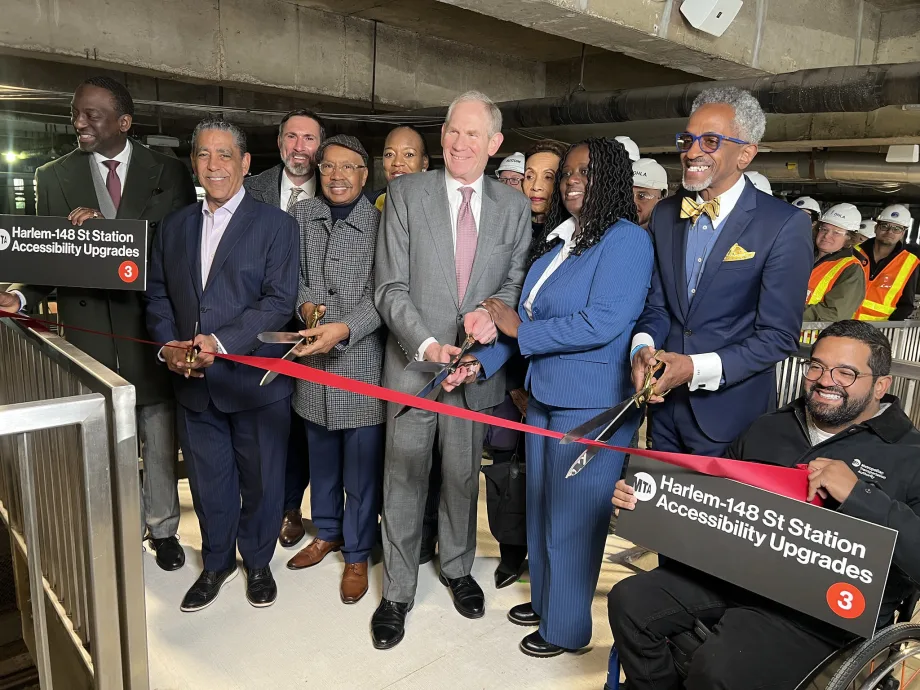
Because every station in the MTA system is built differently, ramps aren’t always feasible, but where they fit, they are significantly cheaper to build and require less maintenance than elevators.
Credit:
Ray Raimundi/MTA
2 min to read
On May 1, the Metropolitan Transportation Authority (MTA) announced the completion of accessibility upgrades at the Harlem-148 Street 3 Station.
A new six-foot-wide ADA-compliant ramp with guardrails and handrails has been installed that runs from the street to the platform, which provides a lower-cost accessibility solution for customers, according to an agency release. Project crews also installed an eight-foot-wide staircase as an additional path from street to platform to “improve the flow of customers entering and exiting the station.”
“In recent years, the MTA has dramatically accelerated work to make our subway system ADA accessible,” said MTA Chair and CEO Janno Lieber. “Since 2020, we’ve upgraded 57 stations to fully accessible status, and right now another 40 stations are under construction, with 60 stations coming as part of the current MTA Capital Plan.”
MTA also found a way to deliver full accessibility that’s useful for riders and benefits the agency’s budget.
“It’s a perfect example of how the MTA is expanding accessibility better, faster, and cheaper,” said MTA Construction & Development President Jamie Torres-Springer. “By installing a ramp where it makes sense over what elevators would have cost, we saved $30 million on this project, and that’s dollars that go into making other stations ADA accessible.”
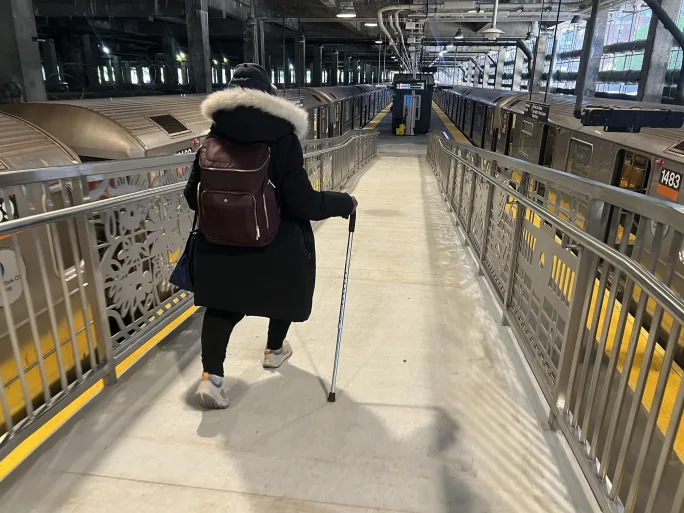
Permanent artwork by artist Michael A. Cummings shows up in the stainless-steel panels installed within the railing of the new accessibility ramp.
Credit:
Ray Raimundi/MTA
Beyond Accessibility Enhancements at Harlem Station
Because every station in the MTA system is built differently, ramps aren’t always feasible, but where they fit, they are significantly cheaper to build and require less maintenance than elevators. The design is part of an ongoing effort by MTA C&D to expand accessibility while reducing costs, contributing to the more than $4 billion saved since the creation of MTA C&D in 2020.
“All Harlem residents and visitors, especially those with mobility devices, luggage, and strollers, will forever enjoy guaranteed access to this station thanks to this newly installed ramp,” said MTA Chief Accessibility Officer Quemuel Arroyo.
In addition to accessibility upgrades, the project includes significant station upgrades designed to enhance customer experience, including brighter, energy-efficient LED lighting above and below the ramp, a new Automated Fare Control gate, a new public announcement system and a new customer information screen. Upgrades also include a new CCTV system along with an expanded fire alarm system.
Art is another element of the upgrades at the Harlem-148 Street 3 station. MTA Arts & Design announced the installation of Harlem Reflections, a new permanent artwork by artist Michael A. Cummings. Comprising 36 intricately designed stainless-steel panels installed within the railing of the new ramp, the work traces the layered histories, communities, and natural landscapes that have shaped Harlem and Manhattan.
More Management

Public Transit Conference Returning to GFX in 2027, Call for Papers Now Open
The Call for Papers is now open, allowing transit agency professionals and industry experts to help shape the PTC educational program by submitting session ideas for consideration.
Read More →
Indian River Transit’s Community-Focused Approach Earns National Recognition
Named APTA’s 2026 Outstanding Public Transportation System in its size category, Florida’s Indian River County transit system continues to grow ridership through fare-free service and a focus on evolving community needs.
Read More →
ENC Lands MATA Contract and More in Biz Briefs
In this edition of Biz Briefs, we spotlight the latest developments shaping the future of mobility.
Read More →

From Surviving to Thriving: Building Stronger Transportation Organizations
Bus Business Consultants founder Brian Dickson shares lessons on leadership, organizational health, and creating options for long-term success in a changing transportation industry.
Read More →
Everett Transit, Community Transit Outline Consolidation Agreement
The proposed agreement calls for a 50% increase in bus service in Everett, a new microtransit zone, continued paratransit service, and the transfer of Everett Transit operations to Community Transit.
Read More →
Strada360’s Steve Lassey on Turning Transit Data Into Better Decisions
From breaking down data silos to preparing for AI, Strada360 CEO Steve Lassey discusses how transit agencies can use technology to improve operations, customer information, and long-term decision-making.
Read More →
People Movement: Phil Washington Joins HNTB, Denver RTD Launches CEO Search, and More
In this edition, we also spotlight recent personnel moves at STV, the Eno Center for Transportation, and more, highlighting the people taking on new roles across the transportation industry.
Read More →
SEPTA Details Accelerate Vision for Transit System
The plan outlines investments in trolley modernization, new Metro and Regional Rail vehicles, accessible stations, and more frequent bus and rail service.
Read More →
FTA Ends Direct Oversight of MBTA Safety Actions
The federal agency closed its remaining special directive to the Massachusetts Department of Public Utilities following a safety review that began in 2022.
Read More →
Report: Transit Bus Manufacturing Supports 34,100 Jobs, $5.1B in GDP
The “Buses Mean Business” report examines the transit bus manufacturing industry’s economic footprint, supply chain, and rising demand for vehicle replacements.
Read More →