



UPDATED: Iowa's DART Taps New CEO, Deputy CEO/COO
Erin Hockman will officially assume the role on May 7, as current CEO Amanda Wanke departs to take a leadership position with Metro Transit in the Twin Cities.

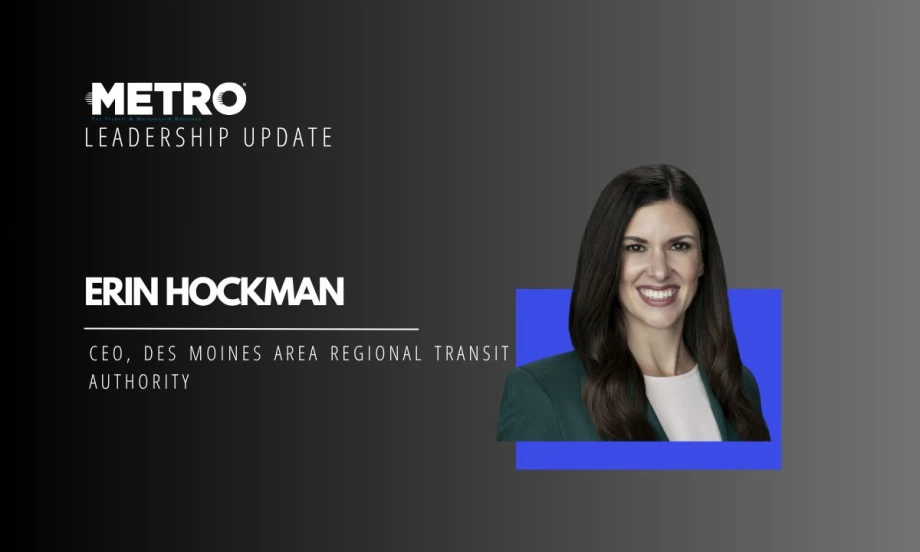
Erin Hockman joined DART in 2016 as marketing and communications manager, bringing valuable experience from the private sector.
DART
- Erin Hockman has been appointed as the new CEO of Iowa's DART.
- Hockman will start her new role on May 7.
- Current CEO Amanda Wanke is leaving to join Metro Transit in the Twin Cities.
*Summarized by AI
This story, originally published May 4, has been updated to include the announcement of a new Deputy CEO/COO.
The board at Iowa’s Des Moines Area Regional Transit Authority (DART) announced the selection of Erin Hockman as CEO.
A respected and familiar leader with both the organization and the Greater Des Moines community, Hockman brings a decade of experience at DART, most recently as chief administrative and strategy officer.
She will officially assume the role on May 7, as current CEO Amanda Wanke departs to take a leadership position with Metro Transit in the Twin Cities.
“Erin is a proven leader who’s been at the heart of DART’s work for years and has earned the trust of this commission and the member communities DART serves,” said Connie Boesen, chair of the DART Commission. “As we get ready to roll out Reimagine DART and whatever follows in the years ahead, we’re confident she’s the right person to continue advancing public transit’s impact in Greater Des Moines.”
Building a Legacy in Des Moines
Hockman joined DART in 2016 as marketing and communications manager, bringing valuable experience from the private sector.
Before DART, she spent eight years at Kemin Industries, a global nutritional manufacturing company, where she advanced through multiple roles focused on strategic communications, executive counsel, employee relations, public relations, and marketing.
At DART, Hockman has played a key role in shaping organizational strategy, working closely with the CEO to align priorities and guide short- and long-term planning. She has also helped spearhead Reimagine DART, including a community-driven network redesign set to launch in June, said officials.
“What made this decision easy for me is the exceptional team at DART,” said Hockman. “Talented, dedicated employees drive our success at every level, who are committed to delivering their best for our riders and the communities we serve. I am excited about the transformative changes we’re making to our bus routes next month, which will expand access to more people while delivering a stronger return on investment and lowering costs to taxpayers.”
DART Adds Deputy CEO
In her first few days as CEO, Hockman announced an expanded leadership role for Luis Montoya, who will serve as deputy CEO and COO.
Montoya, who previously served as chief operating and planning officer, joined DART in 2018 from the San Francisco Municipal Transportation Agency and brings nearly two decades of community transit experience.
Known for pairing strategic leadership with a roll-up-the-sleeves approach, he has helped guide the organization through a period of significant change and progress. He has led innovative service pilots and partnerships, helped navigate the pandemic, and played a key role in shaping a new network redesign set to launch in June as a result of Reimagine DART.
Hockman said Montoya’s leadership and expertise will be critical as DART moves from implementing a new bus network into its next phase while ensuring strong leadership continuity.
Quick Answers
Erin Hockman is the new CEO of Iowa's DART.
*Summarized by AI
More Management

Best and Worst U.S. Cities for Public Transportation in 2026
A new analysis of 50 major U.S. urban areas ranks public transit systems based on accessibility, affordability, usefulness, and safety, highlighting where transit performs best and where challenges remain.
Read More →
Laketran Cuts Fuel Costs, Boosts Efficiency with Propane-Powered Fleet
The Ohio transit agency is using propane-powered vehicles and on-site fueling infrastructure to cut fuel and maintenance costs while meeting growing demand for paratransit services.
Read More →
Canada’s Public Transit Supports $65.6 Billion in Annual GDP
New research from the Canadian Chamber of Commerce examines transit's economic contributions, including job creation and the financial implications of transportation investment.
Read More →
Pierce Transit Moves to Expand Fleet Following Proposition 1 Approval
The agency authorized the purchase or refurbishment of up to 60 buses to support a 47% service expansion, as voters nationwide approved billions in new transit funding.
Read More →
Right-Sizing Rural Transit: Lessons from North Grenville’s On-Demand Model
A small municipality shows how flexible service, rider needs, and public accountability can expand mobility with limited resources.
Read More →
Transit Ballot Victories Signal Strong Voter Support: What Comes Next?
Voters approved billions in public transportation investments in 2026, giving agencies opportunities to preserve service, expand operations, and strengthen regional connections amid a changing political landscape.
Read More →
Transit Expands Agency Partnerships, Reaching 200 Official App Partners
COO Jake Sion discusses Transit’s growth, the success of its Transit Royale program, and how technology is helping agencies improve the rider experience.
Read More →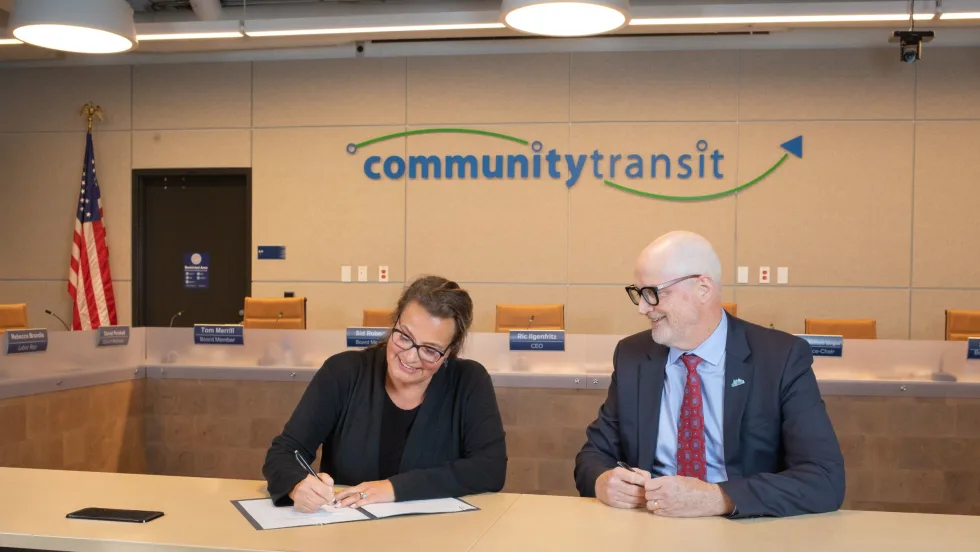
Everett Transit, Community Transit Approve Consolidation of Services
The agreement will bring Everett Transit into Community Transit’s network in April 2027, with plans to increase bus service by 50% by 2031 and expand regional connections.
Read More →
NITA Proposes $5B Operating Budget, $9.7B Capital Program for 2027
The proposed budget includes funding for expanded transit service, safety initiatives, fleet upgrades, and infrastructure improvements across CTA, Metra, and Pace.
Read More →
Financing, Fleet Replacement Requires a More Strategic Approach
Executives from ABC Companies and MCI discuss how rising costs, changing market conditions, and post-pandemic challenges are prompting motorcoach operators to rethink financing strategies, fleet replacement cycles, and long-term planning.
Read More →