



L.A. Metro, Partners Break Ground on Affordable Housing Project
The joint development project, scheduled for completion in 2024, is Metro’s latest effort to add critically needed affordable housing to the L.A. region and provide new opportunities for Metro customers to live adjacent to transit in their own communities.

L.A. Metro’s joint development sites are a gateway to the Metro transit system and hold unique potential to advance community development goals while attracting new riders to the Metro system.
L.A. Metro
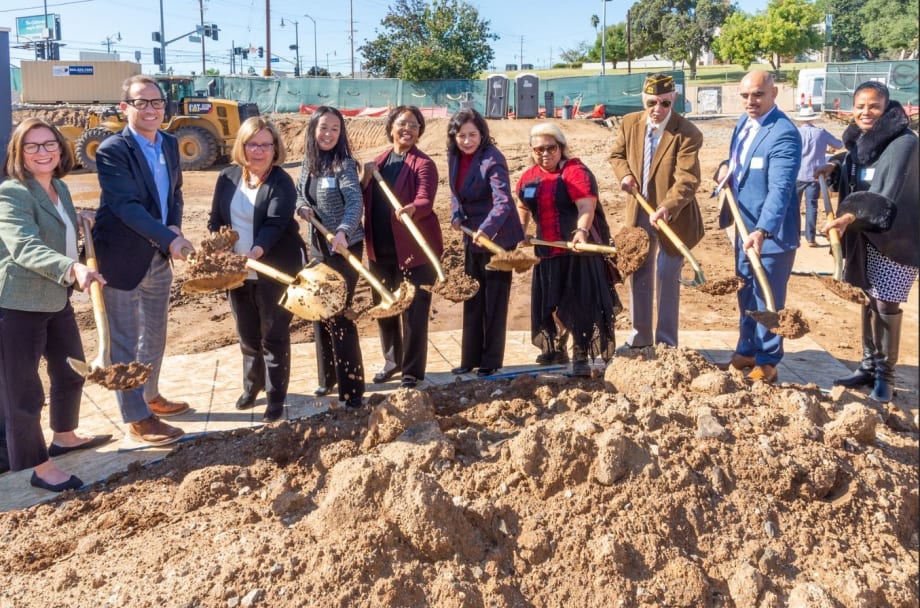
The Los Angeles County Metropolitan Transportation Authority (Metro) and A Community of Friends, a nonprofit specializing in developing supportive housing, broke ground on construction of a new affordable housing development called Lorena Plaza located at the intersection of 1st and Lorena Streets in Boyle Heights. Low-income veterans will receive preference for half of all units in the development.
The joint development project, scheduled for completion in 2024, is Metro’s latest effort to add critically needed affordable housing to the L.A. region and provide new opportunities for Metro customers to live adjacent to transit in their own communities.
Located next to the L Line (Gold) about a quarter mile from the Indiana Station, the development will be home to a four-story apartment building that will include 49 affordable housing units. This includes a mix of studio, one-, two-, and three-bedroom apartments. It will also feature 7,500 square feet of commercial space. Thirty-two of the 49 apartments will go to unhoused individuals and families, another 16 to low-income families and the remaining unit will go to a resident manager.
Of the 48 apartments to be leased, half will go to veterans who are either unhoused or low-income. In addition to housing, the Lorena Plaza project will also provide supportive services to its tenants.
Onsite amenities will include a large community room with kitchen that opens into a private, landscaped interior courtyard with outdoor seating. There will also be a barbecue area, play area for children, on-site laundry rooms, offices for case management staff and property manager, bicycle parking, computer room, fitness center, and elevators.
As a part of the original Spanish land grant that established the City of Los Angeles in 1781, Boyle Heights was one of the first neighborhoods to develop outside of Downtown Los Angeles. When Lorena Plaza is completed, it will help the Boyle Heights community maintain its rich history of vibrancy and diversity and help its residents avoid displacement.
Metro’s joint development sites are a gateway to the Metro transit system and hold unique potential to advance community development goals while attracting new riders to the Metro system. In June 2021, the Metro board adopted an updated Joint Development Policy with a mandate to build as much affordable housing near transit for those who need it most, as soon as possible.
"This project demonstrates what holistic approaches, strong partnerships and perseverance can achieve. We are grateful to the many members of the community who were involved in making this project a reality," said Metro CEO Stephanie Wiggins. "We are excited to partner with A Community of Friends to bring much-needed affordable housing to Boyle Heights."
In 2022, 300 affordable housing units have begun construction on Metro-owned property. This is in addition to the 2,200 existing units already in Metro’s portfolio. Last June, Metro celebrated the groundbreaking of Los Lirios, another Boyle Heights affordable housing development. With the addition of Lorena Plaza, 111 affordable housing units are now under construction in Boyle Heights.
Metro’s overall joint development efforts are designed to help reduce auto use and increase transit ridership by directly linking Metro’s transportation network with housing, employment, retail and commercial opportunities.
More Management

Bringing Austin’s First Light Rail System to Life
Austin Transit Partnership CEO Greg Canally discusses the city's nearly 10-mile light rail project, its collaborative approach to project delivery, the importance of community engagement, and the milestones ahead as construction approaches in 2027.
Read More →
ETA CEO John Maglio on Transit Technology, Innovation, and Building Agency Trust
ETA founder and CEO John Maglio explores the evolution of transit technology, the importance of reliable systems, and how stronger partnerships can help agencies improve operations and the passenger experience.
Read More →
Metra Draft Plan Outlines Costs, Service Improvements for Regional Rail
The Systemwide Network Plan identifies infrastructure needs and potential investments to expand all-day, bidirectional rail service across the Chicago region.
Read More →
New Orleans RTA Names Augustine III as New CEO
In this edition, we also spotlight recent personnel moves at HDR, PATH, STV, and more, highlighting the people taking on new roles across the transportation industry.
Read More →
How Transit Agencies Are Using Free Rides to Improve Voting Access
Transit agencies are using fare-free service, trip-planning tools, and targeted rides to improve voting access. See what other agencies can learn from these efforts.
Read More →
Caltrain’s Electrification Drives a New Era of Ridership Growth
The railroad’s shift to electric service has brought more frequent trains, stronger customer satisfaction, and increased ridership, earning it APTA’s Outstanding Public Transportation System award.
Read More →
Chicago, Charlotte Transit Agencies Expand Rider Support Programs
CTA launched crisis intervention teams as CATS prepares to deploy fare ambassadors, expanding customer assistance and security efforts across both systems.
Read More →
New York MTA Launches Historic $1.9B Signal, Track Modernization Project
Funded in part by congestion pricing revenue, the project will replace nearly century-old signals along the A and C lines in Brooklyn and Queens.
Read More →
Brian Dickson on Building Stronger, More Resilient Transportation Organizations
Bus Business Consultants Founder Brian Dickson discusses the leadership principles, operational discipline, and strategic planning that separate transportation companies positioned for long-term success from those stuck in survival mode.
Read More →
LA Metro Breaks Ground on Vermont BRT Project
The 12.4-mile corridor is projected to serve 66,200 daily riders, reduce travel times by up to 24%, and create the nation's busiest bus rapid transit corridor.
Read More →