



Foothill Gold Line Celebrates Completion of Work for New Light Rail Track System
The celebration took place at the D Street railroad crossing in La Verne, Calif., just steps away from the University of La Verne campus and one of the four new light rail stations that will serve future riders.


Regional leaders from the San Gabriel Valley celebrating completion of major work on new light rail track system for 9.1-mile, four-station Foothill Gold Line light rail project from Glendora to Pomona at Track Completion Ceremony on June 24, 2023, in La Verne, Calif.
Photo: Construction Authority
The Foothill Gold Line Construction Authority (Construction Authority) held a Track Completion Ceremony to celebrate the completion of major work for the new light rail track system for the 9.1-mile, four-station Foothill Gold Line light rail project from Glendora to Pomona.
Construction Authority's Celebration
The celebration took place at the D Street railroad crossing in La Verne, Calif., just steps away from the University of La Verne campus and one of the four new light rail stations that will serve future riders.
The event culminated in the installation of the 230,630th rail clip (rail clips permanently attach the steel rail to the concrete railroad ties), officially completing major construction for the new light rail tracks, and permanently connecting the cities of Glendora, San Dimas, La Verne, and Pomona via this new light rail line.
An engraved, commemorative boulder embedded in the sidewalk was also unveiled during the ceremony, recognizing the importance of the day to these corridor cities.
“It is a historic and symbolic day for the Foothill Gold Line project and our corridor cities,” said Foothill Gold Line Board Chairman Ed Reece. “The completion of the light rail tracks doesn’t just mark a physical connection between Glendora, San Dimas, La Verne, and Pomona; it also marks the imminent arrival of a better and brighter transportation future for these foothill communities, the San Gabriel Valley and Greater Los Angeles.”
History of the Project
Since major construction on the project began in July 2020, work has been underway or completed on the new light rail system; 19 new or renovated bridges, including four bridges spanning major streets and intersections; 21 at-grade railroad crossings; four new stations, including public artwork for the stations; freight track relocation; project walls; and more.
Nearly all major construction activities will be completed this year, with testing of the new light rail system expected to begin by the end of the year.
The project is now 72% complete overall and remains on schedule to be completed in early-January 2025 when it will be turned over to Metro for training and pre-revenue service. Metro determines when passenger service starts.
"Congratulations to the Foothill Gold Line Construction Authority on reaching this important milestone,” said Stephanie Wiggins, CEO of Metro. “The Foothill Extension will be the first light rail project funded by Measure M to be delivered to L.A. County residents, and once completed it will provide needed transit services to the 2 million residents of the San Gabriel Valley. This project is our number one priority for funding for the next round of state Transit and Intercity Rail Capital Program (TIRCP) funding and we look forward to working with all parties to secure the resources needed to extend this project beyond Pomona to Claremont and Montclair.”
The Challenge Building the Light Rail Track System for the Foothill Gold Line
Construction of the light rail track system was a complicated undertaking, due to the existing, active freight track that initially sat in the middle of the now-shared rail corridor.
Specialized track crews had to first relocate the freight track to the northern or southern half of the corridor – while still allowing limited freight service – in order to make room for the new light rail system.
Following the completion of the freight track relocation in mid-2022, work began on constructing two new light rail tracks – one each for future westbound and eastbound trains. While the new light rail tracks and relocated freight tracks now share the corridor, the light rail trains, and freight trains will not share tracks.
More Rail
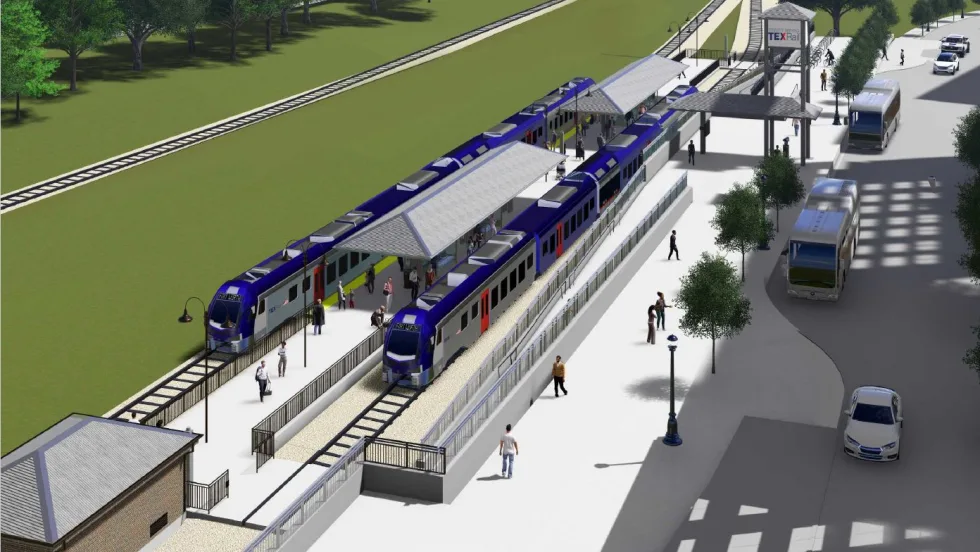
Trinity Metro Breaks Ground on $270M TEXRail Extension
The 2.1-mile extension will connect Fort Worth’s Medical District and Near Southside to downtown, surrounding communities, and Dallas-Fort Worth International Airport.
Read More →
Bringing Austin’s First Light Rail System to Life
Austin Transit Partnership CEO Greg Canally discusses the city's nearly 10-mile light rail project, its collaborative approach to project delivery, the importance of community engagement, and the milestones ahead as construction approaches in 2027.
Read More →
Metra Draft Plan Outlines Costs, Service Improvements for Regional Rail
The Systemwide Network Plan identifies infrastructure needs and potential investments to expand all-day, bidirectional rail service across the Chicago region.
Read More →
Amtrak Completes First Street Tunnel Upgrades, Restores Service
The nine-day construction project included replacing aging track infrastructure and modernizing switch systems near Washington Union Station.
Read More →
FRA Announces $2.3B for Passenger, Freight Rail Projects Nationwide
The CRISI Grant Program funding will support rail infrastructure improvements, safety upgrades, and projects aimed at improving freight and passenger rail service across 45 states and Washington, D.C.
Read More →
Caltrain’s Electrification Drives a New Era of Ridership Growth
The railroad’s shift to electric service has brought more frequent trains, stronger customer satisfaction, and increased ridership, earning it APTA’s Outstanding Public Transportation System award.
Read More →
FTA Advances $164M Broward County Commuter Rail Project
The proposed 10.5-mile commuter rail extension would connect Fort Lauderdale and Aventura, expanding passenger rail options in South Florida.
Read More →
New York MTA Launches Historic $1.9B Signal, Track Modernization Project
Funded in part by congestion pricing revenue, the project will replace nearly century-old signals along the A and C lines in Brooklyn and Queens.
Read More →
LA Metro Breaks Ground on East San Fernando Valley Light Rail Project
The 6.7-mile line will add 11 stations along Van Nuys Boulevard, expand access to jobs and regional transit connections, and support Metro’s broader efforts to improve mobility as rail ridership grows.
Read More →
CSA Group Releases Climate Resilience Standard for Transit, Passenger Rail
Developed with support from the Standards Council of Canada, CSA D700 guides assessing climate-related risks and planning adaptation measures for transit and passenger rail systems.
Read More →