L.A. Metro Continues to Recapture Post-Pandemic Ridership
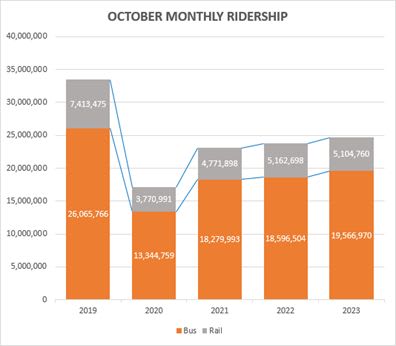
Metro’s monthly bus and rail ridership is now at 79% of its 2019 pre-pandemic level. Average weekend ridership is now at 92% of pre-pandemic (October 2019) levels and 78% for average weekdays.
L.A. Metro’s monthly bus and rail ridership is now at 79% of its 2019 pre-pandemic level. Average weekend ridership is now at 92% of pre-pandemic (October 2019) levels and 78% for average weekdays.
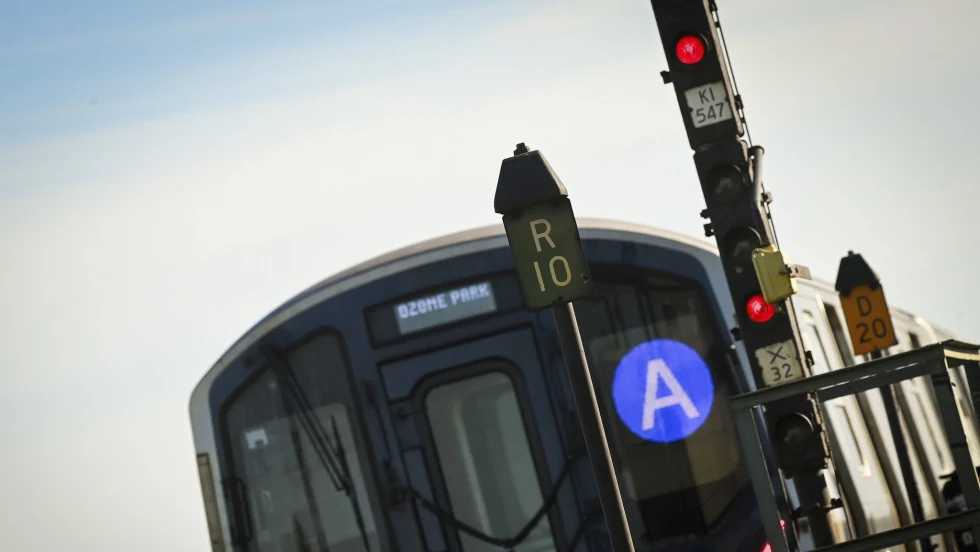
Photo: L.A. Metro
3 min to read
The Los Angeles County Metropolitan Transportation Authority (Metro) saw a nearly 12% increase in total system ridership in October 2023 compared to October 2022 with more than 26.5 million boardings, marking the 11th consecutive month of year-over-year ridership growth.
Metro’s monthly bus and rail ridership is now at 79% of its 2019 pre-pandemic level. Average weekend ridership is now at 92% of pre-pandemic (October 2019) levels and 78% for average weekdays.
Ad Loading...
The increased focus on safety, and the resulting 43% decrease in crime across the system since April, improved reliability and frequency of service, plus more Metro Ambassadors helping customers navigate the system, are all helping to drive increased ridership.
LA Metro’s October Ridership
In October, Metro had 26,528,697 boardings on its bus and rail services. An average of 956,754 rides were taken each weekday, highlighting the second consecutive month that weekday Metro ridership has surpassed 900,000 boardings. Saturday boardings averaged 667,506 and Sunday boardings averaged 562,017.
Weekends continue to show the greatest gains in post-pandemic ridership recovery, with average boardings on Saturdays reaching 89% of their (October 2019) pre-pandemic level and average boardings on Sundays reaching 95% of their (October 2019) pre-pandemic level.
October 2023 marked the fourth full month of operation for the A (Blue) and E (Gold) Lines. The A (Blue) Line, which serves customers from Azuza to Long Beach, saw a 9.5% increase in month over month ridership with 1,737,608 boardings in October 2023 and 1,586,470 boardings in September 2023.
The E (Gold) Line, which serves customers from East L.A. to Santa Monica, had a 7% increase in month over month ridership with 1,208,838 boardings in October 2023 and 1,130,105 boardings in September 2023.
Ad Loading...
The K Line, which celebrated its first anniversary in October, saw increased ridership on Saturdays, boosted in part by the annual Taste of Soul festival on Oct. 21. The K Line saw a 200% increase in boardings for the event over the previous Saturday.
In October, Metro had 26,528,697 boardings on its bus and rail services. An average of 956,754 rides were taken each weekday, highlighting the second consecutive month that weekday Metro ridership has surpassed 900,000 boardings.
Photo: L.A. Metro
Additional Factors Boosting Ridership
Sporting events, such as college football and Rams and Chargers games, are also contributing to increased ridership on the weekends.
In October 2023, Metro bus ridership saw a 12.5% year-over-year increase. Nearly 21 million rides were taken on Metro buses, with total bus ridership in October 2023 at 80% of its pre-pandemic level (October 2019).
Metro is making it easier for everyone to ride by providing accessible and affordable reduced-price transit pass programs such as the student GoPass pilot program, which offers free transit passes to K-12 and community college students, and its Low-Income Fare is Easy (LIFE) program that provides free rides and reduced fares to low-income customers.
In October, the GoPass pilot program saw nearly two million student boardings with 1,777,199 student bus boardings and 194,424 student rail boardings. To date the program has 340,000 registered students from 1570 participating schools in 115 participating school districts.
Ad Loading...
Metro’s Low-Income Fare is Easy (LIFE) program saw 1,437,046 boardings during October 2023 from the nearly 300,000 people enrolled in the program. New LIFE enrollees receive a free 90-day pass and after the first 90 days, riders can either load 20 free rides or purchase a discounted pass from any of the LIFE participating transit agencies.
The LIFE program helps qualifying Los Angeles County residents save money by providing free rides or deeply discounted fares on 13 transit systems across Los Angeles County.
Bus Business Consultants Founder Brian Dickson discusses the leadership principles, operational discipline, and strategic planning that separate transportation companies positioned for long-term success from those stuck in survival mode.
The 12.4-mile corridor is projected to serve 66,200 daily riders, reduce travel times by up to 24%, and create the nation's busiest bus rapid transit corridor.
Dr. Carol Parker Walsh discusses leadership development, employee retention, workplace culture, and preparing transit’s workforce for AI and automation.
The company’s CEO discusses carrying forward a third-generation family legacy, ABC’s continued evolution in passenger transportation, support for increasingly complex fleets, and how technology and continued investment could help operators improve uptime.
The new microtransit zone connects residents to key destinations as Charlotte Area Transit System rolls out the first phase of its 2055 Transit System Plan.
San Antonio's VIA Metropolitan Transit reported the highest bus ridership growth among major Texas transit systems. Federal Transit Administration data ranked it second among the nation's 50 largest transit systems.
Developed with support from the Standards Council of Canada, CSA D700 guides assessing climate-related risks and planning adaptation measures for transit and passenger rail systems.
ETA founder and CEO John Maglio explores the evolution of transit technology, the importance of reliable systems, and how stronger partnerships can help agencies improve operations and the passenger experience.
The new plan outlines improvements to service reliability, accessibility, communication, and the overall rider experience across Central Ohio's transit system.