



Amtrak Celebrates 75 Years of California Zephyr Service
In honor of the milestone and the daily operation of this iconic route, Amtrak released a Top 25 list of California Zephyr facts.

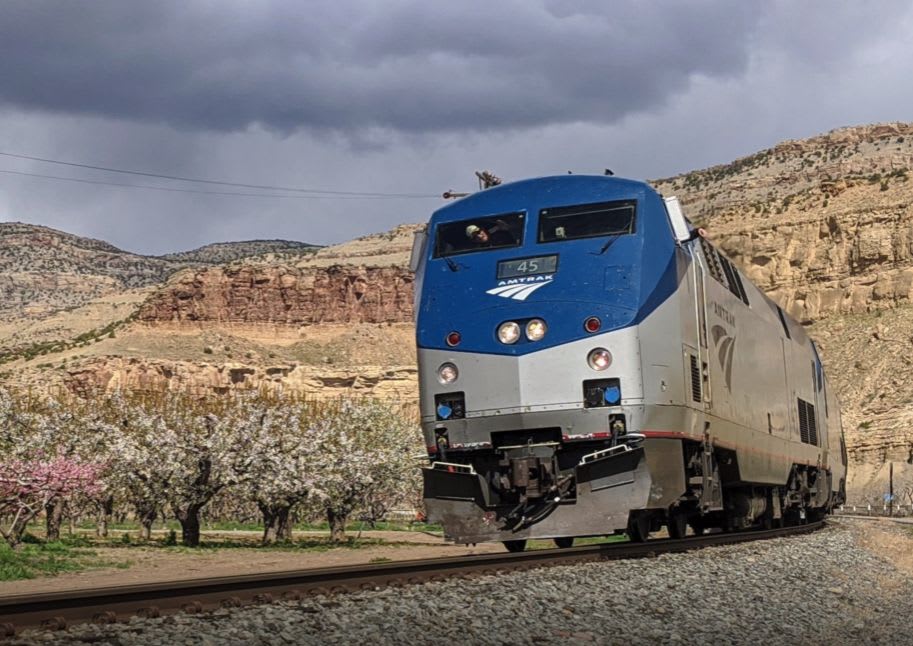
The first eastbound train from Oakland to Chicago happened on March 20, 1949.
Photo: Screenshot via Amtrak
Amtrak is celebrating 75 years since the California Zephyr launched its first trip between the San Francisco Bay Area and Chicago.
The Zephyr runs between Chicago and San Francisco, coursing through the plains of Nebraska to Denver, across the Rockies to Salt Lake City, and then through Reno and Sacramento into Emeryville/San Francisco.
25 Zephyr Facts
In honor of the milestone and the daily operation of this iconic route, Amtrak released a Top 25 list of California Zephyr facts:
The California Zephyr was named in San Francisco by actress Eleanor Parker on March 19, 1949.
The first eastbound train from Oakland to Chicago happened on March 20, 1949.
The California Zephyr’s main draw was (and remains) the spectacular scenery along the route.
Those views led to the California Zephyr becoming the first transcontinental train to regularly use dome cars.
The names of all original California Zephyr cars began with the word “Silver,” followed by a theme.
Animals for baggage cars — Silver Stag.
Wild west themes for dome coaches — Silver Lariat.
Dining car names had catering/food service references — Silver Plate.
Sleeping cars were named for trees (Silver Maple), birds (Silver Quail), and geographical features (Silver Canyon).
Dome-buffet lounge cars had names associated with hospitality (Silver Chalet), while the dome-observation-lounge cars had names that invoked scenic vistas (Silver Horizon).
Dubbed the “Cable Car Room” in the 1950s, the buffet lounge paid homage to San Francisco in murals and memorabilia, including scale models of the iconic cable cars.
Until 1958, a West Coast California Zephyr trip began and ended with a ferry ride between San Francisco’s Transbay Terminal and Oakland Pier.
On March 1, 1955, the first baby was born on the California Zephyr while it traveled through Colorado’s Ruby Canyon.
In 1969, the Interstate Commerce Commission (ICC) called the California Zephyr a unique national asset.
Some original California Zephyr cars were sold to other countries and private owners; a number still operate on tourist railroads.
The largest collection of preserved original California Zephyr equipment can be found in Portola, Calif., at the Western Pacific Railroad Museum.
Amtrak launched its California Zephyr service in July 1983.
The California Zephyr travels 2,438 miles over three days and two nights.
The California Zephyr passes through two mountain ranges: the Rockies and Sierra Nevada Range.
The train reaches a maximum altitude of 9,270 feet above sea level passing through the 6.2-mile-long Moffat Tunnel in Colorado.
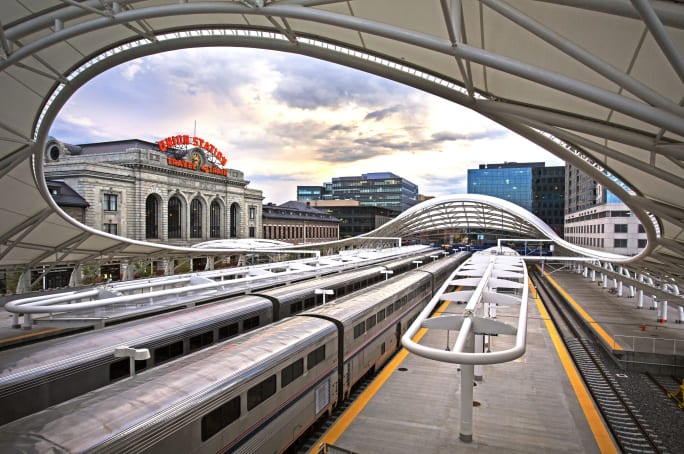
The California Zephyr’s schedule ensures passengers move through the most scenic parts of the route in Colorado, Utah, and Nevada during daylight hours.
Photo: Amtrak/Chase Gunnoe
The California Zephyr shares tracks with Amtrak’s Winter Park Express, a seasonal train carrying skiers between Denver and Winter Park Resort.
The California Zephyr travels through the infamous Donner Pass, where a wagon train became stranded during the winter of 1846-47. Approximately half of the people survived.
The California Zephyr uses bi-level Superliner railcars. The train offers two classes of service: Coach and Private Rooms, which include Roomettes, Bedrooms, Bedroom Suites, Family Bedrooms, and Accessible Bedrooms.
The California Zephyr features the bi-level Sightseer Lounge, offering panoramic views along the route upstairs and café service with meals, snacks, and beverages for sale downstairs.
From Salt Lake City to San Francisco Bay Area, the California Zephyr loosely follows Interstate 80 along the south shore of the Great Salt Lake, across the Bonneville Salt Flats towards Nevada.
The California Zephyr is Amtrak’s longest route with daily operation.
The California Zephyr departs Chicago at 2:00 p.m. (Central) and Emeryville, CA at 9:10 a.m. (Pacific).
The California Zephyr’s schedule ensures passengers move through the most scenic parts of the route in Colorado, Utah, and Nevada during daylight hours. The train stops at 37 stations in California, Nevada, Utah, Colorado, Nebraska, Iowa, and Illinois.
In many of the smaller communities it serves, the California Zephyr is the only option for intercity transportation.
In 2018, the California Zephyr saw its highest yearly ridership: 418,203 passengers.
More Rail

New York MTA Advances Final Contract for Second Avenue Subway Expansion
Contract Four is the largest in the Second Avenue Subway Phase 2 project and includes construction of station infrastructure, tracks, and signals for the subway expansion, MTA officials said. Work on Contract Four will begin in 2027.
Read More →
San Diego MTS Breaks Monthly Trolley Ridership Record
Agency officials said July’s ridership indicates MTS’s continued recovery from the pandemic.
Read More →
Report Examines NJ TRANSIT Reliability, Funding Challenges
The Garden State Initiative analysis examines the roles of Amtrak infrastructure, fleet management, and agency operations while recommending a more performance-based approach to improving reliability.
Read More →
Stadler, CapMetro Sign Long-Term Rail Fleet Support Agreement
Beginning in 2027, Stadler will provide on-site technical expertise, spare parts support, training, and obsolescence management to help extend the reliability and longevity of CapMetro’s GTW fleet.
Read More →
Biz Briefs: Alstom Lands Canadian Contract, LYT to Supply California TSP, and More
In METRO's latest installment, we take a look at recent news from Complete Coach Works, Beep, FlixBus, and more partnerships making headlines across the transportation sector.
Read More →
CATS Gold Line Marks 5 Years of Service, 2.8M Passenger Trips
With a six-mile expansion planned, the Charlotte streetcar is positioned to connect more neighborhoods and major transit hubs across the region.
Read More →
Why Simulating Pedestrian Movement Has Become Essential for Modern Rail Stations
Pedestrian microsimulation is helping rail planners identify bottlenecks, test station designs, and prepare complex transit hubs for growing passenger volumes.
Read More →
Amtrak Begins Major Construction at New York’s Sunnyside Yard
The new maintenance facility will support Amtrak’s Airo trainsets while improving maintenance efficiency and turnaround times in New York.
Read More →
Chicago Leaders Unveil Plans for O’Hare Airport Express Train
The privately developed project would offer a 15-minute trip between downtown and O’Hare’s Terminal 2, with trains operating every 15 minutes on a dedicated track. The service would use battery-electric trains and three existing freight rail rights-of-way.
Read More →
OCTA Maps Out 30-Year Strategy to Protect Coastal Rail Corridor
The draft feasibility report identifies strategies to protect the coastal rail line for decades as the agency continues near-term stabilization and sand placement efforts.
Read More →