



MARTA Adopts Amendment to BRT Line Alignment
The locally preferred alternative for the Rapid Southlake will include a direct connection to Hartsfield-Jackson Atlanta International Airport, the state’s largest employer and the world’s busiest airport.

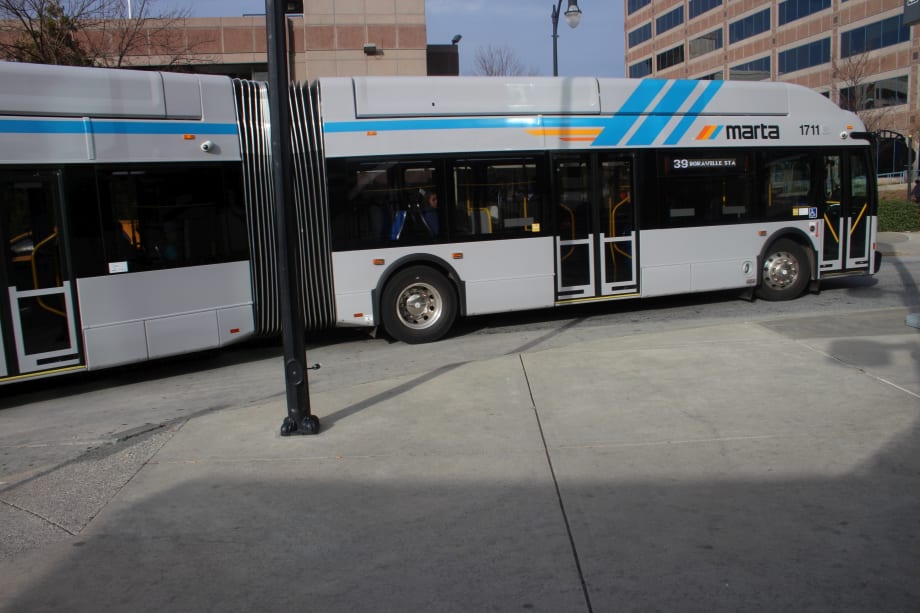
MARTA Rapid is the authority’s BRT, the first in the region, and is characterized by high-capacity buses running in dedicated right-of-way and mixed traffic lanes on existing roads.
Photo: MARTA
The Metropolitan Atlanta Rapid Transit Authority (MARTA) board adopted an amended locally preferred alternative (LPA) for Rapid Southlake to include a direct connection to Hartsfield-Jackson Atlanta International Airport, the state’s largest employer and the world’s busiest airport.
MARTA’s BRT
MARTA Rapid is the authority’s bus rapid transit system (BRT), the first in the region, and is characterized by high-capacity buses running in dedicated right-of-way and mixed traffic lanes on existing roads.
The approximately 15-mile Rapid Southlake route will connect to Southlake Mall, the Shops of Riverdale, Southern Regional Medical Center, and Airport Station and has rail-like stations that will feature off board fare payment, seating, and digital signage.
“We are thrilled by the progress of Rapid Southlake, a dynamic project that will provide generational impacts for those living, working, or traveling in Clayton County,” said MARTA GM/CEO Collie Greenwood. “Additionally, we see this direct connection to the airport’s Domestic Terminal as an opportunity to provide improved access to thousands of airport-related jobs and strengthen the project’s federal funding competitiveness.”
With the adoption of this amended LPA, the project now advances to the 30% design phase and submission of updated environmental studies. MARTA will submit an application for Federal Transit Administration (FTA) Capital Investments Grants (CIG) Small Starts funding this summer.
More Bus

New York MTA Plans Largest Bus Fleet Upgrade in More Than a Decade
The agency is seeking manufacturers for 650 new CNG buses to replace aging vehicles, improve reliability, and advance its broader fleet modernization strategy.
Read More →
Building a Flexible Path to Transit Electrification
John Hroncich discusses BAE Systems’ modular and scalable approach, lessons learned from decades of real-world operations, and how agencies can identify electrification strategies that fit their fleets.
Read More →
Bus Tech Talk: Keeping Transit Technicians Ahead of the Technology Curve
LA Metro’s Obed Mejia discusses technician training, evolving maintenance technology, fleet replacement, and strategies for getting the most out of today’s transit fleets.
Read More →
Biz Briefs: RIPTA Unveils New Frontrunners, Clevland RTA Adds New Siemens, and More
In METRO's latest installment, we take a look at recent news from Siemens, Prevost, Dodge, and more partnerships making headlines across the transportation sector.
Read More →
People Movement: Holly Arnold Joins Transdev and More
In this edition, we also cover recent appointments and announcements at Pace, CamTran, MCI, and more, showcasing the individuals helping to shape the future of transportation.
Read More →
The High Cost of Transit Buses: Industry Leaders Look to Procurement Reform
Transit leaders and policymakers examine how standardized bus designs, streamlined procurement, and predictable funding could help agencies stretch budgets and deliver better service.
Read More →
The Business Voice Behind Public Transportation
As chair of APTA’s Business Members Board of Governors, Ray Melleady explains how more than 850 business members are partnering with transit agencies to advance funding, innovation, and industry-wide collaboration.
Read More →
From Surviving to Thriving: Building Stronger Transportation Organizations
Bus Business Consultants founder Brian Dickson shares lessons on leadership, organizational health, and creating options for long-term success in a changing transportation industry.
Read More →
Finding the ‘Happy Medium’: Optimizing Maintenance Without Sacrificing Reliability
The key to maintenance optimization isn’t doing less work—it’s doing the right work at the right time on the right assets.
Read More →
LA Metro, City of West Hollywood, and Partners Advance Smarter Bus Lane Enforcement
The award-winning partnership combines AI-powered detection with human oversight to improve bus reliability, accessibility, and enforcement efficiency.
Read More →