



MBTA Launching Income-Eligible Reduced Fare Program
A meaningful improvement for fare equity, the new program provides riders who are aged 18 to 64 and have low income with reduced one-way fares of approximately 50% off on all MBTA buses, subway, commuter rail, and paratransit travel.

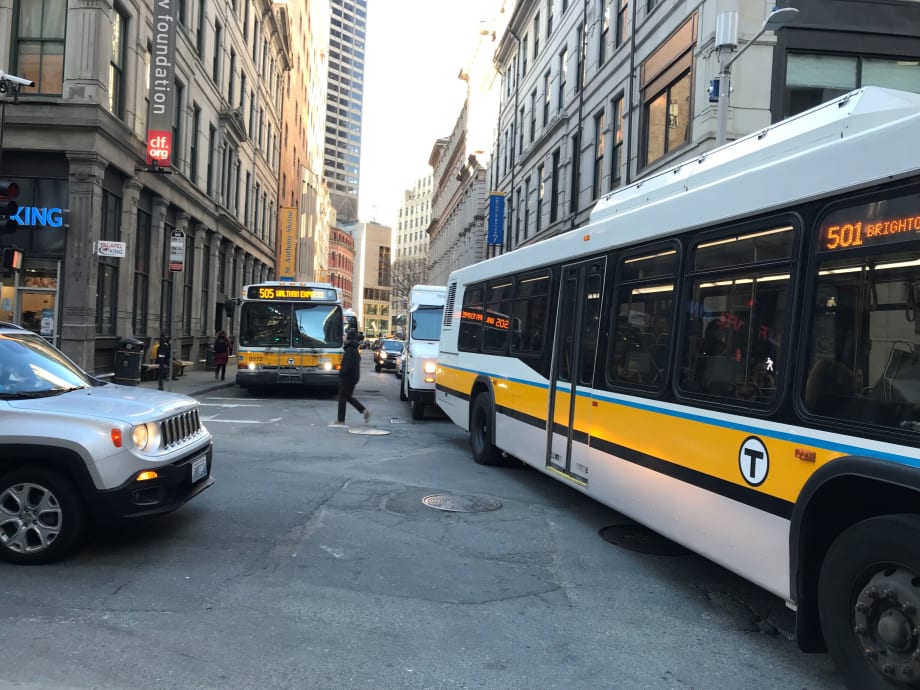
MBTA riders with low income will be able to apply in multiple languages online and at five in-person locations provided by ABCD and MASSCAP around the MBTA service area.
Photo: METRO Magazine
Boston’s MBTA is expanding access to reduced fares for income-eligible riders beginning in September.
The launch will also include the availability of in-person support at five locations around the MBTA service area in partnership with Action for Boston Community Development (ABCD) and the Massachusetts Association for Community Action (MASSCAP) network.
An additional 31 locations will become available for service over fall 2024.
MBTA’s Reduced Fares Program
Following input from critical stakeholder groups, a pool of “early adopters” of the program will be able to apply online beginning later this month.
A meaningful improvement for fare equity, the new program provides riders who are aged 18 to 64 and have low income with reduced one-way fares of approximately 50% off on all MBTA buses, subway, commuter rail, and paratransit (The RIDE) travel.
The program unlocks affordability for residents across the MBTA service area, including in the Gateway Cities, with the expansion being the first reduced fare program to include The RIDE.
As part of this change, senior users of The RIDE will also be eligible for half-priced fares on both standard and premium RIDE trips.
“Connectivity is essential not only for the quality of life of individuals and their families, but for our collective long-term well-being,” said Massachusetts Transportation Secretary and CEO Monica Tibbits-Nutt. “When we make the MBTA more accessible for low-income riders, we are helping to make our transportation system more equitable — and our communities healthier, stronger, and more prosperous.”
Process for Riders
Riders with low income will be able to apply in multiple languages online and at five in-person locations provided by ABCD and MASSCAP around the MBTA service area.
Program participants can demonstrate eligibility via existing enrollment in programs with a cutoff of 200% of the federal poverty level (or lower), including Supplemental Nutrition Assistance Program, Transitional Assistance for Families and Dependent Children, Emergency Aid to the Elderly, Disabled & Children, MassHealth CarePlus, MassHealth Family Assistance, MassHealth Limited, MassHealth Standard, and MASSGrant.
As part of the program launch, RIDE customers enrolled in the Senior or income-eligible reduced fare programs will also be able to use an online form to link their reduced fare eligibility to their RIDE accounts and receive a discounted rate on Standard or Premium RIDE trips.
Additionally, young people with low income already enrolled in the Youth Pass will be guided to enroll in the new program beginning in September, with the Youth Pass program set to be discontinued on October 31.
Boosting Opportunities
According to prior research, riders with low income are expected to take 30% more trips with a reduced fare, significantly increasing mobility while saving on transportation costs.
More than 60,000 riders are expected to qualify for and enroll in the program, which is expected to result in up to eight million more trips per year.
The initiative is thanks to the collaboration of multiple partners across the Commonwealth with the MBTA, including the Commonwealth’s Executive Office of Health and Human Services in allowing riders to demonstrate eligibility through existing EOHHS programs; the Registry of Motor Vehicles in allowing riders to offer proof of identity through an RMV ID; ABCD and the MASSCAP Network in providing in-person support; and Omicron Technology Solutions in providing additional application reviews.
More Management
Indian River Transit’s Community-Focused Approach Earns National Recognition
Named APTA’s 2026 Outstanding Public Transportation System in its size category, Florida’s Indian River County transit system continues to grow ridership through fare-free service and a focus on evolving community needs.
Read More →
ENC Lands MATA Contract and More in Biz Briefs
In this edition of Biz Briefs, we spotlight the latest developments shaping the future of mobility.
Read More →
From Surviving to Thriving: Building Stronger Transportation Organizations
Bus Business Consultants founder Brian Dickson shares lessons on leadership, organizational health, and creating options for long-term success in a changing transportation industry.
Read More →

Everett Transit, Community Transit Outline Consolidation Agreement
The proposed agreement calls for a 50% increase in bus service in Everett, a new microtransit zone, continued paratransit service, and the transfer of Everett Transit operations to Community Transit.
Read More →
Strada360’s Steve Lassey on Turning Transit Data Into Better Decisions
From breaking down data silos to preparing for AI, Strada360 CEO Steve Lassey discusses how transit agencies can use technology to improve operations, customer information, and long-term decision-making.
Read More →
People Movement: Phil Washington Joins HNTB, Denver RTD Launches CEO Search, and More
In this edition, we also spotlight recent personnel moves at STV, the Eno Center for Transportation, and more, highlighting the people taking on new roles across the transportation industry.
Read More →
SEPTA Details Accelerate Vision for Transit System
The plan outlines investments in trolley modernization, new Metro and Regional Rail vehicles, accessible stations, and more frequent bus and rail service.
Read More →
FTA Ends Direct Oversight of MBTA Safety Actions
The federal agency closed its remaining special directive to the Massachusetts Department of Public Utilities following a safety review that began in 2022.
Read More →
Report: Transit Bus Manufacturing Supports 34,100 Jobs, $5.1B in GDP
The “Buses Mean Business” report examines the transit bus manufacturing industry’s economic footprint, supply chain, and rising demand for vehicle replacements.
Read More →
LIT Marks 10-Year Milestone at Annual Summit
Hosted by the COTA from September 10 to 13, the Summit carried the theme “Celebrating 10 Years of Excellence, Leadership, and Impact,” with every part of the program honoring the people, agencies, and partners who built LIT over its first decade.
Read More →