



RIPTA, Officials Celebrate Reopening of Renovated East Side Tunnel
Built in 1914 to support Providence’s former trolley system in climbing the steep 10% incline of streets in the College Hill neighborhood, the East Side Tunnel remains a critical piece of transit infrastructure, connecting downtown Providence with the East Side and beyond.

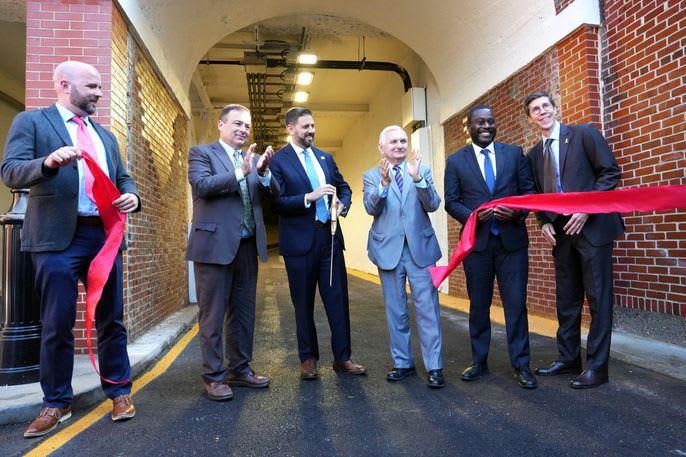
(L-R): Eric Papetti, director, planning and program development, Federal Transit Administration; House Speaker K. Joseph Shekarchi; Christopher Durand, RIPTA interim CEO; U.S. Sen. Jack Reed; U.S. Rep. Gabe Amo; and City of Providence Mayor Brett Smiley cut ribbon in front of tunnel.
Photo: RIPTA
The Rhode Island Public Transit Authority (RIPTA) gathered with members of the State’s Congressional delegation, the City of Providence, and the Federal Transit Administration to announce the completion of renovations to the historic East Side Tunnel.
Built in 1914 to support Providence’s former trolley system in climbing the steep 10% incline of streets in the College Hill neighborhood, the East Side Tunnel remains a critical piece of transit infrastructure, connecting downtown Providence with the East Side and beyond.
Rhode Island’s Renovated Tunnel
Following months of construction and restoration, the tunnel, which was set to reopen on October 31, revitalized and ready to serve the next generation of Rhode Island transit riders.
The $25 million renovation project addressed several key areas, including drainage upgrades, enhanced lighting, and structural repairs inside the tunnel.
As part of RIPTA’s commitment to improving the passenger experience under the Transit Forward RI 2040 plan, the 110-year-old bus shelter on North Main Street has been meticulously restored to its original architectural splendor, preserving its historical significance while modernizing its function.
“We are excited to restore and enhance this important infrastructure while ensuring that it continues to meet the needs of Providence residents and visitors alike,” said Christopher Durand, interim CEO at RIPTA. “RIPTA riders deserve comfortable, safe, and accessible amenities, and the restoration of the tunnel’s shelter is a major step toward providing them. We are grateful to our congressional delegation for securing the funds for these critical improvements.”
Benefits of the Tunnel
The tunnel remains a key part of the east-west transit corridor, offering bus-only access for six RIPTA routes, with over 250 trips passing through the nearly 2,000-foot-long structure daily.
The renovations will ensure that the tunnel can continue to support RIPTA’s evolving service plans and infrastructure needs. Improvements were made with an eye toward placemaking and accessibility, including conceptual designs to enhance bus stops on both ends of the tunnel, better signage, modern lighting, and ADA-compliant facilities.
RIPTA worked with area neighborhood and business associations, historic preservation organizations, RISD, Brown University, and other neighbors and interested parties to ensure that the project honors the tunnel’s place in Providence’s history and community.
Renovation Turnaround
Construction began in March 2024 and cost $25 million to complete with $903,000 in federal grant money secured by U.S. Sen. Jack Reed.
The U.S. Department of Transportation provided over $8 million toward the project. Maintaining and reinforcing bus infrastructure like the East Side Tunnel is necessary as RIPTA works to further expand and improve service to meet goals set in our Transit Forward RI 2040 plan.
The next phase of the tunnel project will involve the full design and construction of improved bus stops at Thayer Street, including modernized amenities and accessibility features.
RIPTA’s Project Management team will continue to work closely with the City of Providence, RIDOT, and other key stakeholders throughout the process.
More Bus

New York MTA Plans Largest Bus Fleet Upgrade in More Than a Decade
The agency is seeking manufacturers for 650 new CNG buses to replace aging vehicles, improve reliability, and advance its broader fleet modernization strategy.
Read More →
Building a Flexible Path to Transit Electrification
John Hroncich discusses BAE Systems’ modular and scalable approach, lessons learned from decades of real-world operations, and how agencies can identify electrification strategies that fit their fleets.
Read More →
Bus Tech Talk: Keeping Transit Technicians Ahead of the Technology Curve
LA Metro’s Obed Mejia discusses technician training, evolving maintenance technology, fleet replacement, and strategies for getting the most out of today’s transit fleets.
Read More →
Biz Briefs: RIPTA Unveils New Frontrunners, Clevland RTA Adds New Siemens, and More
In METRO's latest installment, we take a look at recent news from Siemens, Prevost, Dodge, and more partnerships making headlines across the transportation sector.
Read More →
People Movement: Holly Arnold Joins Transdev and More
In this edition, we also cover recent appointments and announcements at Pace, CamTran, MCI, and more, showcasing the individuals helping to shape the future of transportation.
Read More →
The High Cost of Transit Buses: Industry Leaders Look to Procurement Reform
Transit leaders and policymakers examine how standardized bus designs, streamlined procurement, and predictable funding could help agencies stretch budgets and deliver better service.
Read More →
The Business Voice Behind Public Transportation
As chair of APTA’s Business Members Board of Governors, Ray Melleady explains how more than 850 business members are partnering with transit agencies to advance funding, innovation, and industry-wide collaboration.
Read More →
From Surviving to Thriving: Building Stronger Transportation Organizations
Bus Business Consultants founder Brian Dickson shares lessons on leadership, organizational health, and creating options for long-term success in a changing transportation industry.
Read More →
Finding the ‘Happy Medium’: Optimizing Maintenance Without Sacrificing Reliability
The key to maintenance optimization isn’t doing less work—it’s doing the right work at the right time on the right assets.
Read More →
LA Metro, City of West Hollywood, and Partners Advance Smarter Bus Lane Enforcement
The award-winning partnership combines AI-powered detection with human oversight to improve bus reliability, accessibility, and enforcement efficiency.
Read More →