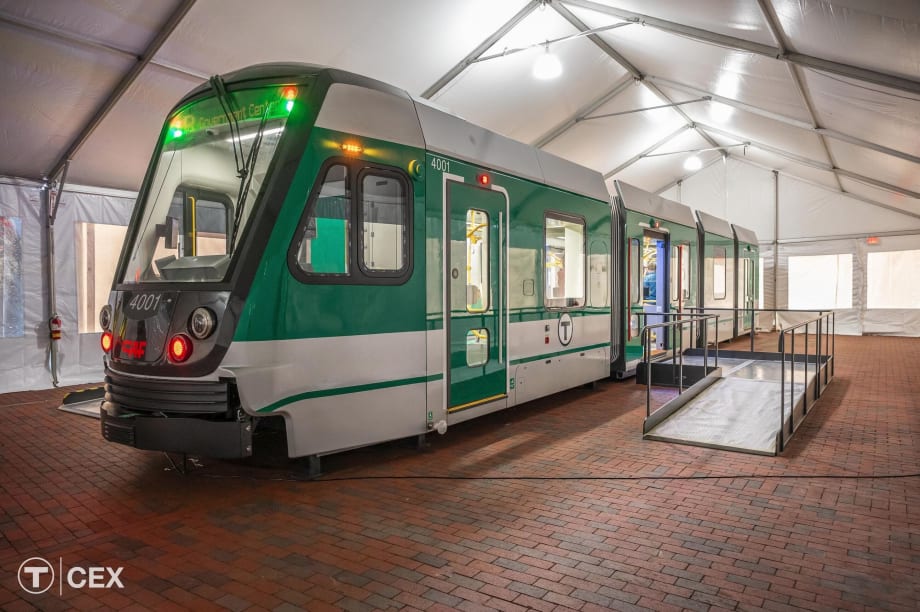
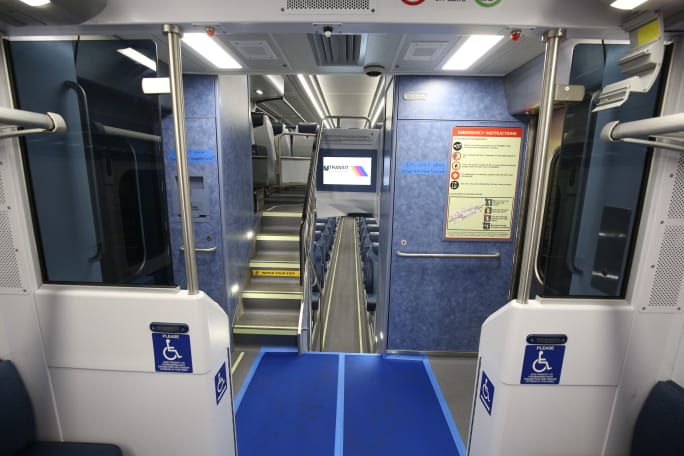
In Boston, MBTA celebrated the arrival of a future Green Line Type 10 vehicle mockup at Boston City Hall Plaza.
Ad Loading...
Feedback from the public will help the MBTA in its final design phase with contractor CAF USA Inc. The MBTA has an $810-million contract with CAF USA Inc. for the design, construction, and delivery of new Green Line vehicles.
The contract includes 102 cars with new safety technology and accessibility improvements.
“We are committed to giving our riders the safe, reliable, and comfortable trip that they deserve. The Type 10 mockup vehicle is a peak into the future, allowing the public an opportunity to provide feedback, which is important to us as we finalize design of the vehicle,” said MBTA GM/CEO Phillip Eng.
Upgrades to the new Type 10 vehicle include:
A 100% low floor design, making the vehicles more accessible.
Additional bridge plate request buttons and passenger intercoms to make it easier for riders to request assistance.
A hearing loop available throughout the entire train.
Four priority areas for wheeled mobility devices.
The latest generation of crash-safety technology.
Wider doors for streamlined boarding and alighting.
Passenger information screens onboard that will show digital real-time information and line maps.
Ad Loading...
The MBTA and CAF USA Inc will finalize the design and continue the procurement process. Pilot cars are expected to be delivered in 2026. The full Type 10 fleet delivery is expected to be completed in 2031.
The new NJ Transit cars, manufactured by Alstom Transportation in Plattsburgh, N.Y., will offer a range of benefits over the older, 40-plus year-old single level cars they will replace, including dramatic improvement in mechanical reliability.
Photo: NJ Transit
NJ Transit’s New Multilevel Railcars
Meanwhile in New Jersey, Gov. Phil Murphy and NJ Transit President/CEO Kevin S. Corbett showcased the latest generation of multilevel railcars at an event at the agency’s Meadows Maintenance Complex (MMC) in Kearny.
"NJ TRANSIT is committed to improving every aspect of the customer journey, and the 174 new multilevel railcars will achieve that through vastly improving reliability, increasing capacity, and enhancing the onboard experience,” said Corbett. “NJ Transit is grateful to Governor Murphy and our partners at the Federal Transit Administration (FTA) for delivering the necessary funding to ensure our system continues to meet the growing demands of our region, and the expectations of our customers.”
NJ Transit officials highlighted many of the new car’s amenities, including USB charging ports and onboard information displays.
The new cars, manufactured by Alstom Transportation in Plattsburgh, N.Y., will offer a range of benefits over the older, 40-plus year-old single level cars they will replace, including dramatic improvement in mechanical reliability.
Ad Loading...
The vehicle maximum speed will increase to 110 miles per hour.
The cars, which will begin entering service mid-next year, will also be compliant with the latest federal regulations, including Positive Train Control.
The Multilevel III Power Cars are Electric Multiple Units (EMUs), meaning they are self-propelled and don’t require a separate locomotive. Electric motors are incorporated within one or a number of the vehicles on the train. They are the first of their kind in North America.
Teaming with Alstom for Next Generation
In December of 2018, the NJ Transit board approved a rail rolling stock vehicle procurement award to Bombardier Transit Corp. (now Alstom Transportation Inc.) for 113 Multilevel III rail vehicles to replace the single-level, self-propelled Arrow III rail vehicles manufactured more than 40 years ago.
In February 2022, the board approved the purchase of an additional 25 Multilevel III vehicles.
Ad Loading...
In July 2024, the board approved the purchase of an additional 36 Multilevel III vehicles, bringing the total number of new cars to 174 since 2018.
Contract Four is the largest in the Second Avenue Subway Phase 2 project and includes construction of station infrastructure, tracks, and signals for the subway expansion, MTA officials said. Work on Contract Four will begin in 2027.
The Garden State Initiative analysis examines the roles of Amtrak infrastructure, fleet management, and agency operations while recommending a more performance-based approach to improving reliability.
Beginning in 2027, Stadler will provide on-site technical expertise, spare parts support, training, and obsolescence management to help extend the reliability and longevity of CapMetro’s GTW fleet.
In METRO's latest installment, we take a look at recent news from Complete Coach Works, Beep, FlixBus, and more partnerships making headlines across the transportation sector.
Pedestrian microsimulation is helping rail planners identify bottlenecks, test station designs, and prepare complex transit hubs for growing passenger volumes.
The privately developed project would offer a 15-minute trip between downtown and O’Hare’s Terminal 2, with trains operating every 15 minutes on a dedicated track. The service would use battery-electric trains and three existing freight rail rights-of-way.
The draft feasibility report identifies strategies to protect the coastal rail line for decades as the agency continues near-term stabilization and sand placement efforts.