



Chicago Transit Returning Rail Service to Pre-Pandemic Levels
The news delivers on CTA President Dorval R. Carter Jr.’s commitment to provide pre-pandemic levels of rail service by end of year. With this new schedule, CTA is adding over 1,200 weekly rail trips when compared to the Spring 2024 schedule.

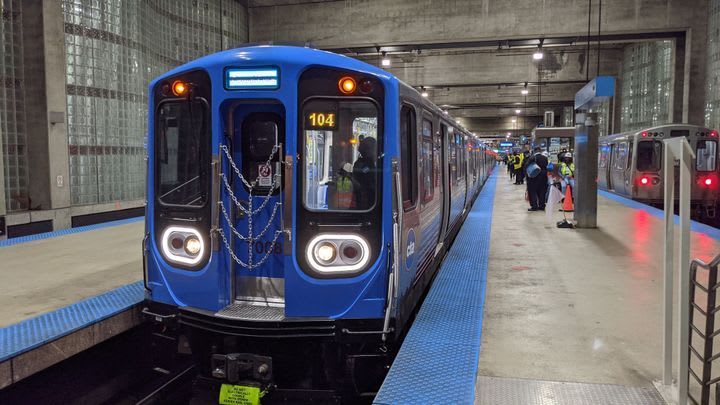
As part of CTA's proposed 2025 operating budget, additional bus and rail services are planned for the year ahead.
PHOTO: CTA
As part of its commitment to riders to improve service frequency, the Chicago Transit Authority (CTA) announced details of the fall rail service schedule, which will result in added services along all eight rail lines, across all days of the week — the equivalent of a 20% increase in scheduled weekly roundtrips.
The news delivers on CTA President Dorval R. Carter Jr.’s commitment to provide pre-pandemic levels of rail service by end of year. With this new schedule, CTA is adding over 1,200 weekly rail trips when compared to the Spring 2024 schedule.
“As a result of our efforts, I am pleased to share that as promised, CTA has returned to pre-pandemic scheduled levels across all rail lines before the end of the year,” Carter said. “Hundreds of dedicated personnel throughout our agency worked tirelessly over the last couple years to recruit, hire, and train the unprecedented number of employees needed to strengthen our workforce and get us where we are today. And I look forward to building on our success next year with more rail service improvements planned for 2025.”
Returning to Pre-Pandemic Levels
The rail schedule returns to pre-covid service levels with some strategic adjustments to better meet current ridership patterns.
Current ridership retention across all rail lines compared to 2019 is highest on Saturdays and Sundays. This schedule reduces some rush hour weekday service to allow CTA to deliver more weekend service, especially on Sundays.
CTA will continue to analyze ridership trends and mobility patterns to determine additional service adjustments that can better meet evolving ridership.
Bringing Back More Service
In 2024, CTA committed to training up to 200 new rail operators, double the amount from the previous year.
CTA has trained and qualified more than 150 rail operators who have since been added into service, with the remaining cohorts of employees currently in training and expected to begin qualifying for rail operator status before the end of the year.
CTA’s rail operator training courses allow for at least 20 participants per class, with up to three classes in training at a given time.
As part of the agency’s proposed 2025 operating budget, additional bus and rail services are planned for the year ahead. As such, the agency will continue with its rigorous training efforts to qualify more bus and rail personnel to meet these needs.
Bus Improvements As Well
On the bus side, CTA has made significant progress in its goal to deliver pre-pandemic levels by the end of the year.
Through August, service levels have been improved on 58 bus routes throughout the service region, bringing the bus system back to 98% of pre-pandemic scheduled service levels.
As part of the winter schedule, which is expected to roll out by the end of December, CTA will meet its goal of fully returning pre-pandemic scheduled bus service levels.
Impact on Ridership
Improving service frequency is helping to drive CTA’s ongoing ridership growth.
The CTA currently is second among peer transit agencies across the nation in year-over-year ridership growth.
Ridership on the 58 bus routes that received additional service in 2024 is up 13% year-over-year, outpacing other routes, which grew by 4% year-over-year.
More Rail

New York MTA Advances Final Contract for Second Avenue Subway Expansion
Contract Four is the largest in the Second Avenue Subway Phase 2 project and includes construction of station infrastructure, tracks, and signals for the subway expansion, MTA officials said. Work on Contract Four will begin in 2027.
Read More →
San Diego MTS Breaks Monthly Trolley Ridership Record
Agency officials said July’s ridership indicates MTS’s continued recovery from the pandemic.
Read More →
Report Examines NJ TRANSIT Reliability, Funding Challenges
The Garden State Initiative analysis examines the roles of Amtrak infrastructure, fleet management, and agency operations while recommending a more performance-based approach to improving reliability.
Read More →
Stadler, CapMetro Sign Long-Term Rail Fleet Support Agreement
Beginning in 2027, Stadler will provide on-site technical expertise, spare parts support, training, and obsolescence management to help extend the reliability and longevity of CapMetro’s GTW fleet.
Read More →
Biz Briefs: Alstom Lands Canadian Contract, LYT to Supply California TSP, and More
In METRO's latest installment, we take a look at recent news from Complete Coach Works, Beep, FlixBus, and more partnerships making headlines across the transportation sector.
Read More →
CATS Gold Line Marks 5 Years of Service, 2.8M Passenger Trips
With a six-mile expansion planned, the Charlotte streetcar is positioned to connect more neighborhoods and major transit hubs across the region.
Read More →
Why Simulating Pedestrian Movement Has Become Essential for Modern Rail Stations
Pedestrian microsimulation is helping rail planners identify bottlenecks, test station designs, and prepare complex transit hubs for growing passenger volumes.
Read More →
Amtrak Begins Major Construction at New York’s Sunnyside Yard
The new maintenance facility will support Amtrak’s Airo trainsets while improving maintenance efficiency and turnaround times in New York.
Read More →
Chicago Leaders Unveil Plans for O’Hare Airport Express Train
The privately developed project would offer a 15-minute trip between downtown and O’Hare’s Terminal 2, with trains operating every 15 minutes on a dedicated track. The service would use battery-electric trains and three existing freight rail rights-of-way.
Read More →
OCTA Maps Out 30-Year Strategy to Protect Coastal Rail Corridor
The draft feasibility report identifies strategies to protect the coastal rail line for decades as the agency continues near-term stabilization and sand placement efforts.
Read More →