



Stadler to Modernize Atlanta's Signaling Tech
The replacement of the current system will improve train control, which in turn increases rail safety and on-time performance.

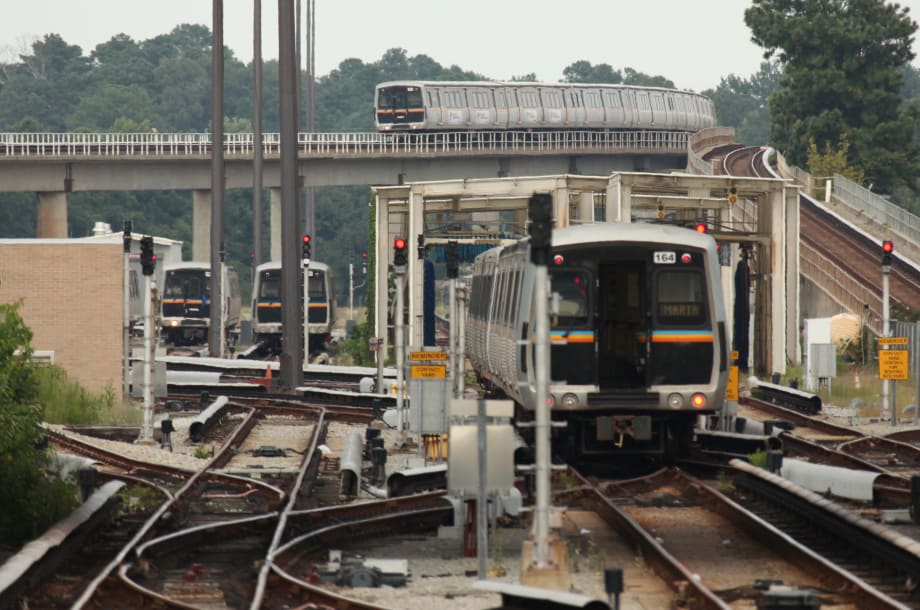
The Stadler system will work seamlessly with MARTA’s new Stadler CQ400 railcars being introduced in 2025.
Photo: MARTA
The Metropolitan Atlanta Rapid Transit Authority (MARTA) board awarded Stadler a $500 million contract to equip the agency’s rail network with a new train control system.
The replacement of the current system will improve train control, which in turn increases rail safety and on-time performance.
“This investment will enhance the safety and reliability of our rail network and allow our trains to operate with the highest safety standards, while still being monitored and controlled by skilled MARTA operators,” said MARTA GM/CEO Collie Greenwood. “The system will allow us to increase capacity, improve on-time performance, and optimize efficiency. By doing so, we’ll improve the customer experience and position MARTA as one of the most advanced transportation systems in the country.”
A Key Safety Feature
CBTC is an advanced train control system that uses wireless communication to precisely track trains at all times. Thanks to the real-time information on train positioning, trains can be operated more precisely, safely, and efficiently.
“This order is a significant milestone and represents an international market breakthrough for us in the CBTC sector,” says Markus Bernsteiner, Group CEO Stadler Rail. “MARTA and its passengers can look forward to a state-of-the-art train control system that will make Metro operations more punctual, safer, and more efficient. We look forward to working with MARTA, thank them for the trust they have placed in us and for now relying on our train control solution in addition to their trains.”
Adding Stadler’s New Tech
The Stadler system will work seamlessly with MARTA’s new Stadler CQ400 railcars being introduced in 2025. The resulting synergies between the on-board and trackside signaling components will allow for a smooth introduction of the system and increase operational performance while minimizing downtime.
The vehicles will be equipped with the necessary hardware at the Stadler plant in Salt Lake City, where the 56 new MARTA trains ordered in 2019 are being built.
The trackside equipment will be installed, tested, and commissioned directly on the MARTA network. As the on-board and trackside components come from the same supplier, the project can be completed seamlessly.
During a transition phase, trains will be able to run with both the old and the new system. As soon as the trackside components have been installed across the board, the transition process to the new system will be smooth and without any interruption to operations.
More Rail

New York MTA Advances Final Contract for Second Avenue Subway Expansion
Contract Four is the largest in the Second Avenue Subway Phase 2 project and includes construction of station infrastructure, tracks, and signals for the subway expansion, MTA officials said. Work on Contract Four will begin in 2027.
Read More →
San Diego MTS Breaks Monthly Trolley Ridership Record
Agency officials said July’s ridership indicates MTS’s continued recovery from the pandemic.
Read More →
Report Examines NJ TRANSIT Reliability, Funding Challenges
The Garden State Initiative analysis examines the roles of Amtrak infrastructure, fleet management, and agency operations while recommending a more performance-based approach to improving reliability.
Read More →
Stadler, CapMetro Sign Long-Term Rail Fleet Support Agreement
Beginning in 2027, Stadler will provide on-site technical expertise, spare parts support, training, and obsolescence management to help extend the reliability and longevity of CapMetro’s GTW fleet.
Read More →
Biz Briefs: Alstom Lands Canadian Contract, LYT to Supply California TSP, and More
In METRO's latest installment, we take a look at recent news from Complete Coach Works, Beep, FlixBus, and more partnerships making headlines across the transportation sector.
Read More →
CATS Gold Line Marks 5 Years of Service, 2.8M Passenger Trips
With a six-mile expansion planned, the Charlotte streetcar is positioned to connect more neighborhoods and major transit hubs across the region.
Read More →
Why Simulating Pedestrian Movement Has Become Essential for Modern Rail Stations
Pedestrian microsimulation is helping rail planners identify bottlenecks, test station designs, and prepare complex transit hubs for growing passenger volumes.
Read More →
Amtrak Begins Major Construction at New York’s Sunnyside Yard
The new maintenance facility will support Amtrak’s Airo trainsets while improving maintenance efficiency and turnaround times in New York.
Read More →
Chicago Leaders Unveil Plans for O’Hare Airport Express Train
The privately developed project would offer a 15-minute trip between downtown and O’Hare’s Terminal 2, with trains operating every 15 minutes on a dedicated track. The service would use battery-electric trains and three existing freight rail rights-of-way.
Read More →
OCTA Maps Out 30-Year Strategy to Protect Coastal Rail Corridor
The draft feasibility report identifies strategies to protect the coastal rail line for decades as the agency continues near-term stabilization and sand placement efforts.
Read More →