



Metra Draft Plan Outlines Costs, Service Improvements for Regional Rail
The Systemwide Network Plan identifies infrastructure needs and potential investments to expand all-day, bidirectional rail service across the Chicago region.

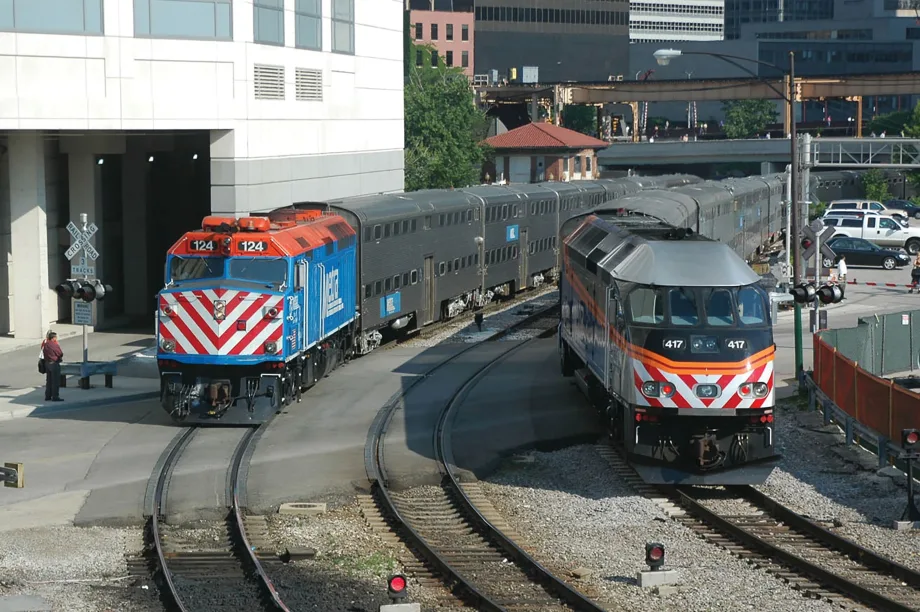
Metra officials said each rail line presents different challenges involving infrastructure, freight traffic, ridership patterns, and other factors, making a single approach impractical.
Metra
- The Metra Draft Plan emphasizes infrastructure improvements to enhance rail services in the Chicago area.
- It identifies the need for investments to support all-day, bidirectional train operations.
- The goal is to improve regional rail connectivity and efficiency for the community.
*Summarized by AI
Chicago’s Metra released a draft study outlining the improvements and estimated costs needed to provide more frequent, all-day service across its rail network, a goal shared by the agency’s strategic plan and the new Northern Illinois Transit Authority (NITA).
The Systemwide Network Plan (SNP) will be the subject of public outreach this fall, including a virtual public hearing in November. Once finalized, the plan will be submitted to NITA to support future regional planning efforts.
Developing a Regional Rail Vision
Metra undertook the study in response to its strategic plan, which examined post-pandemic ridership patterns and called for a transition toward a regional rail service model.
Under that model, Metra would maintain rush-hour service for downtown commuters while expanding service in both directions throughout the day and week to accommodate a wider range of trips.
The transition is also supported by the NITA Act, which requires Metra to implement a regional rail pilot on the Rock Island Line by January 2027. The legislation also establishes regional rail as a service standard Metra will be expected to meet going forward, according to agency officials.
“This plan lays out near- and mid-term implementation steps to support the evolution of our service, but it also defines a long-term vision for what regional rail can become,” said Metra Executive Director/CEO Jim Derwinski. “We hope it will serve as a blueprint to support the transition and success of NITA in a regionally coordinated effort to implement regional rail.”
Identifying Service Improvements
Metra officials said each rail line presents different challenges involving infrastructure, freight traffic, ridership patterns, and other factors, making a single approach impractical.
On some lines, existing service patterns could be maintained with more frequent trains. Others could benefit from a service model dividing routes into inner and outer zones.
The plan outlines two potential levels of regional rail service:
- Regional Rail 1.0: Trains operating every 30 to 60 minutes.
- Regional Rail 2.0: Trains operating every 15 to 30 minutes with additional investment.
“Metra’s Systemwide Network Plan represents an opportunity to put years of work and rider engagement into action and improve transit connections across the region,” said NITA interim Executive Director Jamie Rhee. “We know that riders want to move more easily from city to city across the suburbs and collar counties in addition to more frequent service downtown. NITA looks forward to incorporating all Service Board efforts into our regional service planning framework beginning 2027.”
Developed in alignment with the NITA Act, the plan identifies steps toward expanding service on the Chicago region’s existing rail network to accommodate changing travel patterns.
The study focuses on improvements within Metra’s current footprint, largely avoiding costly investments in new rights-of-way and additional mainline capacity beyond existing plans.
Estimated Costs and Next Steps
Metra estimates Regional Rail 1.0 would require $2.7 billion in capital investment and $269 million in additional operating costs.
Advancing to Regional Rail 2.0 would require an additional $6.4 billion in capital investment and $411 million in operating costs.
Metra has already taken steps toward regional rail service, including simplifying and standardizing train schedules, reducing the number of stopping patterns, shortening off-peak headways, improving reverse-commute service, and strengthening transfer connections.
According to the agency, schedules incorporating more regional rail elements have generally experienced stronger ridership recovery.
Quick Answers
The Metra Systemwide Network Plan aims to identify infrastructure needs and potential investments to enhance all-day, bidirectional rail service across the Chicago region.
*Summarized by AI
More Rail
Amtrak Completes First Street Tunnel Upgrades, Restores Service
The nine-day construction project included replacing aging track infrastructure and modernizing switch systems near Washington Union Station.
Read More →
FRA Announces $2.3B for Passenger, Freight Rail Projects Nationwide
The CRISI Grant Program funding will support rail infrastructure improvements, safety upgrades, and projects aimed at improving freight and passenger rail service across 45 states and Washington, D.C.
Read More →
Caltrain’s Electrification Drives a New Era of Ridership Growth
The railroad’s shift to electric service has brought more frequent trains, stronger customer satisfaction, and increased ridership, earning it APTA’s Outstanding Public Transportation System award.
Read More →
FTA Advances $164M Broward County Commuter Rail Project
The proposed 10.5-mile commuter rail extension would connect Fort Lauderdale and Aventura, expanding passenger rail options in South Florida.
Read More →
New York MTA Launches Historic $1.9B Signal, Track Modernization Project
Funded in part by congestion pricing revenue, the project will replace nearly century-old signals along the A and C lines in Brooklyn and Queens.
Read More →
LA Metro Breaks Ground on East San Fernando Valley Light Rail Project
The 6.7-mile line will add 11 stations along Van Nuys Boulevard, expand access to jobs and regional transit connections, and support Metro’s broader efforts to improve mobility as rail ridership grows.
Read More →
CSA Group Releases Climate Resilience Standard for Transit, Passenger Rail
Developed with support from the Standards Council of Canada, CSA D700 guides assessing climate-related risks and planning adaptation measures for transit and passenger rail systems.
Read More →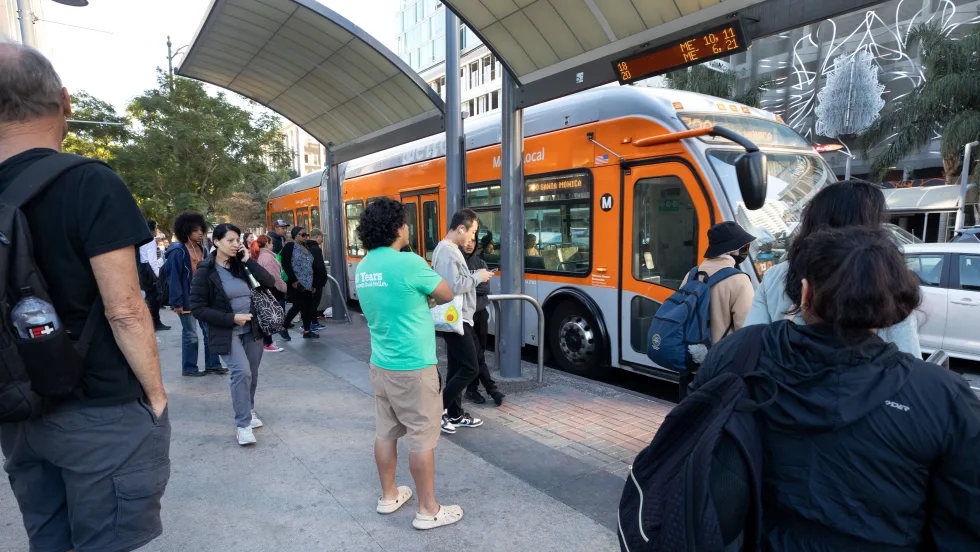
LA Metro September Ridership Climbs 3.9%, Led by Rail Growth
The agency recorded more than 27.2 million boardings, with rail ridership increasing 12.4% year over year and the D Line posting the largest gains.
Read More →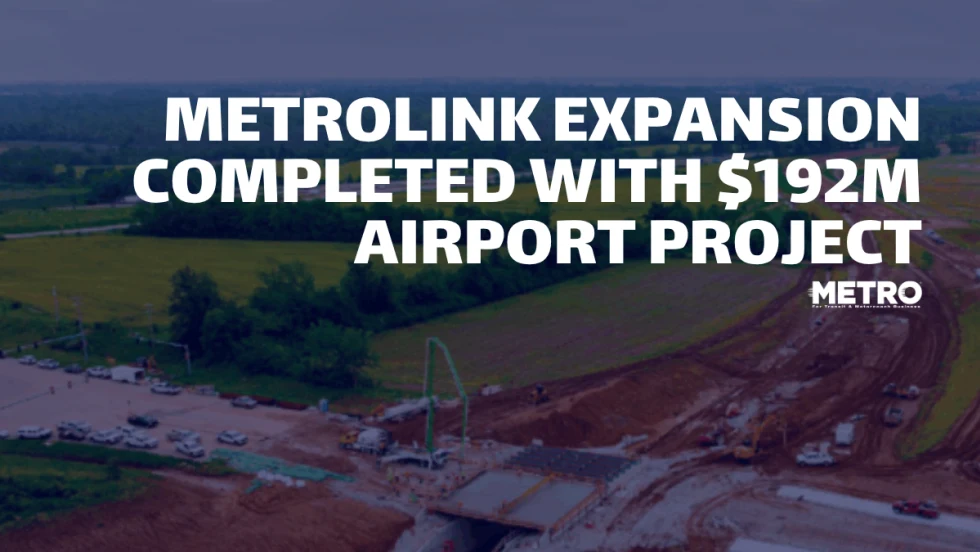
First Full MetroLink Rail Expansion Completed in 20 Years with $192M Airport Project
The project links two St. Louis-area airports by light rail while adding roadway and bike trail connections to improve regional access and mobility.
Read More →
Utilimarc Launches SmartReplace to Optimize Fleet Replacement Decisions
AI-powered SmartReplace helps fleets prioritize vehicle replacements, model budget scenarios, and build more defensible long-term strategies.
Read More →