



Bringing Austin’s First Light Rail System to Life
Austin Transit Partnership CEO Greg Canally discusses the city's nearly 10-mile light rail project, its collaborative approach to project delivery, the importance of community engagement, and the milestones ahead as construction approaches in 2027.

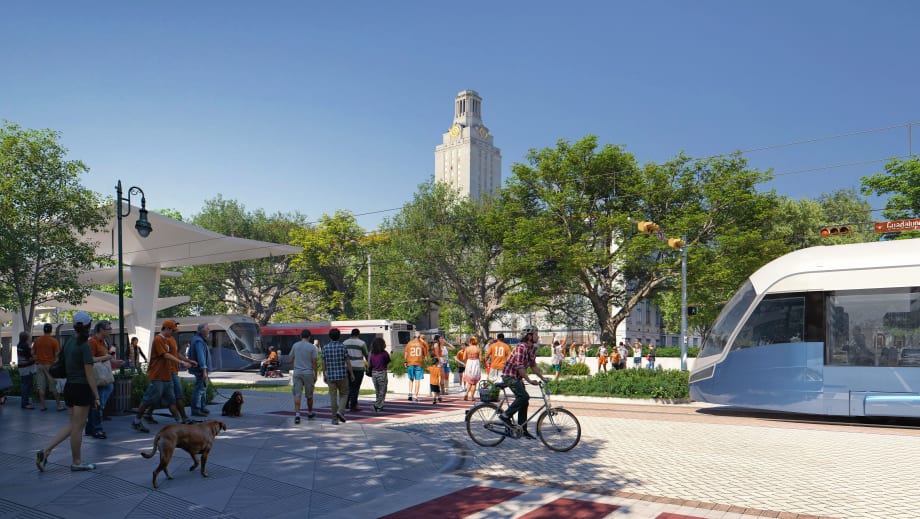
The new light rail vehicles will support Austin's efforts to expand transportation options, improve regional connectivity, and provide residents with a reliable alternative to driving.
Artist conceptual visualization, Austin Transit Partnership
- Austin Transit Partnership CEO Greg Canally outlines plans for a nearly 10-mile light rail project to enhance the city’s transit system.
- The project emphasizes a collaborative approach and prioritizes community engagement to ensure it meets local needs.
- Construction is slated to begin in 2027, marking a significant milestone in expanding Austin’s transportation infrastructure.
*Summarized by AI
Austin, Texas, is moving closer to delivering its first light rail system, a major transportation investment more than two decades in the making. After voters approved it in 2020, the Austin Transit Partnership (ATP) has been advancing the 9.8-mile, two-line system through planning, procurement, federal approvals, and design.
METRO Magazine spoke with Greg Canally, ATP's CEO, about the project's progress, how the agency is approaching megaproject delivery differently, and the lessons other transit agencies can take from Austin's experience.
About ATP's Light Rail Project
Q: Can you give us an overview of Austin's light rail project, including its scope, where it will operate, and what it will mean for the city?
Canally: Austin is in the process of building its first-ever light rail system. It's something that's been a long time coming. For more than 25 years, we have been working toward this, including a couple unsuccessful elections in 2000 and the mid-2010s.
In 2020, we successfully passed a measure to fund a new light rail system, along with investments in commuter rail, expanded bus rapid transit, and initiatives to address housing and displacement. The measure passed with about 58% approval. A few things were happening in November 2020, so I think that level of support spoke volumes about Austin.
Relatively few Austinites take transit to get around. When 58% of voters say they want to invest in something that isn't necessarily part of their daily routine, I think that says a lot about the community's willingness to come together and do big things.
That election also created Austin Transit Partnership, a new entity focused specifically on delivering this megaproject. The goal was to have an organization dedicated to managing all the details and processes involved in a project of this scale.
Austin Light Rail will be a 9.8-mile system with 15 stations. It will primarily operate at street level, with an elevated section crossing Lady Bird Lake on a new bridge through downtown Austin.
The system will connect several key economic activity centers, including the University of Texas, downtown Austin, the city's new convention center, and areas along Riverside Drive where significant mixed-use development is underway.
We are seeing a real shift in how the development and business communities view transit. I recently spoke with a developer working on a residential project along the corridor. I asked how things were going, and he told me, ‘It's great. I just need the train.’ Twenty years ago, that wasn't necessarily the attitude in Austin.
Today, developers and businesses recognize that light rail creates more transportation choices, supports economic activity, and strengthens connections across the city. That's what makes this project so exciting as we look toward construction in 2027.
Q: That also speaks to the confidence CapMetro has helped build in public transportation and its ability to work in a city like Austin. How are ATP and its partners working together to deliver the project?
Canally: I think partnerships are critical, particularly when you're delivering a megaproject.
Austin Transit Partnership is responsible for the contracting and funding of the light rail project, but we work closely with the City of Austin and CapMetro to move it forward.
Because we're building a street-running system, coordination with the city's transportation infrastructure, including traffic signals, is incredibly important.
We have also made it a priority to partner closely with the private sector. We have now awarded all our major contracts, including those for the light rail vehicles, the 10 miles of civil and systems work, the stations, and the maintenance facility. Because this is a completely new light rail system, we also have to build a maintenance facility from the ground up.
Significantly, we awarded all those contracts exactly when we said we would. We spent considerable time engaging the industry before procurement, using requests for information and one-on-one meetings to understand the market and gather feedback.
Over about six months, we awarded all our major construction contracts. In one case, our board approved an award; we signed the contract that same week, and the contractor was working the following Monday. Normally, you might spend several months negotiating a contract after the award. We did much of that work up front, incorporating industry feedback into the procurement process. As a result, our teams are already advancing design while we move through the federal process and prepare for construction in 2027.
Project Approach
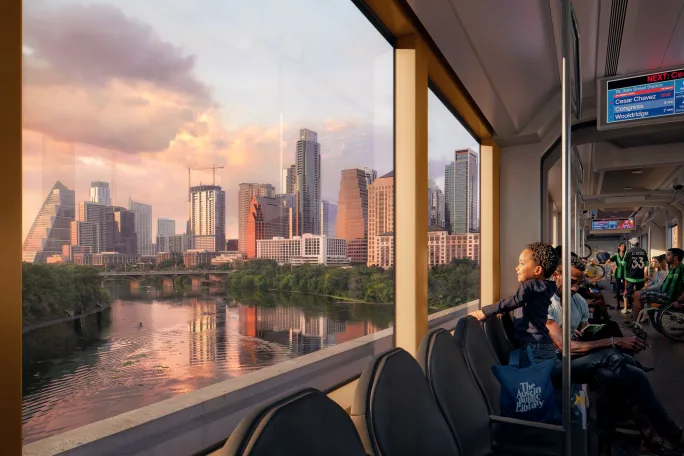
Austin Transit Partnership's light rail project continues to advance, with the selection of a vehicle manufacturer marking a key milestone in bringing electric light rail service to the Texas capital.
Artist conceptual visualization, Austin Transit Partnership
Q: You have taken a different approach to project delivery compared with many traditional U.S. transit projects, drawing on practices used in Canada and elsewhere. Can you explain that approach and what makes it different?
Canally: As a new, purpose-built organization, we had the advantage of taking time to think carefully about how we wanted to deliver the project.
We are a relatively small organization, with about 60 people, and we wanted to work closely with industry partners to advance the project.
One of our biggest priorities was ensuring the federal approval, contracting, and community engagement processes were synchronized. On major projects, different teams sometimes move forward independently without considering how their work affects other parts of the project. We wanted to avoid that. We spent time talking with colleagues across the country and learning from projects elsewhere, including Toronto.
We brought one approach to Austin: a collaborative behavioral assessment as part of our procurement process. This was the first time this approach had been used in the U.S.
Instead of relying solely on traditional interviews, we spent a day and a half working through problems with prospective partners. It let us see how people would collaborate, communicate, and solve challenges together before entering a contract. It worked so well that we've continued that approach after we awarded contracts.
Ultimately, megaprojects are about people. The result is connecting people to jobs, homes, and opportunities, and making it easier for them to get around. But delivering those benefits requires teams to work together every day.
We also adopted a progressive design-build model, drawing on lessons from Canada and U.S. projects, such as the East San Fernando Valley project in Los Angeles and work at VTA.
The goal was to create an environment where we could work collaboratively through difficult issues rather than encounter them later when they become more expensive or complicated to resolve. We invested time upfront, and we believe that investment has helped keep us on track for construction in 2027.
Q: That's a thoughtful approach, especially the idea of testing collaboration before contracts are awarded. What led you to develop that strategy?
Canally: A lot of it comes from my own experience.
I have spent my career in public administration, primarily in finance, but I have also led major city projects.
You will find that sometimes different parts of an organization aren't aligned. Your procurement process, financial operations, and project management teams all have to work together.
Whether you are building a central library, a soccer stadium, or a light rail system, those functions need to be coordinated to deliver successfully. I wanted to bring that experience into this project.
Before everyone launches into their individual responsibilities, it's important to understand how their work connects to everyone else's. We emphasized that repeatedly.
The book How Big Things Get Done also influenced our thinking, particularly the idea that slowing down at the beginning can help you move more effectively later. There is always pressure to start immediately, but taking time to plan and align your teams can prevent problems down the road.
Another advantage is that ATP is a single-purpose organization. If you work for a city or a transit agency, a thousand other responsibilities compete for your attention.
At ATP, we wake up every day thinking about delivering light rail for Austin, from big-picture decisions to the small, detailed steps required to move the project forward. That focus has been incredibly valuable.
Q: How has that approach helped the project advance, particularly when it comes to avoiding delays, controlling costs, and navigating the federal approval process?
Canally: One of the biggest benefits is that we completed the National Environmental Policy Act (NEPA) process in under two years, which is significantly faster than the typical timeline for projects of this size. ATP is the first major transit project to complete an EIS for NEPA in less than two years under current federal guidelines.
I think a major reason for that success was how we approached the process. We didn't treat NEPA as a separate activity disconnected from the rest of the project. Instead, we integrated it into our broader planning and community engagement efforts.
When we went into the community to conduct the required environmental review outreach, we also used those conversations to provide project updates and gather feedback on things like station locations and design. That helped build and expand community trust while keeping the project moving.
We also had a strong working relationship with the Federal Transit Administration throughout the process. I think there's growing recognition across the country that we need to improve how megaprojects move through these early review stages.
For us, a focused organization, coordinated processes, and consistent community engagement helped us complete the work efficiently. We are proud of what we accomplished in under two years.
Challenges and What's Ahead

Greg Canally, CEO of the independent Austin Transit Partnership, has more than 25 years delivering large-scale capital projects.
METRO
Q: Every major infrastructure project faces challenges. What have been some of the biggest obstacles you've encountered, and how have you worked to address them?
Canally: One of the biggest challenges is communication.
Austin doesn't have much experience with a project of this scale that, by design, takes eight, 10, or even 12 years to complete. That means we have to be very intentional about how we communicate with the public.
Of course, travel times, service frequencies, and other technical details are important. But when you're talking to the community, you also need to explain what the project means for people's everyday lives. We focus on how light rail will connect people to jobs, provide more transportation choices, and support economic opportunities.
Another important area is addressing potential obstacles before they become problems.
We have identified three major areas that can create challenges for large projects: permitting, right-of-way acquisition, and private utilities. Rather than waiting until construction begins to deal with those issues, we've been working on them well in advance.
For example, we've worked with the city to streamline permitting for about two years, well before construction begins.
We are taking that same proactive approach with right-of-way and utility coordination. But communication remains an ongoing challenge. A lot is happening in Austin and throughout Texas, and we have to make sure our stakeholders understand where the project stands and how it's progressing.
We also want people to understand the economic opportunities construction brings. We like to say Austin Light Rail is going to be built by Texans because we're going to need workers from across the state to help deliver it.
The community voted for this project because people want it. Our responsibility is to keep them informed and demonstrate that we're making progress toward delivering it.
Q: Looking ahead, what are the next major milestones for Austin Light Rail, and what should people be watching for as the project moves toward construction?
Canally: We continue moving through the federal process, and the past 12 months have been successful.
We received a medium-high rating through the Federal Transit Administration's Capital Investment Grants (CIG) program, and we've completed the NEPA process. We are currently in project development and are working to advance into the CIG engineering phase. We are also progressing with our contractors, who are already working on the project.
Bringing our construction teams on early has been an important part of our strategy. Because they are involved during design, we can develop better cost estimates and address potential construction challenges earlier. That benefits us, and we believe it benefits the FTA as well.
The two major milestones ahead are continuing to advance through the federal process and preparing our first early construction packages for 2027. Those are our immediate priorities as we move closer to starting construction.
Q: Is there anything we haven't covered that you'd like to add, particularly about ATP's structure and what other agencies might learn from Austin's experience?
Canally: One thing I'd emphasize is the value of having an organization like ATP.
When voters approved the creation of Austin Transit Partnership, the idea was initially driven largely by financial considerations and the need for an independent entity to manage the project's financing. But I think the benefits have gone well beyond that.
As a new special-purpose organization, we have a level of flexibility we might not otherwise have. Early on, we held an industry event, and a consultant asked us about this new organization and what we were trying to accomplish.
After hearing about our approach, the consultant said something that has stayed with me: ‘That's cool. You don't have any organizational bad habits.’ I repeat that a lot because there's some truth to it.
We all have our own habits, and I certainly do. But as an organization, we have had an opportunity to build our processes and culture from the ground up. We can challenge the traditional bureaucracy around procurement and project delivery and ask whether there's a better way.
I encourage my team to challenge me, and we challenge each other every day. It's about creating a leadership culture where people are willing to roll up their sleeves, work together, and focus on getting things done.
I don't think anyone was necessarily thinking about that benefit when voters approved creating an independent organization. But I believe it has become foundational to our success.
Since June 2023, we've met important federal and contractual milestones while continuing to deliver on our commitments to the community. And that puts us in a strong position as we prepare to begin construction.
Quick Answers
The Austin light rail project is a nearly 10-mile transit initiative aimed at improving mobility within the city.
*Summarized by AI
More Rail

Metra Draft Plan Outlines Costs, Service Improvements for Regional Rail
The Systemwide Network Plan identifies infrastructure needs and potential investments to expand all-day, bidirectional rail service across the Chicago region.
Read More →
Amtrak Completes First Street Tunnel Upgrades, Restores Service
The nine-day construction project included replacing aging track infrastructure and modernizing switch systems near Washington Union Station.
Read More →
FRA Announces $2.3B for Passenger, Freight Rail Projects Nationwide
The CRISI Grant Program funding will support rail infrastructure improvements, safety upgrades, and projects aimed at improving freight and passenger rail service across 45 states and Washington, D.C.
Read More →
Caltrain’s Electrification Drives a New Era of Ridership Growth
The railroad’s shift to electric service has brought more frequent trains, stronger customer satisfaction, and increased ridership, earning it APTA’s Outstanding Public Transportation System award.
Read More →
FTA Advances $164M Broward County Commuter Rail Project
The proposed 10.5-mile commuter rail extension would connect Fort Lauderdale and Aventura, expanding passenger rail options in South Florida.
Read More →
New York MTA Launches Historic $1.9B Signal, Track Modernization Project
Funded in part by congestion pricing revenue, the project will replace nearly century-old signals along the A and C lines in Brooklyn and Queens.
Read More →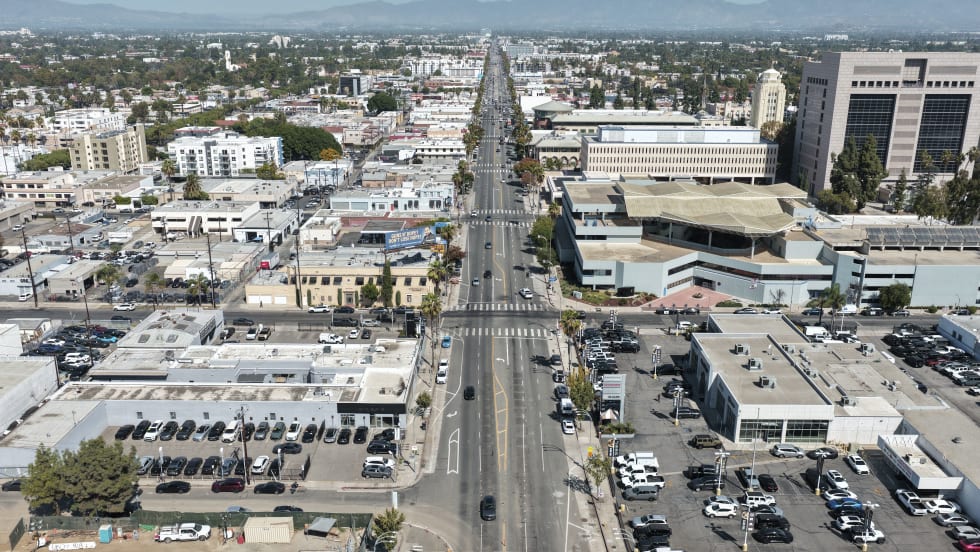
LA Metro Breaks Ground on East San Fernando Valley Light Rail Project
The 6.7-mile line will add 11 stations along Van Nuys Boulevard, expand access to jobs and regional transit connections, and support Metro’s broader efforts to improve mobility as rail ridership grows.
Read More →
CSA Group Releases Climate Resilience Standard for Transit, Passenger Rail
Developed with support from the Standards Council of Canada, CSA D700 guides assessing climate-related risks and planning adaptation measures for transit and passenger rail systems.
Read More →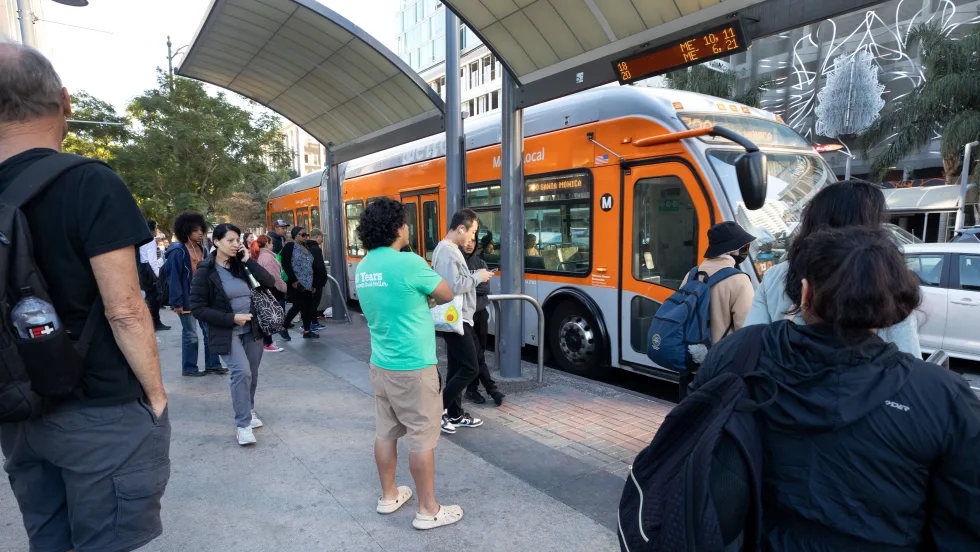
LA Metro September Ridership Climbs 3.9%, Led by Rail Growth
The agency recorded more than 27.2 million boardings, with rail ridership increasing 12.4% year over year and the D Line posting the largest gains.
Read More →
First Full MetroLink Rail Expansion Completed in 20 Years with $192M Airport Project
The project links two St. Louis-area airports by light rail while adding roadway and bike trail connections to improve regional access and mobility.
Read More →