




More: Inside Monterey-Salinas Transit’s New Approach to Ridership Recovery
Montreal’s STM Reports Ridership Decline, Service Modernization Efforts
The transit agency cites labor disruptions, demographic shifts, and evolving rider needs as it advances safety initiatives, paratransit changes, and major infrastructure projects across its network.
May 8, 2026

The Montreal agency reported 293.9 million trips in 2025, a 6.6% decrease compared to 2024.
Credit:
Société de transport de Montréal
2 min to read
The Société de transport de Montréal (STM) released its 2025 Activity Report, outlining a year shaped by labor negotiations, ridership declines, safety initiatives, and major infrastructure projects aimed at modernizing Montreal’s public transit network.
STM reported 293.9 million trips in 2025, a 6.6% decrease compared to the previous year. Officials attributed the decline in part to demographic changes tied to new immigration policies, including a reduction in international students, a key transit user group. Service disruptions related to union strike activity during collective bargaining negotiations also impacted ridership.
“Changes in how we do business combined with efforts to optimize our budget have made 2025 a decisive year for STM’s ability to continue to deliver efficient, reliable, safe, and cost-effective public transit in the years to come,” said STM CEO Marie-Claude Léonard in a statement.
Four of STM’s six union groups were engaged in negotiations throughout 2025. The agency said it worked to maintain essential service levels during strike actions while pursuing operational changes intended to support long-term service sustainability. As of May 7, four labor agreements had been ratified, with negotiations continuing for the remaining two unions.
Despite operational challenges, STM reported an approximately 10% decrease in overall customer complaints compared to 2024. Complaints related to metro service dropped 13%, while paratransit complaints fell 31%. Bus service complaints increased 6%, which STM largely attributed to strike-related disruptions.
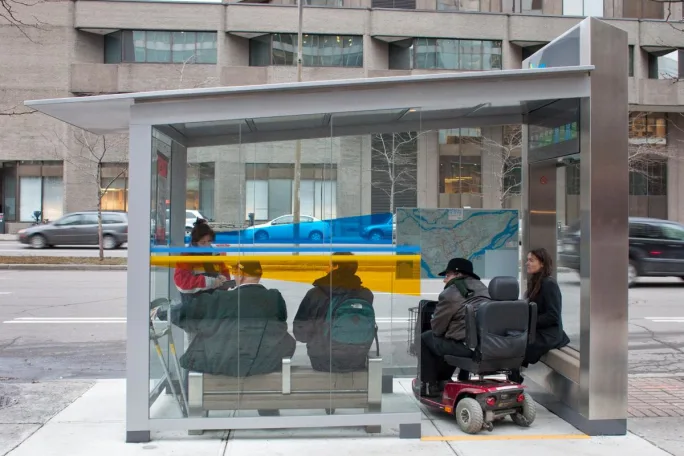
Several major infrastructure initiatives advanced during 2025, including progress on the Blue Line extension project.
Credit:
Société de transport de Montréal
Safety, Accessibility, and Long-Term Network Sustainability
The agency also expanded safety and social coexistence measures across its network in response to increased incivility and declining perceptions of safety in the system. Temporary initiatives included mandatory circulation policies in stations, reconfigured station areas, and increased staff presence. STM said the positive results prompted an extension of the circulation requirement through April 30, 2026.
STM also announced changes to its paratransit operations. Beginning in 2026, external partners will fully operate the service as part of an effort to standardize operations, improve vehicle availability, and support the agency’s goal of zero trip denials amid growing demand driven by an aging population and evolving customer needs.
Several major infrastructure initiatives advanced during the year, including progress on the Blue Line extension project. STM said the largest tunnel boring machine ever used in Quebec arrived to begin excavation of the 4.6-km tunnel extension. Construction also continued on five future stations, with project timelines and budgets remaining on schedule.
Additional projects completed in 2025 included the launch of the second section of the Henri-Bourassa bus rapid transit corridor, accessibility upgrades at Atwater station, and integration of the new Deux-Montagnes branch of the Réseau express métropolitain (REM) with McGill and Édouard-Montpetit stations.
More Management
Indian River Transit’s Community-Focused Approach Earns National Recognition
Named APTA’s 2026 Outstanding Public Transportation System in its size category, Florida’s Indian River County transit system continues to grow ridership through fare-free service and a focus on evolving community needs.
Read More →
ENC Lands MATA Contract and More in Biz Briefs
In this edition of Biz Briefs, we spotlight the latest developments shaping the future of mobility.
Read More →
From Surviving to Thriving: Building Stronger Transportation Organizations
Bus Business Consultants founder Brian Dickson shares lessons on leadership, organizational health, and creating options for long-term success in a changing transportation industry.
Read More →
Everett Transit, Community Transit Outline Consolidation Agreement
The proposed agreement calls for a 50% increase in bus service in Everett, a new microtransit zone, continued paratransit service, and the transfer of Everett Transit operations to Community Transit.
Read More →
Strada360’s Steve Lassey on Turning Transit Data Into Better Decisions
From breaking down data silos to preparing for AI, Strada360 CEO Steve Lassey discusses how transit agencies can use technology to improve operations, customer information, and long-term decision-making.
Read More →
People Movement: Phil Washington Joins HNTB, Denver RTD Launches CEO Search, and More
In this edition, we also spotlight recent personnel moves at STV, the Eno Center for Transportation, and more, highlighting the people taking on new roles across the transportation industry.
Read More →
SEPTA Details Accelerate Vision for Transit System
The plan outlines investments in trolley modernization, new Metro and Regional Rail vehicles, accessible stations, and more frequent bus and rail service.
Read More →
FTA Ends Direct Oversight of MBTA Safety Actions
The federal agency closed its remaining special directive to the Massachusetts Department of Public Utilities following a safety review that began in 2022.
Read More →
Report: Transit Bus Manufacturing Supports 34,100 Jobs, $5.1B in GDP
The “Buses Mean Business” report examines the transit bus manufacturing industry’s economic footprint, supply chain, and rising demand for vehicle replacements.
Read More →
LIT Marks 10-Year Milestone at Annual Summit
Hosted by the COTA from September 10 to 13, the Summit carried the theme “Celebrating 10 Years of Excellence, Leadership, and Impact,” with every part of the program honoring the people, agencies, and partners who built LIT over its first decade.
Read More →