




New York Governor Signs Legislation to Fully Fund Transit Improvements
New York MTA Adding 316 New Passenger Railcars
With growing ridership, MTA is investing in a faster, more modern fleet — starting with 316 next-gen M-9A railcars.
June 24, 2025
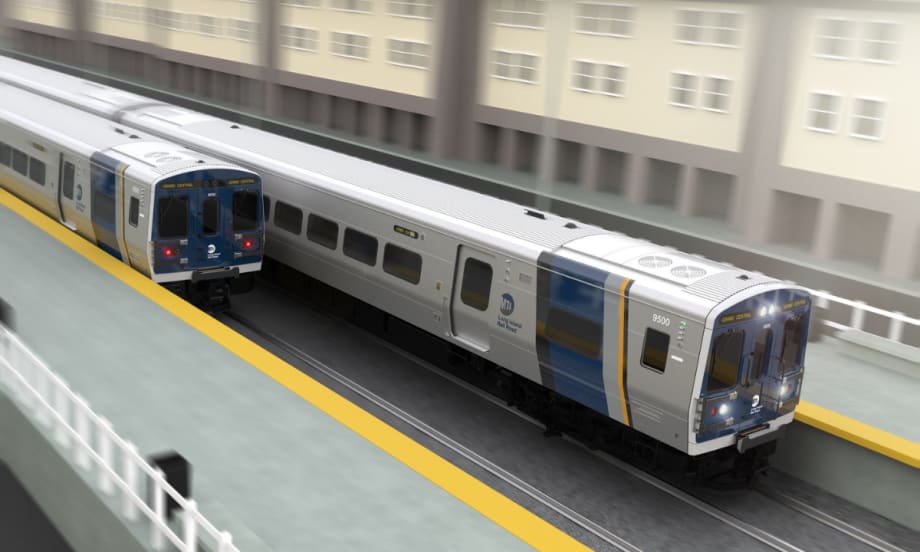
Alstom Transportation will deliver pilot cars in 2029, first entering LIRR passenger service in 2030. All cars will be delivered by 2032.
Photo: New York MTA
2 min to read
New York Governor Kathy Hochul recently announced that the Metropolitan Transportation Authority (MTA) Finance Committee approved the purchase of M-9A Passenger Railcars on June 23.
This order includes 316 M-9A cars — 160 cars will be allocated to the Long Island Rail Road’s (LIRR) fleet and 156 for Metro-North Railroad.
“New Yorkers deserve a fast, reliable, and comfortable transit system. We are delivering that today through the purchase of modern railcars for the LIRR and Metro-North fleets,” Governor Hochul said. “The commuter rails are a lifeline for riders in one of the world’s largest and busiest transit systems — this is how we continue to achieve record on-time performance.”
Alstom Transportation will deliver pilot cars in 2029, first entering LIRR passenger service in 2030. All cars will be delivered by 2032.
The M-9A cars are needed to replace Metro-North’s M-3 cars beyond their service life and allow the LIRR to retire its M-3 cars, whose service has been extended to support service with the opening of Grand Central Madison. These railcars will operate in LIRR electric territories and on the Metro-North Hudson and Harlem lines.
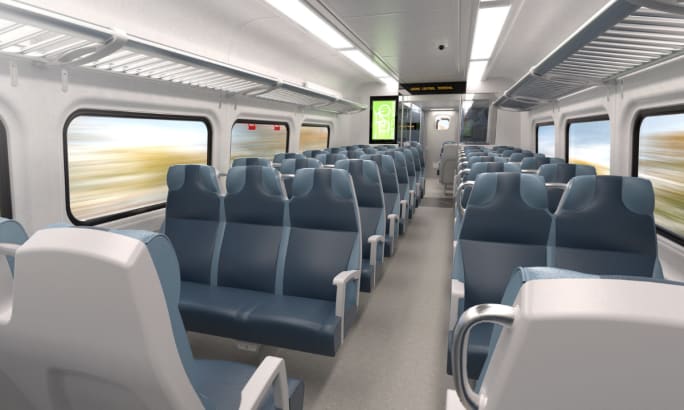
The M-9A cars feature glass windows, USB charging ports, and accessibility improvements, including automatic bathroom doors.
Photo: New York MTA
New Railcars Coming to Long Island Rail Road and Metro-North
This approval builds on the MTA’s ongoing efforts to modernize its rolling stock fleet. The M-9A cars feature glass windows, USB charging ports, and accessibility improvements, including automatic bathroom doors.
“We’re looking to buy almost 2,000 rail cars as part of the new Capital Plan — $10.9 billion worth — and this 300+ order gets us off to a strong start,” said MTA Chair and CEO Janno Lieber. “I want to thank Governor Hochul for her work to secure the funding that made it possible.”
“The MTA is the biggest railcar purchaser in North America, and we are using innovative methods to bring down costs and delivery time,” MTA Chief of Rolling Stock Program Tim Mulligan said. “By building on the reliable design of previous cars, we were able to work with the contractor to get things done better, faster, and cheaper.”
“Thanks to record on-time performance and increased service with the opening of Grand Central Madison, LIRR ridership continues to explode,” Long Island Rail Road President Rob Free said. “Our customers deserve modern railcars, which will result in even more reliable service and improve the customer experience for years to come.”
I’m excited for our customers to experience even more reliable service when the M-9A railcars join our fleet,” Metro-North Railroad President Justin Vonashek said. “We are committed to providing the best customer experience every day on every ride on Metro-North.”
More Rail

ENC Lands MATA Contract and More in Biz Briefs
In this edition of Biz Briefs, we spotlight the latest developments shaping the future of mobility.
Read More →
Strada360’s Steve Lassey on Turning Transit Data Into Better Decisions
From breaking down data silos to preparing for AI, Strada360 CEO Steve Lassey discusses how transit agencies can use technology to improve operations, customer information, and long-term decision-making.
Read More →
SEPTA Details Accelerate Vision for Transit System
The plan outlines investments in trolley modernization, new Metro and Regional Rail vehicles, accessible stations, and more frequent bus and rail service.
Read More →
FTA Ends Direct Oversight of MBTA Safety Actions
The federal agency closed its remaining special directive to the Massachusetts Department of Public Utilities following a safety review that began in 2022.
Read More →
Amtrak, CN Reach Agreements to Strengthen Passenger Rail Service, Safety
The agreement resolves a more than decade-long proceeding before the Surface Transportation Board concerning the terms and conditions for Amtrak services, such as the City of New Orleans, Illini/Saluki, and Wolverine.
Read More →
New York MTA Advances Final Contract for Second Avenue Subway Expansion
Contract Four is the largest in the Second Avenue Subway Phase 2 project and includes construction of station infrastructure, tracks, and signals for the subway expansion, MTA officials said. Work on Contract Four will begin in 2027.
Read More →
San Diego MTS Breaks Monthly Trolley Ridership Record
Agency officials said July’s ridership indicates MTS’s continued recovery from the pandemic.
Read More →
Report Examines NJ TRANSIT Reliability, Funding Challenges
The Garden State Initiative analysis examines the roles of Amtrak infrastructure, fleet management, and agency operations while recommending a more performance-based approach to improving reliability.
Read More →
Stadler, CapMetro Sign Long-Term Rail Fleet Support Agreement
Beginning in 2027, Stadler will provide on-site technical expertise, spare parts support, training, and obsolescence management to help extend the reliability and longevity of CapMetro’s GTW fleet.
Read More →
Biz Briefs: Alstom Lands Canadian Contract, LYT to Supply California TSP, and More
In METRO's latest installment, we take a look at recent news from Complete Coach Works, Beep, FlixBus, and more partnerships making headlines across the transportation sector.
Read More →