



Alexander Dennis Opens Las Vegas Bus Manufacturing Facility
To commemorate the facility's launch, it handed over the first two of 10 new Enviro500 double-deck buses to the Regional Transportation Commission of Southern Nevada.

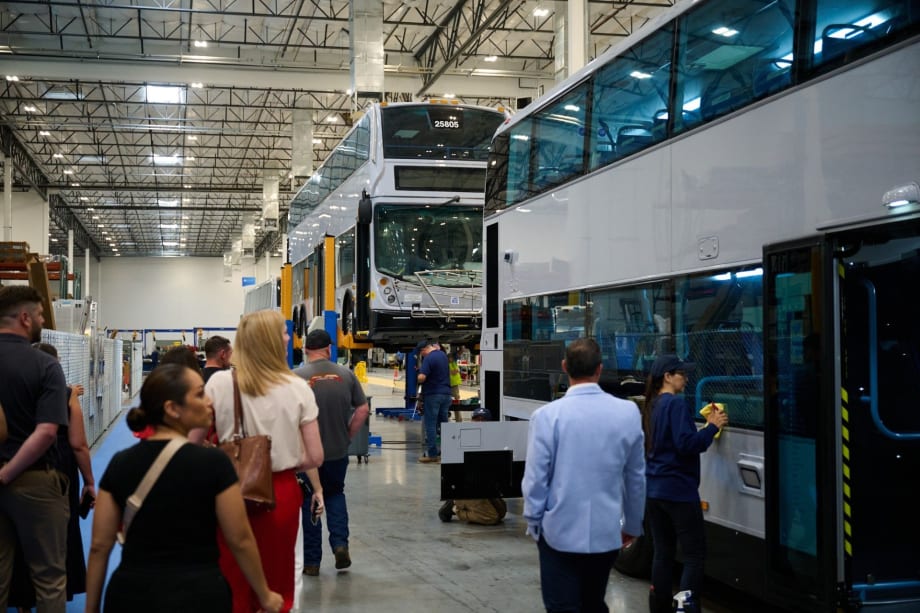
The opening of the new manufacturing facility is a significant milestone for Alexander Dennis as it will lead the development and production of double-deck buses for the North American market and support Southern Nevada’s transportation and manufacturing industry.
Photo: Alexander Dennis
Alexander Dennis, a subsidiary of NFI Group Inc., celebrated the official opening of its U.S. manufacturing facility in Las Vegas.
To commemorate the facility's launch, it handed over the first two of 10 new Enviro500 double-deck buses to the Regional Transportation Commission of Southern Nevada (RTC).
The New Las Vegas Facility
The opening of the new manufacturing facility is a significant milestone for Alexander Dennis as it will lead the development and production of double-deck buses for the North American market and support Southern Nevada’s transportation and manufacturing industry. It is the only facility making double-deck buses in the U.S., making Las Vegas a hub for cutting-edge transit solutions, according to the company.
Among the first buses to be completed at the facility are 10 Enviro500 for the RTC.
NFI Group President/CEO, Paul Soubry, and Alexander Dennis President/Managing Director, Paul Davies, worked directly with RTC’s CEO, MJ Maynard-Carey, and her team to transition the first two vehicles in the fleet.
The new buses will boost RTC’s transit fleet on its Deuce on The Strip route.
Manufacturing Buy America-Compliant Buses
The new Las Vegas assembly facility is owned and directly operated by Alexander Dennis Inc. (ADI), the manufacturer’s legal entity in the U.S.
The company’s investment of $15.3 million represents not only a commitment to innovation but also a testament to the strong partnerships Alexander Dennis builds with its local communities and the economic value it creates.
The buses are Buy America compliant, which means more than 70% of the materials and components are sourced from US-based suppliers. In Southern Nevada, ADI spent over $5.5 million directly with local suppliers over the past 12 months.
Double-decker production is currently one bus per week. This is expected to ramp up to one and a half buses per week through 2026, allowing ADI to manufacture 75 vehicles per year.
As demand grows, there is an opportunity to increase capacity within the existing facility with further investments and workforce development, which could increase employment from over 115 local jobs initially, ADI officials said. The roles support Nevada’s economy while opening new career paths in manufacturing and transit.
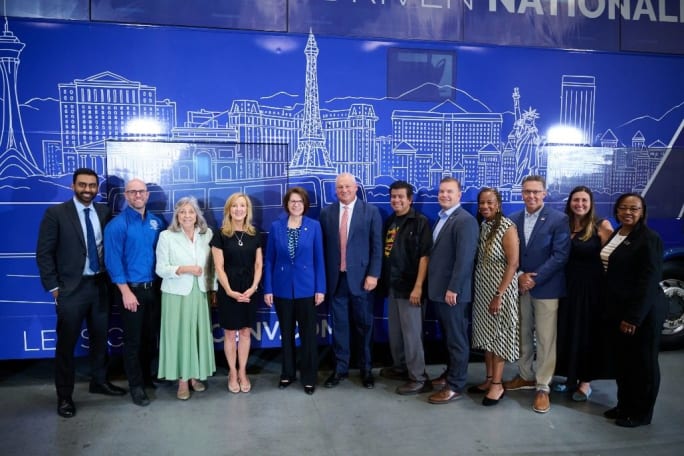
NFI Group President/CEO, Paul Soubry, and Alexander Dennis President/Managing Director, Paul Davies, worked directly with RTC’s CEO, MJ Maynard-Carey, and her team to transition the first two vehicles in the fleet.
Photo: RTC of Southern Nevada
ADI’s New Buses
The new Enviro500 buses for RTC Transit are 42 feet, 5 inches long and 13 feet, 6 inches tall, and have a capacity for 100 passengers. Fifty-one seats on the upper deck are easily accessed via two staircases, while the lower deck offers 15 more fixed seats, seven tip-up seats, and spaces for two wheelchair users.
The 10 new double-deckers, built in Las Vegas, join 40 already in the RTC fleet that were manufactured in 2020 at Alexander Dennis’ former manufacturing facility. Another 10 Enviro500s are now on order for delivery next year and will again be built locally in Southern Nevada.
“The grand opening of the Alexander Dennis manufacturing facility is a proud moment for Southern Nevada and a testament to the power of strategic partnerships,” Maynard-Carey said. “As the only site in the country building double-decker buses, this facility not only supports the RTC’s mission to provide safe, efficient, and innovative transit solutions, but it also brings quality jobs and economic investment to our region.”
“With our new manufacturing facility here in Las Vegas, we’re now giving back to the local economy and creating value in Southern Nevada,” said ADI’s Davies. “We’re very grateful for the support we have received, including the help of Big Rig Manufacturing in setting up this facility and its initial operations.”
More Bus

New York MTA Plans Largest Bus Fleet Upgrade in More Than a Decade
The agency is seeking manufacturers for 650 new CNG buses to replace aging vehicles, improve reliability, and advance its broader fleet modernization strategy.
Read More →
Building a Flexible Path to Transit Electrification
John Hroncich discusses BAE Systems’ modular and scalable approach, lessons learned from decades of real-world operations, and how agencies can identify electrification strategies that fit their fleets.
Read More →
Bus Tech Talk: Keeping Transit Technicians Ahead of the Technology Curve
LA Metro’s Obed Mejia discusses technician training, evolving maintenance technology, fleet replacement, and strategies for getting the most out of today’s transit fleets.
Read More →
Biz Briefs: RIPTA Unveils New Frontrunners, Clevland RTA Adds New Siemens, and More
In METRO's latest installment, we take a look at recent news from Siemens, Prevost, Dodge, and more partnerships making headlines across the transportation sector.
Read More →
People Movement: Holly Arnold Joins Transdev and More
In this edition, we also cover recent appointments and announcements at Pace, CamTran, MCI, and more, showcasing the individuals helping to shape the future of transportation.
Read More →
The High Cost of Transit Buses: Industry Leaders Look to Procurement Reform
Transit leaders and policymakers examine how standardized bus designs, streamlined procurement, and predictable funding could help agencies stretch budgets and deliver better service.
Read More →
The Business Voice Behind Public Transportation
As chair of APTA’s Business Members Board of Governors, Ray Melleady explains how more than 850 business members are partnering with transit agencies to advance funding, innovation, and industry-wide collaboration.
Read More →
From Surviving to Thriving: Building Stronger Transportation Organizations
Bus Business Consultants founder Brian Dickson shares lessons on leadership, organizational health, and creating options for long-term success in a changing transportation industry.
Read More →
Finding the ‘Happy Medium’: Optimizing Maintenance Without Sacrificing Reliability
The key to maintenance optimization isn’t doing less work—it’s doing the right work at the right time on the right assets.
Read More →
LA Metro, City of West Hollywood, and Partners Advance Smarter Bus Lane Enforcement
The award-winning partnership combines AI-powered detection with human oversight to improve bus reliability, accessibility, and enforcement efficiency.
Read More →