



Biz Briefs: Hitachi Rail, GreenPower, and More
Stay informed with these quick takes on the projects and companies driving progress across the transportation landscape.

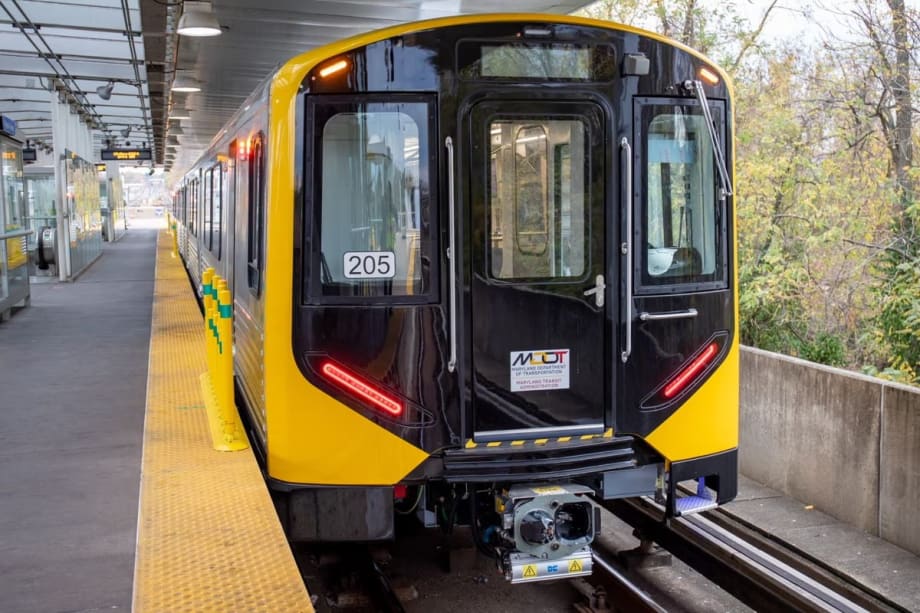
As the first project completed at Hitachi Rail’s new factory in Hagerstown, Maryland, the new system will enhance comfort and reliability for thousands of daily commuters and provide a modern ridership experience, according to Hitachi and MTA officials.
Credit: Maryland MTA
In METRO's latest installment, we take a look at the latest news from suppliers including Masabi, Transit Technologies, and more.
Credit: METRO
From strategic partnerships to acquisitions and service expansions, the industry continues to evolve at a rapid pace.
In this edition of Business Briefs, we highlight the latest developments shaping the future of mobility — from manufacturers and technology providers to transit agencies and motrocoach service operators. Stay informed with these quick takes on the projects and companies driving progress across the transportation landscape.
In METRO's latest installment, we take a look at the latest news from suppliers including Masabi, Transit Technologies, and more.
South Carolina's Palmetto Breeze Adds 4 MCIs
Bluffton, South Carolina’s Palmetto Breeze, operated by the Lowcountry Regional Transportation Authority, received four 2024 Motor Coach Industries (MCI) buses from the South Carolina Department of Transportation.
The four coaches were provided by SCDOT at no cost to Palmetto Breeze, supporting fleet modernization while keeping local resources focused on service delivery and ongoing maintenance. The new vehicles strengthen long-term fleet sustainability and enhance regional public transportation across the Lowcountry, said officials.
The new buses will replace aging vehicles currently used on Palmetto Breeze’s daily intercounty commuting services. Palmetto Breeze officials said this investment helps improve reliability, comfort, and overall fleet readiness while maintaining consistent service for riders.
Once deployed, the four MCIs will support daily intercounty commuting routes and help reduce service disruptions related to maintenance and vehicle downtime.
COTA Unveils Regionwide Open Payments with Masabi
The Central Ohio Transit Authority (COTA) and Masabi launched open payments across COTA’s network, allowing riders to pay fares simply by tapping a contactless payment card or device.
The new service builds on COTA’s pioneering implementation of Account-Based Ticketing (ABT) with smartcards and a mobile app, launched in partnership with Masabi in 2021, adding another convenient way for COTA riders to pay by tapping their payment card.
With the addition of Open Payments, COTA riders can now pay for their trip directly with a contactless card or device, eliminating the need for a ticket, app, or reload, while automatically receiving the benefits of fare capping and concessions, helping ensure equitable pricing and added convenience.
Through account linking, riders can register their contactless card to view payment history and apply concessions to their account, guaranteeing that they always pay the correct reduced fare when eligible. Combined with fare capping, this ensures that all riders benefit from the lowest available fare, removing financial barriers and promoting fairness across the system.
Hitachi Rail Vehicles Enter Service for Maryland’s MTA
Hitachi Rail celebrated the official start of revenue service for its new cutting-edge metro cars produced for the Maryland Transit Administration's (MTA) Baltimore Metro Subway Link.
Contracted in 2017, this milestone marks a significant development for Maryland’s only heavy rail subway system, replacing and upgrading existing rolling stock and rail control systems, which were last updated in 1983.
As the first project completed at Hitachi Rail’s new factory in Hagerstown, Maryland, the new system will enhance comfort and reliability for thousands of daily commuters and provide a modern ridership experience, according to Hitachi and MTA officials.
Highlights of the new vehicles include:
Upgraded SelTrac technology, which will provide higher system capacity with improved performance with state-of-the-art data analytics, lower capital investment and lifecycle costs, and flexible and scalable architecture.
New metro cars are designed to be highly innovative, with passenger comfort and design at the forefront. The updated driver cab also includes a state-of-the-art integrated diagnostic system.
Each bi-directional married pair consists of two stainless steel cars, each with 76 seats and a capacity of 196 passengers.
Built with advanced passenger information systems, LED lighting, ADA-compliant interiors, and fiberglass car heads– with a 30-year life cycle capable of providing an average journey of 80,000 miles per year.
A significant portion of the new fleet was assembled and completed at Hitachi Rail’s $100 million state-of-the-art, carbon-neutral factory in Hagerstown. Officially opened in September 2025, the 307,000-square-foot facility is capable of building up to 20 railcars per month, with 460 on-site staff once the project reaches operational capacity.
GreenPower Picks New Mexico for New EV Manufacturing Facility
Electric vehicle manufacturer GreenPower Motor Company (NASDAQ: GP) reached an agreement with the New Mexico Economic Development Department (EDD) to establish operations in Santa Teresa, New Mexico.
Internationally headquartered in Vancouver, Canada, with current operational facilities in Southern California and West Virginia, GreenPower manufactures and distributes all-electric, purpose-built, zero-emission medium and heavy-duty vehicles serving the cargo and delivery market, shuttle and transit space, and school bus sector.
The new 135,000 sq. ft. facility in Santa Teresa will become the company’s base for North American operations and US corporate headquarters. The move is estimated to generate over $200 million in economic impact for New Mexico over the next decade, creating more than 340 jobs.
The company will receive a $5 million LEDA award from the state and $4.6 million in job training incentive funds. The company also qualified for a $1.36 million Rural Jobs Tax Credit and $3.65 million as part of New Mexico’s High-Wage Jobs Tax Credit program.
Leadership Transition Underway at Bytecurve and busHive
Transit Technologies announced that Brian Mann has been appointed GM of Bytecurve and busHive.
Mann brings more than 13 years of experience supporting workforce and operational needs across K–12 and motorcoach transportation, most recently serving as president of busHive, where he led significant growth initiatives and helped expand the platform's operational impact for transportation providers.
He succeeds GP Singh, founder of Bytecurve, who is transitioning into a Strategic Advisor role at Transit Technologies. Under Singh’s leadership, Bytecurve grew into a respected platform known for its reliability, operational depth, and strong client relationships.
In his advisory role, Singh will continue to support Transit Technologies through industry thought leadership and by advising on product and solutions strategy, helping guide the next phase of innovation across the company's workforce technology offerings.
Transit Technologies officials said the leadership transition is already underway and is designed to ensure continuity for clients using Bytecurve to manage workforce operations and busHive to support both public and private transportation service management needs.
More Technology

From Hardware to Digital Partner: Luminator Charts Its Next Chapter
CEO Magnus Friberg discusses Luminator’s shift toward becoming a digital partner, the growing importance of software and interoperability, and how AI can help agencies improve operations and passenger experience.
Read More →
Beyond the Checklist: A Structured Approach to Transit Maintenance
Reliability-Centered Maintenance helps transit agencies move beyond routine checklists to focus limited resources on the assets and failures that have the greatest impact on safety, reliability, and service.
Read More →
NJ TRANSIT Advances Bus Technology Upgrades Across Statewide Fleet
More than 1,500 buses now feature upgraded technology designed to improve arrival predictions and provide free Wi-Fi, with deployment expected to reach nearly 2,000 buses by the end of 2026.
Read More →

Building a Flexible Path to Transit Electrification
John Hroncich discusses BAE Systems’ modular and scalable approach, lessons learned from decades of real-world operations, and how agencies can identify electrification strategies that fit their fleets.
Read More →
Biz Briefs: Alstom Lands Canadian Contract, LYT to Supply California TSP, and More
In METRO's latest installment, we take a look at recent news from Complete Coach Works, Beep, FlixBus, and more partnerships making headlines across the transportation sector.
Read More →
From Legacy Silos to Conversational Intelligence
What if transit leaders could ask any operational question and get a trusted answer in seconds? Conversational AI is transforming how agencies use their data.
Read More →
USDOT Announces Rail Vehicle Replacement Grants, Chattanooga AV Shuttle Funding
More than $191 million in federal funding will help three transit agencies replace aging rail vehicles and support a new autonomous shuttle service in Chattanooga.
Read More →
Bus Tech Talk: Keeping Transit Technicians Ahead of the Technology Curve
LA Metro’s Obed Mejia discusses technician training, evolving maintenance technology, fleet replacement, and strategies for getting the most out of today’s transit fleets.
Read More →
Biz Briefs: RIPTA Unveils New Frontrunners, Clevland RTA Adds New Siemens, and More
In METRO's latest installment, we take a look at recent news from Siemens, Prevost, Dodge, and more partnerships making headlines across the transportation sector.
Read More →
Why Simulating Pedestrian Movement Has Become Essential for Modern Rail Stations
Pedestrian microsimulation is helping rail planners identify bottlenecks, test station designs, and prepare complex transit hubs for growing passenger volumes.
Read More →