



Milwaukee Rolls Out New Measures to Enhance Bus Safety
MCTS officials said the new pilots are part of a broader commitment to improving the rider experience through proactive, visible safety strategies that balance enforcement with customer support.

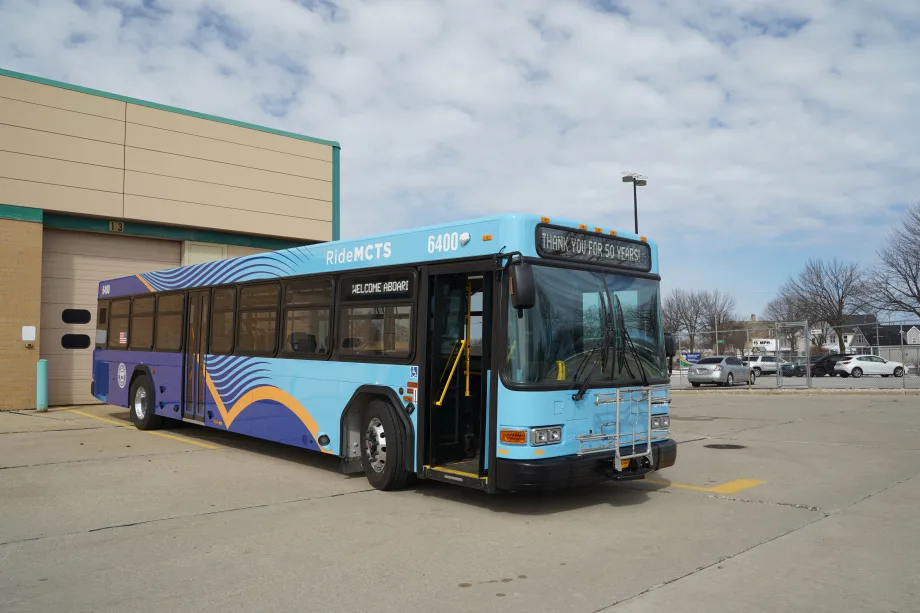
The new enforcement initiatives build upon ongoing investments in passenger and operator safety across the MCTS system through staffing, technology, and infrastructure.
Credit: MCTS
The Milwaukee County Transit System (MCTS) announced two new pilot programs aimed at enhancing safety and security for both bus operators and passengers. Funded through safety-focused investments included in Milwaukee County’s 2026 budget, the initiatives will launch later this year.
The first program — the 2026 Milwaukee County Sheriff’s Office Transit Security Pilot — will deploy sheriff’s deputies on select routes to respond to serious safety or criminal incidents onboard buses. The goal is to provide faster, more visible law enforcement presence in high-need areas, helping deter crime and enhance rider confidence.
The second initiative, the 2026 Bus Fare Compliance Program, will expand MCTS’s existing Public Safety Officer (PSO) Program. These in-house officers will focus on addressing fare evasion and supporting safe rider behavior, complementing the work of bus operators and law enforcement.
New MCTS Pilot Programs
MCTS officials said the new pilots are part of a broader commitment to improving the rider experience through proactive, visible safety strategies that balance enforcement with customer support.
Additional details on route selection, timelines, and staffing are expected to be released in the coming months.
“I am committed to keeping transit safe and sustainable, which is why I have continuously collaborated with public safety partners, law enforcement officials, and local leaders to invest in security on our buses,” said Milwaukee County Executive David Crowley. “It’s important for our riders, operators, and their loved ones to feel safe while using the bus to get to work, school, and other destinations that are important to daily life. We will continue working to improve safety for both MCTS drivers and riders in the years ahead.”
The new pilot programs will build upon MCTS’s in-house PSO Program, Milwaukee County’s largest transit security investment in MCTS history.
Since the program began in 2024, assaults on bus operators have decreased by 50%, and apprehension and conviction of offenders have increased.
“Safety is the foundation of everything we do at MCTS,” MCTS President/CEO Steve Fuentes said. “Our partnership with the Milwaukee County Sheriff’s Office strengthens protections for our bus operators, employees, and the community we serve. We are fully committed to both this pilot program as well as expanding our own internal Public Safety Officer team to ensure our system remains safe, reliable, and secure for everyone.”
The New Pilot Programs
The 2026 Bus Fare Compliance Pilot Program will ramp up MCTS's existing PSO program to deploy uniformed security personnel at high-evasion bus stops and on buses to create a visible presence to deter fare evasion while enhancing safety, said agency officials.
The pilot program, which launches January 19, leverages new funding to boost PSO staff hours dedicated to addressing fare evasion. MCTS will continue to expand its PSO program throughout the year and is currently recruiting more PSOs.
As part of the 2026 Adopted Budget, Milwaukee County, in partnership with the Milwaukee County Sheriff’s Office, launched a pilot program designed to address any criminal activity on MCTS bus routes.
The initiative will place plain clothes Sheriff’s deputies on targeted bus routes to enhance and supplement safety and security for operators and riders.
MCTS's safety and security team will work closely with the Sheriff's Office, providing data and intelligence to support strategic deployment across targeted areas of the transit system.
The program will last through 2026, or until funding dedicated to the program is exhausted.
New Initiatives Complement Existing Safety Efforts
The new enforcement initiatives build upon ongoing investments in passenger and operator safety across the MCTS system through staffing, technology, and infrastructure.
For example, in addition to the 10 high-definition cameras with live-look capabilities on every bus, the newest buses are equipped with passenger-facing CCTV screens to remind riders they are being recorded and to enhance situational awareness.
MCTS officials said it also plans to test even larger operator shields that recently entered the market and offer more robust protection to bus operators. These measures are supported by a robust agency safety plan as part of the MCTS Safety Management System program, in compliance with FTA guidelines.
Overall, MCTS has more than 50 employees engaged in safety, including Route Supervisors, a 24-hour Dispatch Center, Public Safety Officers, and administrative personnel committed to making MCTS safe for employees and customers.
More Security and Safety

Transit Agencies Highlight Safety Gains at National Summit
Leaders from 15 major transit systems shared crime-reduction results and safety initiatives while discussing the role of continued federal support.
Read More →
DART Launches Major Security, Fare Enforcement Initiative
The 90-day demonstration will deploy coordinated security teams at five light rail stations while testing controlled access and gathering data to guide future investments.
Read More →
RTD Launches NextRide App to Consolidate Trip Planning, Fares, Security Reporting
The app expands on RTD’s existing NextRide web application and allows customers to view real-time vehicle locations and service alerts, purchase and store digital fares, and access customer support.
Read More →

TAPTCO Updates OSHA Compliance Training for Transit Maintenance Operations
The revamped program addresses 26 OSHA standards for maintenance facilities, with TAPTCO pointing to training, documentation, and everyday shop hazards as continuing challenges for transit operations.
Read More →
How VaporVision Adds Value to Transit Door Systems
Wabtec engineers explain how the system improves doorway detection, strengthens diagnostics and gives transit agencies and OEMs greater operating flexibility.
Read More →
FRA Announces $5.3B in Rail Investments, Including $2B for Amtrak
Funding will support grade-crossing improvements, infrastructure upgrades, and new Amtrak equipment in 23 states.
Read More →
Chicago, Maryland Expand Non-Law-Enforcement Safety, Rider Support
The CTA and MTA are launching new programs aimed at de-escalation, crisis response, rider assistance, and greater transparency.
Read More →
LA Metro, City of West Hollywood, and Partners Advance Smarter Bus Lane Enforcement
The award-winning partnership combines AI-powered detection with human oversight to improve bus reliability, accessibility, and enforcement efficiency.
Read More →
LA Metro Reports 57% Decline in Homelessness on Transit System Since 2024
The agency's latest homelessness count offers new data on how care-based services and cross-sector partnerships can complement traditional transit security strategies.
Read More →
FTA Launches 'Transit Moves America' Dashboard to Highlight Agency Safety and Performance
The online dashboard transforms National Transit Database information into a public-facing resource that allows users to compare transit agencies on key operational and safety metrics.
Read More →