



Finding Out How Adults with Autism Get Where They Need to Go
A Rutgers study is first step toward making it easier for adults on the autism spectrum to use public transportation.

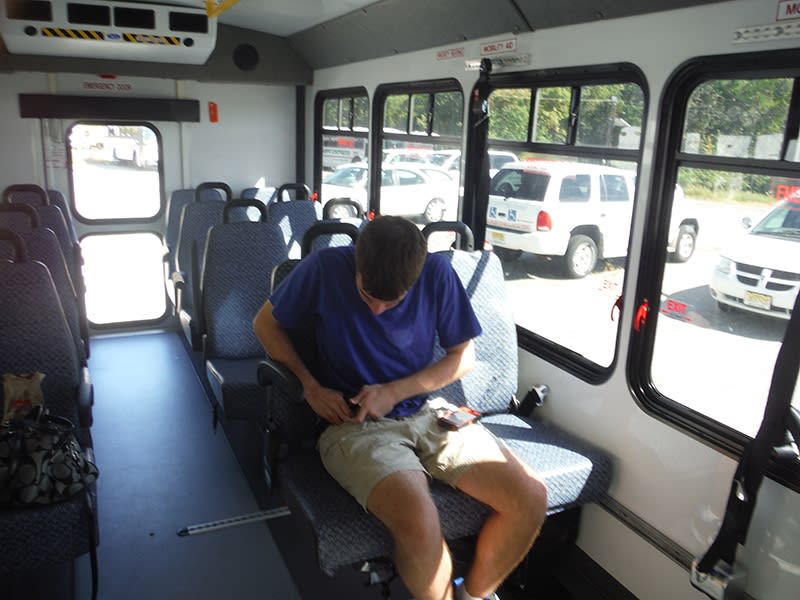
Cecilia Feeley's son, Alex, buckles up for a ride so the CAIT team can assess his transit-riding skills.
Photo courtesy of Rutgers Center for Advanced Infrastructure and Transportation
Cecilia Feeley's son, Alex, buckles up for a ride so the CAIT team can assess his transit-riding skills.
Photo courtesy of Rutgers Center for Advanced Infrastructure and Transportation
By Dory Devlin
(Originally published in Rutgers Today)
Public transportation for autistic adults is available throughout New Jersey, but do the residents who need it know about it and can they easily use it?
Those are a few of the questions the Rutgers’ Center for Advanced Infrastructure and Transportation (CAIT) wants to answer with an ongoing study assessing autistic adults’ transit-riding skills.
“Our aim is to help adults whose families don’t think they can use these services to know that they can,” said Cecilia Feeley, CAIT’s transportation autism project manager. “We want to find out if people who can use it know about it and are using it, and if there are places where it’s not available and would be used.”
Katie Monroe, 20, and her mom, Mary Ann, took part because they wanted to learn more about transportation options for Katie, who often travels into New York from her home in Denville. They find NJ Transit’s website difficult to navigate and would love to have easy-to-read maps to make transferring to other transit easier. “Plugging information into the site usually never brings up what we’re looking for,” said Mary Ann Monroe.
A survey at the start of the study found that many adults on the autism spectrum and their families know about transportation options but most don’t use them. Like Katie, a majority of autistic adults (68 percent) get rides from parents and family members to get where they need to go, while 28 percent walk, according to the survey, a collaboration with the Rutgers Bloustein School’s Alan M. Voorhees Transportation Center.
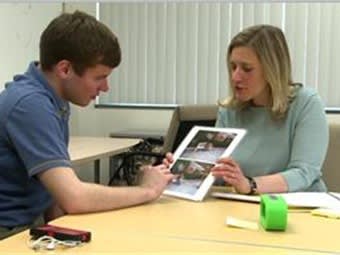
Cecilia Feeley, CAIT's transportation autism project manager, conducts a skills assessment with her son Alex, who has autism. Photo courtesy of Rutgers Center for Advanced Infrastructure and Transportation
“We’re focusing on young adults who are aging out of educational services and whose families are preparing for the next chapter,” Feeley said. New Jersey is home to an estimated 70,000 adults with autism and 40,000 children, according to Autism New Jersey.
Asked if they were aware of NJ Transit’s reduced fare program (which is available for people with disabilities following an approved application), its Access Link service (which follows local NJ Transit bus routes for residents unable to ride buses) and community paratransit services, between 40% and 66% were aware of one or more. Of those who were aware of the reduced fare and Access Link services, less than half took advantage. Even less – 24% – of respondents aware of county paratransit services had ever used them.
Rutgers’ CAIT is applying a $398,300 grant to develop a comprehensive skills test to help ensure that adults on the autism spectrum are able to safely access and use transportation services. Part of a $2.5 million research program funded by the Governor’s Council for Medical Research and Treatment of Autism, the study will give caregivers and transportation service providers a better understanding of the skills and abilities autistic adults need to use paratransit services, Feeley said.
“If we do find there are individuals who have trouble with accessibility and transportation schedules, then we know there are barriers,” Feeley said.
On a bright spring day, Feeley’s teenage son, Alex, who is on the autism spectrum, helped the CAIT team demonstrate how they evaluate riders with autism. When Alex entered the bus, he was expected to respond to the bus driver’s greeting and present his ID and payment for the ride before taking a seat. Scattered throughout the bus and using a detailed checklist, four study team members assessed how he completed the tasks and gauged his behavior on the bus during the trip. Riders need to be able to follow the rules of the vehicle – keep hands to themselves, keep belongings out of others’ way and remember to bring them when they get off at the correct stops.
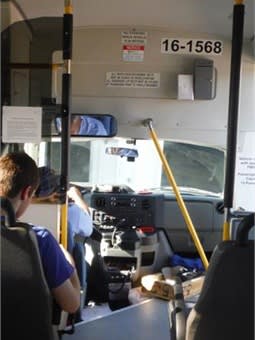
Rutgers' CAIT is applying a $398,300 grant to develop a comprehensive skills test to help ensure that adults on the autism spectrum are able to safely access and use transportation services.
Photo courtesy of Rutgers Center for Advanced Infrastructure and Transportation
GoPro cameras record each session to complement the researchers’ assessments. But before a test ride is set up, members of Feeley’s team interview the adults and their families about transportation needs, how they currently get around when needed and whether their abilities make it possible to participate in the test rides.
From the early findings: Every individual has different skills and needs. And every community paratransit service has different rules and procedures, noted Aaron Zisook, a Bloustein School graduate student. Other student team members bring public policy, social work and research skills to the study.
A reoccurring barrier also has surfaced. NJ Transit’s Access Link provides a 40-minute pick-up window, which can be a long amount of time for some on the autism spectrum to comprehend. “For people who have difficulties with concepts of time, that’s a huge problem,” Feeley said. Narrowing that to a call or text five minutes before the ride arrives would be a big improvement.
“What Cecilia is doing is identifying the problems for us, and also identifying the context in which we as technologists and engineers can come up with ways to improve transportation with people on the autism spectrum,” said Ali Maher, director of CAIT, one of five U.S. Department of Transportation-designated national university transportation research centers.
So far, the team has assessed 30 residents from mostly suburban and rural areas from throughout New Jersey. Finding residents in cities to participate has proven more difficult, Feeley said, though one Paterson resident has participated.
The team aims to interview nearly 100 adults and conduct test rides for 75 by February 2016. Participants who complete the assessment portion of the study will receive $25 for their time, and those who take vehicle test ride will receive an additional $75. Interested adults and families can contact Feeley at cfeeley@rutgers.edu.
More Paratransit

Biz Briefs: RIPTA Unveils New Frontrunners, Clevland RTA Adds New Siemens, and More
In METRO's latest installment, we take a look at recent news from Siemens, Prevost, Dodge, and more partnerships making headlines across the transportation sector.
Read More →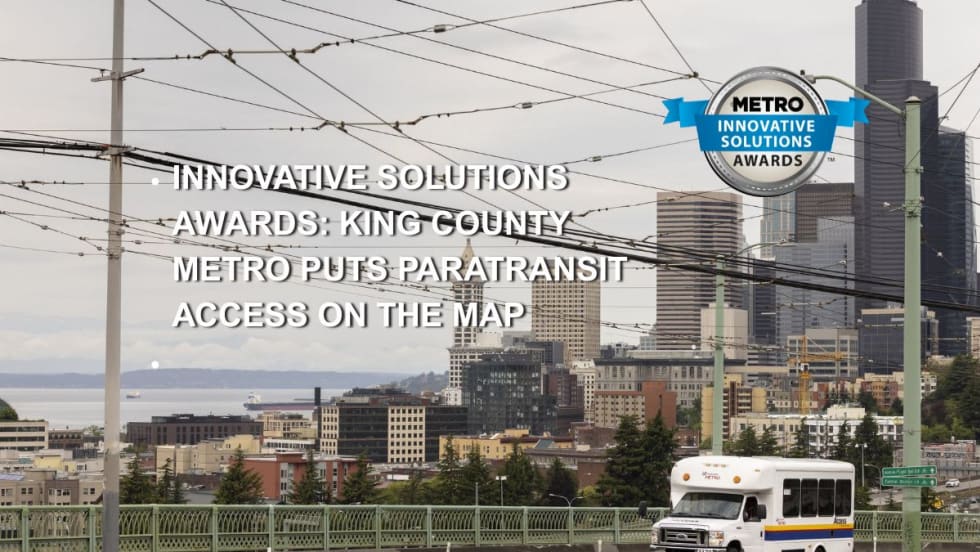
King County Metro Makes ADA Paratransit Easier to Navigate
METRO's Innovative Solutions Award winner replaces complex service-area descriptions with an accessible, interactive map that puts paratransit information directly in customers’ hands.
Read More →
Jacksonville’s NAVI Project Charts a New Course for Autonomous Public Transportation
Through its NAVI program, JTA is showing how autonomous vehicles, intelligent infrastructure, and coordinated operations can work together to deliver everyday public transportation.
Read More →
Driving Smarter Paratransit
John Hanlon shares how AlphaRoute is leveraging AI-powered technology to help paratransit providers optimize operations, support frontline staff, and enhance the rider experience.
Read More →
METRO Magazine Announces 2026 Innovative Solutions Awards Winners
Projects Recognized for Advancing Mobility Through Technology, Accessibility, Workforce Innovation, and Operational Excellence
Read More →
Biz Briefs: STV teams with Amtrak, Motorcoach Operators Boost Fleet and Land Contracts, and More
From manufacturers and suppliers to transit agencies and motorcoach operators, these updates offer a snapshot of the projects, partnerships and business moves driving the industry forward.
Read More →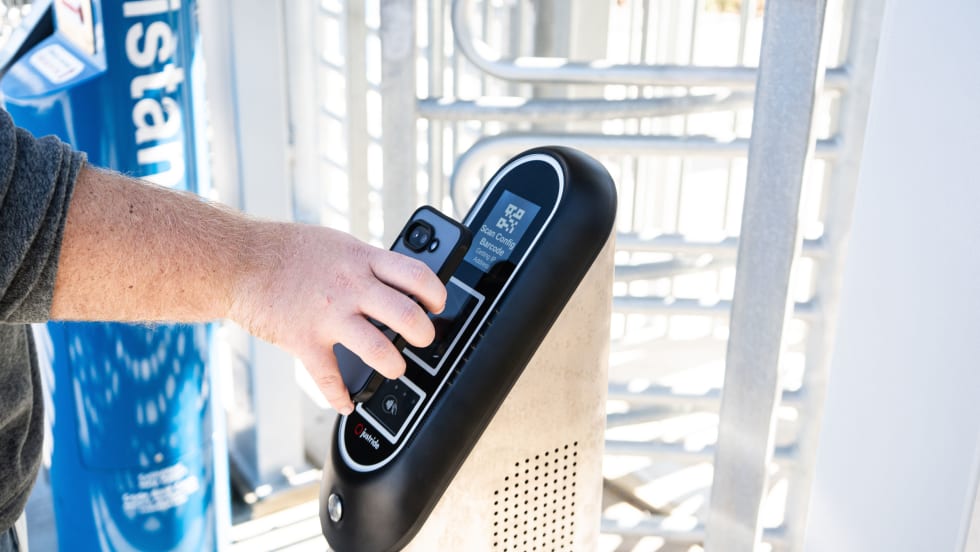
Biz Briefs: Masabi Teams with St. Louis Metro and More
In METRO's latest installment, we take a look at recent news from Transdev, Hitachi, and more partnerships making headlines across the transportation sector.
Read More →
New York MTA Leverages Zoning Program to Advance Station Accessibility
Accessibility enhancements at Nevins St Station will be financed through a development agreement tied to the MTA's Zoning for Accessibility initiative.
Read More →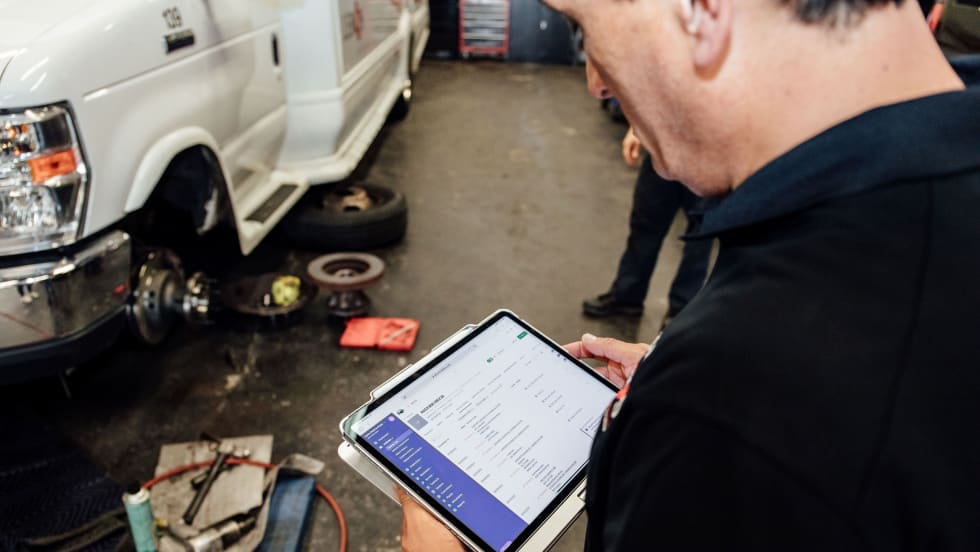
Reinventing Fleet Maintenance with Real-time Visibility and AI
Transit leaders need to know what needs fixing, where to look, who is responsible, when work is completed, and what it costs without having to chase information across disconnected systems.
Read More →
SamTrans Sets Priorities for Potential Connect Bay Area Revenue
The board-approved framework allocates future funding to maintaining service, rider improvements, equity initiatives, and infrastructure repairs.
Read More →