



10 Strategies for Improving the Procurement Process
Practical suggestions to help transit agencies acquire better equipment and services, bolster the U.S. supplier community and deliver more cost-effective technology to riders.
During the past decade, while record investment has poured into the industry and ridership has reached heights not seen since Bobby Darin topped the music charts with “Mack the Knife,” the U.S. supplier-consultant community has rarely if ever been more financially troubled. Transit supplier profits may be at an all-time low, and many bus and railcar builders are on the edge of leaving the business, if not transit entirely then most certainly the American market. What is wrong with this picture?
The answer given by many on the industry’s supply side is that the record investments could merely be forestalling the reckoning that is inevitable if current practices continue. This has been the refrain heard again and again in a variety of industry forums for a decade now. Key suppliers have been warning of onerous commercial terms and conditions, unreasonable retention of payments and customers that egregiously exceed payment terms to the point of threatening their further deliveries and ability to pay component suppliers.
The situation is further complicated by the disruptive effects of new technology. Transit systems see new hardware and want it for their properties, convinced that it will lure more passengers out of their cars or help streamline their operations. Other technologies are forced by accessibility and clean-air mandates. Until now, however, few were convinced that the shaky supply base would have an impact on the operating side of the industry, or that suppliers were merely exaggerating their woes.
For their part, agencies want to avoid their own nightmare scenarios: contractor default, delivery delays and poor product and service quality. Too often, they feel, the consultant or supplier is simply not around when buses fail to make pull-out, subway tunnels leak or construction is hopelessly behind schedule. Onerous commercial terms and conditions or rigid, brand-specific technical specifications are the result of a past breakdown in trust, or worse.
Perhaps because the fragility of suppliers became so acute that it could no longer be ignored, perhaps because several industry-wide initiatives had to complete their work first or perhaps because transit agencies finally began to see the connection to their own bottom lines, a few clear strategies for equitable procurements with higher value for capital invested have emerged. Presented below are 10 of those strategies that any transit agency, large or small, can pursue to make its next procurement a successful one.
1. Use assignable options whenever possible
Also called piggybacking, assignability allows a transit property to transfer unused contract options on rolling stock purchases to another agency. Using options from an existing contract can cut delivery times by a year to 18 months on a procurement because time needed for solicitation and proposal processes is eliminated, and the time needed for contract negotiation is substantially minimized.
Under federal regulations, minimal changes to the specification are allowed, such as seating, paint scheme and other equipment that does not change the basic vehicle that was procured under the initial contract, but major changes such as propulsion type, vehicle length and floor height (e.g., low-floor vs. high-floor light rail vehicle) are not allowed. However, interpretation of how far a transit agency can change the base contract specification and still be considered an option to that contract changes from time to time. It is best to review any proposed technical changes with the regional FTA office prior to contract award.
2. Use standard (or at least most commonly accepted) terms and conditions
This is easier for bus purchases than for railcars because of the industry’s standard bus procurement guidelines developed by APTA. These guidelines contain a specifications section and a terms and conditions section developed by representatives of both suppliers and transit agency procurement specialists. The model document thus represents a consensus of both suppliers’ and operators’ interests, and any deviation from its contents should be done only after input from suppliers and those who have used similar proposed provisions before. In recognition of the many technical changes and commercial practices that have evolved since these guidelines were first established, APTA has launched an update process this spring and summer, which it hopes will culminate in a comprehensive revision of the guidelines by the end of this year. For more information on these developments visit www.aptastandards.com.
3. Minimize use of suppliers with small market shares
Put another way, a small market share means the fewest transit-specific buses in recent revenue service, the least recent field and service experience, the smallest volumes with which to negotiate favorable pricing and warranties with the OEMs and procuring agencies and the least experience in integrating technology in buses or railcars. Unless these suppliers’ technology offers such superior service or economic advantages — or is the only one that complies with recent regulatory mandates — why would you want to take on such risk in doing business with them?
4. Make the pre-proposal and information processes a two-way street
Sadly, too many decisions in the process are made with too little information on both ends of the relationship — whether it is the procuring agency’s lack of knowledge about the marketplace, particularly the technical capability of suppliers or consultants in it or contractors’ lack of appreciation for and understanding of the particularly difficult features of an agency’s operations (and political environment). Those agencies that have good relationships with their suppliers typically have good relationships even before the proposal solicitation process has begun, let alone the actual work itself.
Whether informal gatherings over a meal or in visits either at the agency or the supplier’s facilities, the dialogue must go beyond personal rapport (though that too is an important first step) and enter into knowledge of the technology and trends, sensitivity to the procuring agency’s operating needs and service conditions and financial and technical ability to perform. Indeed, a solid sense of the players and these issues should have been developed even before the RFP is issued. Moreover, requests for information, clarification and approval of technical and commercial changes to the solicitation can be better crafted and evaluated if both sides know the others’ challenges, strengths and weaknesses.
5.Balance onerous terms and conditions
As mentioned above, manufacturers need to understand that quite often the commercial or technical language of a solicitation is onerous because it attempts to prevent deficiency or abuse from a past procurement or to address fleet compatibility issues. Likewise, agencies need to understand these difficult terms, whether high bonding and insurance mandates, low fleet defect thresholds, unusual warranty requirements, high retention percentages or one-sided quality assurance conditions, are a “pay me now or pay me later” proposition; these risks will be built into the consulting contract or bus or car price. This also goes for training requirements; properties must realize up front that they are “buying” training from suppliers in the form of higher prices.
6. Share the risk, particularly on new technology
Los Angeles worked with NABI to develop its new BRT vehicle by developing a mutually acceptable schedule of milestone-based progress payments, common in railcar and consulting services procurements but rare in those for buses. Similarly, Cleveland and Eugene, Ore., teamed to work with New Flyer, supplier of buses for both cities’ BRT starter lines, to develop a vehicle with additional styling and doors on both sides, critical features to BRT operations in both. They are also working with New Flyer to develop a guidance technology for precision docking applications at each BRT station. Both sides must talk about the new twists in a job they are approaching together and structure contract payments to help with cash flow risk and/or incentives and penalties to help keep the project on schedule.
7. Resolve difficult procurement issues quickly and with high-level buy-in
Successful procurements, particularly ones involving new technology, often encounter unforeseen or underestimated problems. These need to be addressed quickly and with minimal second guessing by management on both sides of the relationship. Accordingly, representatives for both sides, whether the project manager or someone higher in all organizations, should be designated to resolve these more difficult issues and they must either have the ability to act on their organizations’ behalf immediately or obtain immediate access to those who do.
8. Use consensus standards where available
In addition to the aforementioned APTA standards developments, several other organizations have developed standards widely used in transit. They include the Society of Automotive Engineers, particularly for buses, and the Institute of Electrical and Electronic Engineers, particularly for rail transit. These organizations use a consensus-building process to develop standards to address common challenges and situations as broadly as possible. They are also periodically updated to keep up with the pace of technology. Unless an application or technical need is too exotic, the commonly accepted standard will offer the best long-term value for the most reasonable cost.
9. Use performance-based requirements
Specifications based on outcomes — e.g., a propulsion system with so many foot-pounds of torque and a certain acceleration and speed profile — rather than designated brands will allow the rolling stock manufacturers to offer the best integrated and tested package for the best price. When bus and railcar builders are forced to use certain suppliers the combination of which may never have been tested and engineered together before, both cost and risk of contract and vehicle performance problems go up.
10. Best value does not mean lowest initial acquisition price
Too many negotiated procurements become a contest over the best bus, railcar, service or system price. For complicated projects and technologies, the initial acquisition as well as the cost of ownership — e.g., operations and maintenance costs, particularly in a period of high fuel prices — must be part of the evaluation and negotiation. Further, agencies must make their evaluation priorities transparent to the proposing party. Notice this previous sentence did not say “evaluation factors.” Too often, respondents to a solicitation have little idea of what evaluation criteria are most important to procuring agencies. Stating these clearly and with clear evaluation methodology will minimize negotiation freedom but will increase the likelihood of both proposals and thus a contractor that will satisfy procurement project objectives.
More Management

ENC Lands MATA Contract and More in Biz Briefs
In this edition of Biz Briefs, we spotlight the latest developments shaping the future of mobility.
Read More →
From Surviving to Thriving: Building Stronger Transportation Organizations
Bus Business Consultants founder Brian Dickson shares lessons on leadership, organizational health, and creating options for long-term success in a changing transportation industry.
Read More →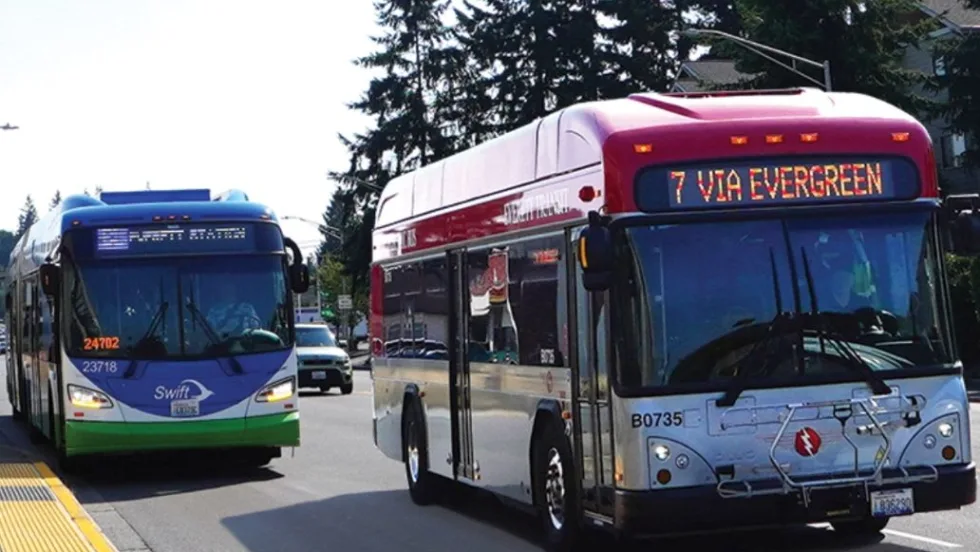
Everett Transit, Community Transit Outline Consolidation Agreement
The proposed agreement calls for a 50% increase in bus service in Everett, a new microtransit zone, continued paratransit service, and the transfer of Everett Transit operations to Community Transit.
Read More →

Strada360’s Steve Lassey on Turning Transit Data Into Better Decisions
From breaking down data silos to preparing for AI, Strada360 CEO Steve Lassey discusses how transit agencies can use technology to improve operations, customer information, and long-term decision-making.
Read More →
People Movement: Phil Washington Joins HNTB, Denver RTD Launches CEO Search, and More
In this edition, we also spotlight recent personnel moves at STV, the Eno Center for Transportation, and more, highlighting the people taking on new roles across the transportation industry.
Read More →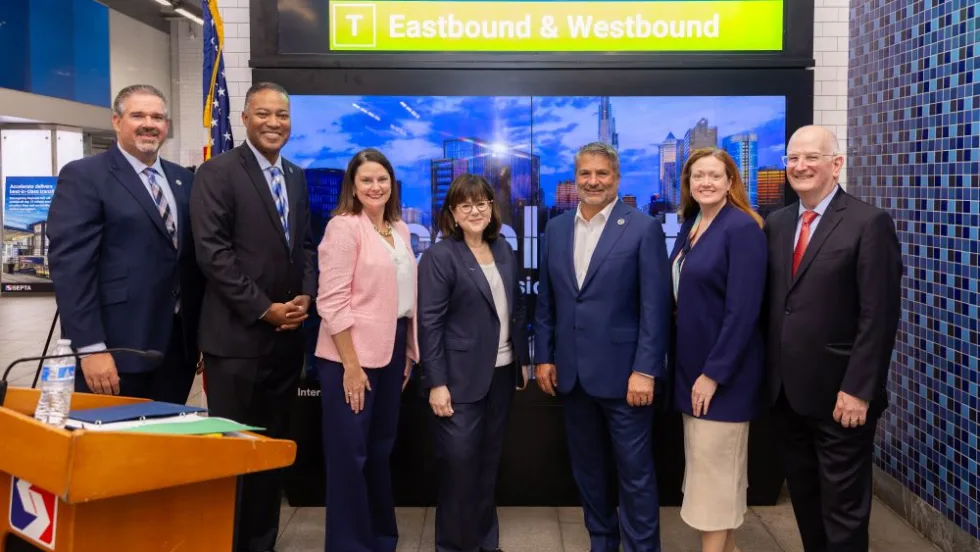
SEPTA Details Accelerate Vision for Transit System
The plan outlines investments in trolley modernization, new Metro and Regional Rail vehicles, accessible stations, and more frequent bus and rail service.
Read More →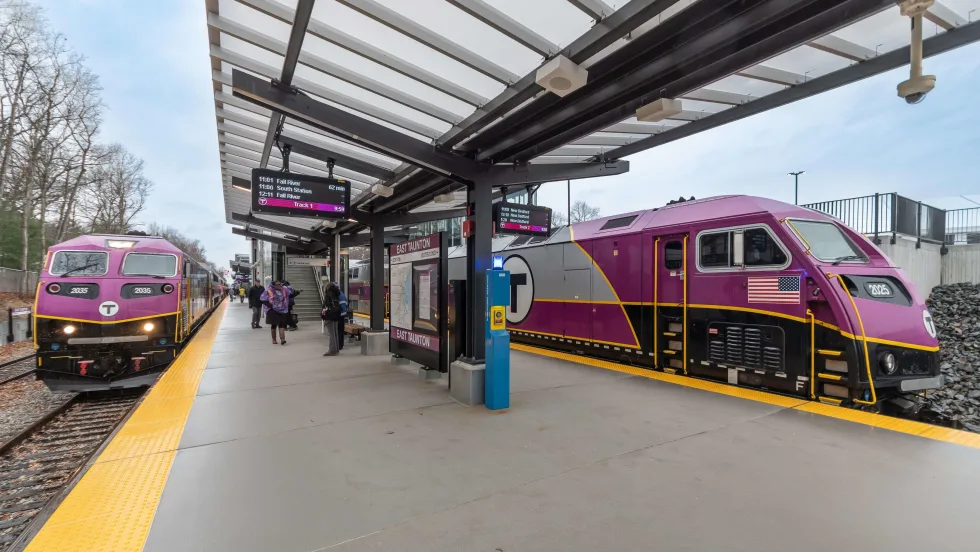
FTA Ends Direct Oversight of MBTA Safety Actions
The federal agency closed its remaining special directive to the Massachusetts Department of Public Utilities following a safety review that began in 2022.
Read More →
Report: Transit Bus Manufacturing Supports 34,100 Jobs, $5.1B in GDP
The “Buses Mean Business” report examines the transit bus manufacturing industry’s economic footprint, supply chain, and rising demand for vehicle replacements.
Read More →
LIT Marks 10-Year Milestone at Annual Summit
Hosted by the COTA from September 10 to 13, the Summit carried the theme “Celebrating 10 Years of Excellence, Leadership, and Impact,” with every part of the program honoring the people, agencies, and partners who built LIT over its first decade.
Read More →
People Movement: Dan Dipert Coaches Adds Third-Generation Leader, Keolis Names New Valley Metro VP/GM, and More
In this edition, we also cover recent appointments and announcements at the Wabtec, SilverRide, HNTB, and more, showcasing the individuals helping to shape the future of transportation.
Read More →